A First Glance – Introduction & Atmosphere
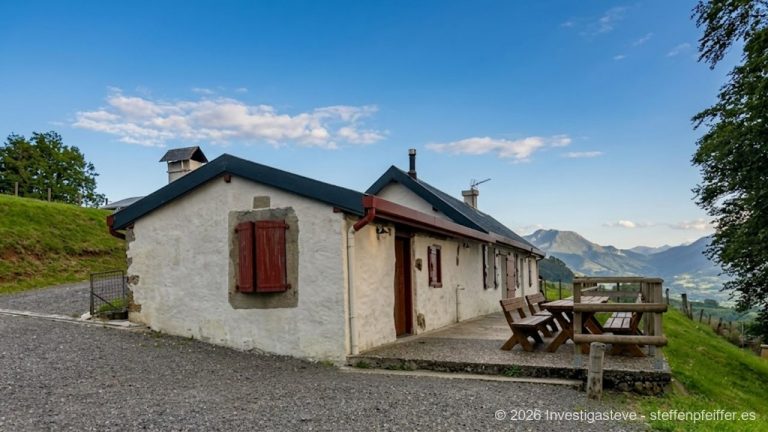
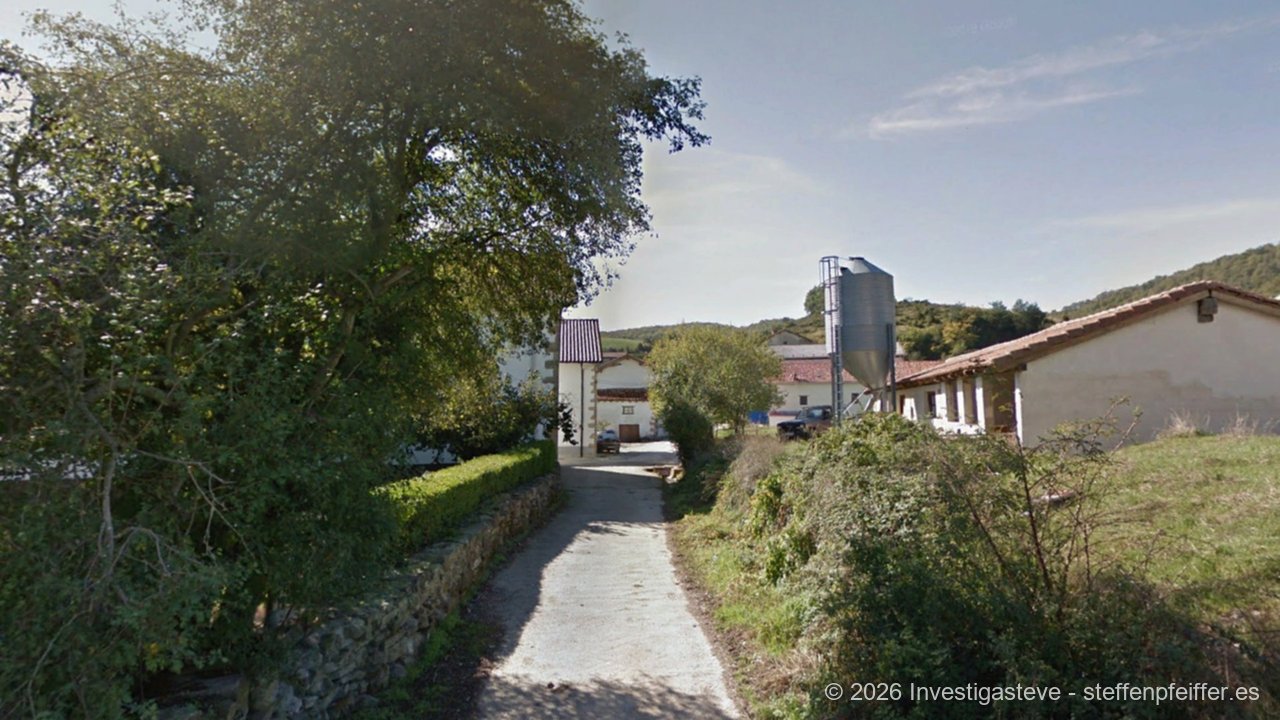
When you leave Bizkarreta behind and the path leads you deeper into the gentle foothills of the Valle de Erro, the world around you changes in a subtle, almost imperceptible way. The air grows heavier with the moisture of the dense beech and oak forests, and the light filters through the thick canopy in a soft, emerald-green shimmer. Suddenly, the forest opens up and reveals a small, stony nest nestling like a protective gesture in the hollow of the valley: Lintzoain. It is a place that makes no loud promises. It welcomes you with an archaic silence so dense that you feel you could wrap it around your shoulders like a heavy cloak. Here, at an altitude of 550 meters, the pulse of the Camino Francés seems to pause for a moment before the landscape prepares for the next great exertion.
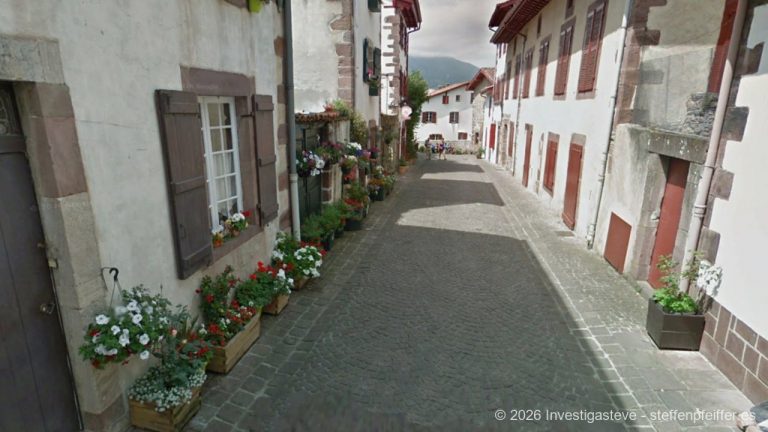
You enter the village on paths lined with walls of roughly hewn limestone, their surfaces covered in silvery grey and bright yellow lichen centuries old. It smells here of a captivating mix of freshly cut grass, the tart aroma of sheep’s wool, and the damp, earthy scent of the nearby stream murmuring softly somewhere in the undergrowth. The houses of Lintzoain do not just stand there; they seem to have grown out of the ground, massive and defiant, with heavy slate roofs that gleam dully in the light of the afternoon sun. You feel the coolness emanating from the thick walls, even when the Navarrese sun stands high in the sky. Every house bears a Basque name, sounding like an echo from a time when the boundaries between man and nature were still fluid.
In Lintzoain, arriving is a quiet process. There is no garish neon light, no loud tourist calls. Instead, you hear the distant, metallic ringing of a bell from a mountain pasture and the rustling of the wind in the treetops of the surrounding peaks like Monte Lastur. The psychological effect of this place is immense: it offers you a breather, a zone of neutrality. You are no longer in the high mountains of the Pyrenees, but neither have you arrived in the bustling activity of Pamplona. Lintzoain is an intermediate realm where time has a different consistency – it flows thick as honey and allows you to feel every single breath consciously. The dust of your shoes mixes with the fine gravel of the village street, and for a moment you are not just a walker, but part of this silent, stony constancy.
What This Place Tells
The history of Lintzoain is carved in stone, but you have to look closely to read the lines. The place is the administrative and spiritual heart of the Valle de Erro, a region that has served as a gateway for kings, warriors, and saints since the early Middle Ages. The parish church of San Saturnino, a building from the 13th century, stands as a silent guardian on the edge of the village. Its architecture is characterized by a simple, almost ascetic Romanesque style that perfectly matches the rugged character of the surroundings. When you stand before its portal, you feel the historical causality: this church was not built for splendor, but as a shelter and spiritual anchor point for a tiny community of barely more than 67 souls today. The masonry is rough and uneven, every stone tells of the laborious work of the local craftsmen who erected this building against the adversities of time and weather.
In the chronicles of the Camino, Lintzoain is often only mentioned as a marginal note, yet for the people here, it is the center of a world that consistently refuses the modern pace. The houses in the village proudly show the traditional Navarrese architecture of the north: whitewashed facades, reinforced with mighty cornerstones of reddish sandstone. Many of the portals are round-arched and bear coats of arms, pointing to the old hidalgo tradition – the pride of minor landed nobility who guarded the passes for centuries. The name Lintzoain itself carries the Basque heritage, a language not only spoken but lived here. It is a culture of resilience that has asserted itself through the centuries of the Reconquista, the Carlist Wars, and isolation.
A special chapter of local history is written by the old “Lavadero,” the public washing place. It is more than just a functional structure; it is a social anchor point. Here the women of the village gathered, and while the water of the mountain stream washed over the stones, information was exchanged, legends retold, and the social fabric of the valley strengthened. The rhythmic sound of work, the beating of laundry on the stone, has fallen silent today, yet the atmosphere at this place is still charged with the spirits of the past. You can almost grasp the historical metamorphosis: from a strategic point on the Roman road that once led over the Pyrenees, to a retreat for modern seekers who find a truth in the simplicity of Lintzoain that they have lost in the loud world. Every step through the village is a journey through time, where the boundaries between the 12th and the 21st century blur.
Addresses & tips in Lintzoain
| Accommodation | 6 |
| Sights | 1 |
Camino Distances
Lintzoain lies strategically well-positioned to gather strength for the upcoming ascent to the Alto de Erro. The distances are short, but the topography takes its toll.
| Previous Place | Distance (km) | Next Place | Distance (km) |
|---|---|---|---|
| Bizkarreta | approx. 2.0 km | Zubiri | approx. 4.8 km |
Sleeping & Arriving
Arriving in Lintzoain is an experience of reduction. Anyone who stops here often consciously seeks to turn away from the large, overcrowded hostels of the better-known stage destinations. In this tiny hamlet, there are no dormitory fortresses, but mostly private initiatives or small guesthouses that breathe the spirit of genuine Basque hospitality. When you cross the threshold of one of these houses, you are often greeted by the smell of floor wax, old wood, and a hint of fireplace smoke, which seems to linger in the thick beams even in summer. The floorboards beneath your feet tell a story with every creak of generations who sought shelter here from the cold of the mountains.
The psychological component of staying overnight in Lintzoain lies in intimacy. Here you are not a number on a list, but a guest who often sits with the residents at the same heavy oak table in the evening. The water from the tap is ice cold and clear, coming directly from the springs of the surrounding mountains, tasting metallic and fresh – a true drink of the gods for a dusty pilgrim. The beds are often simple, but the blankets are heavy and convey a feeling of security, while outside the wind sweeps through the Valle de Erro and whips the leaves of the old trees against the shutters.
Staying in Lintzoain also means exposing yourself to the silence. When after sunset the few lights in the windows go out, it becomes so dark that the stars above the mountain ridges reach an intensity that is almost painfully beautiful. The village sinks into a calm broken only by the distant rustling of nature. For the pilgrim, this is an important moment of integration: the impressions of the Pyrenees crossing can settle here, the musculature finds rest in the absolute stillness of the surroundings. Whoever arrives in Lintzoain chooses the quality of encounter over the quantity of infrastructure. It is a place of grounding, before the path leads steeply up to the Alto de Erro the next morning.
Eating & Drinking
In a place the size of Lintzoain, meals are often a very personal affair. There are no gourmet temples here, but the honest, rustic cuisine of Navarre finds its way onto the plates of those who stop here. The basis is formed by products that the valley itself produces: heavy, dark cheese from sheep’s milk, so intense in flavor that a small piece suffices to challenge the palate for hours. It smells of herbs, dry hay, and the wild freedom of the mountain pastures. It is often served with a hearty, home-baked bread whose crust is so hard that you feel the strength of your own teeth, while the inside is soft and still slightly moist.
A typical dinner in this region might be a “Sopa de Pastor,” a simple but nourishing shepherd’s soup with bread, garlic, and a hint of Pimentón that fills the air with a smoky aroma. The taste is an embrace from within – warm, salty, and infinitely satisfying after the kilometers on the path. It is often accompanied by a glass of robust red wine from the region, which leaves a pleasant warmth in the throat and makes tired limbs heavy and ready for sleep. Drinking here is an act of regeneration; the water from the village fountain is so clean you could almost consider it medicine.
In the small kitchens of the accommodations, the smells of fried chorizo and fresh eggs from the chickens you see scratching in the village during the day mingle. It is a culinary return to the essentials. You eat not just to become full, but to absorb the energy of the earth. The tactile experience of eating – breaking the bread with your hands, cutting the firm cheese – connects you directly with the tradition of the shepherds who have traversed this valley for millennia. In Lintzoain, every bite tastes of the hard work and deep peace of a life in the rhythm of the seasons.
Supplies & Logistics
Logistically, Lintzoain is both a challenge and an opportunity. You have to know what you are getting into, for the place is the definition of minimalism on the Camino Francés. Those who seek help here find it in the community, not in the commercial structure.
Shopping: There is no regular supermarket in Lintzoain. Pilgrims should stock up on necessities in Roncesvalles or Bizkarreta. Occasionally, locals sell eggs or cheese directly from their farm, making the purchase a cultural exchange.
Gastronomy: A fixed bar with regular opening hours is not always guaranteed. Often, the accommodations function as supply centers, where a simple breakfast with strong Café con Leche and toast is served in the morning. The smell of freshly brewed coffee in the morning is the only signal that awakens the village from its slumber.
Accommodation: Capacity is very limited. There are a few private guesthouses and small hostels, often booked out well in advance. The atmosphere is private, almost familial.
Public Facilities: Apart from the church and the public fountain, there is little official infrastructure. For medical emergencies or banking, you have to rely on larger places like Zubiri or the somewhat further Erro.
In summary, Lintzoain is a place for self-sufficient travelers and those seeking peace. Logistics require planning, but reward you with an experience of authenticity often lost on the busier sections of the Way. It is a place that teaches you to get by with little and to re-evaluate the value of a filled water bottle and a piece of cheese.
Don’t Miss
Although Lintzoain is small, there are details that should not be overlooked to grasp the soul of the place.
1. The portal of San Saturnino: Examine the weathered stonework at the entrance of the church. The rough forms of Romanesque art tell of a time when faith was as solid as the stone itself.
2. The village fountain: Take a deep drink from the central fountain. The water is a direct connection to the mountain massif of Monte Lastur and cools you to the marrow.
3. The coats of arms on the house walls: Look for the stone insignia of the Navarrese landed gentry. They are silent witnesses of a proud past and the hidalgo tradition of the valley.
4. The old washing place (Lavadero): Pause for a moment at this historic site of social interaction. Feel the dampness of the walls and let the silence, which is particularly intense here, work on you.
5. The start of the ascent to the Alto de Erro: Just behind the village, the path begins to climb steeply. After the first hundred meters of elevation, turn around once more and enjoy the view of Lintzoain crouching in the valley – a picture of perfect harmony.
Insider Tips and Hidden Places
Beyond the main route, Lintzoain hides small treasures that only those who slow down their pace will find. One of these places is a small, almost overgrown path leading from the side of the church into the dense hedges. After a few steps, you stand before an old stone wall that was part of a former farmstead. Here wild herbs like thyme and rosemary grow, whose scent is almost intoxicating in the heat of the day. It is a place of absolute isolation, where you hear only the distant buzzing of insects. Here you can sit on one of the warm stones and feel the texture of the limestone under your palms while letting your gaze wander over the gentle waves of the valley.
Another insider tip is the small stream flowing below the village through a thicket of alders and willows. There are spots where the water forms small, clear pools. The light refracts there in a way that makes the water appear almost silver. It is an ideal place to cool your feet, away from the eyes of other pilgrims. The water is a tactile sensation – first burning cold, then numbing, and finally invigorating. In these hidden corners, you feel the psychological metamorphosis most intensely: you are no longer driven by the odometer, but one with the elemental power of Navarrese nature.
Also pay attention to the small niches in the walls of the oldest houses. Sometimes you find small offerings or dried flowers there – signs of a popular piety still deeply rooted in these remote valleys. These tiny details make Lintzoain a place that does not reveal its secrets to everyone, but only to those willing to see with their heart. It is the discovery of the inconspicuous that makes this stay so valuable.
Moment of Reflection
In Lintzoain, the pilgrim reaches a psychological threshold. The first great physical hurdle of the Pyrenees lies behind them, yet the path to Santiago is still unimaginably far. In the silence of this village, a deep reflection on one’s own pace often sets in. Who am I when the noise of the world falls silent? What remains when the only task of the day is to put one foot in front of the other? The reduction that Lintzoain embodies mirrors the inner process of pilgrimage. You begin to understand that ballast – both physical in the backpack and emotional in the mind – only slows you down.
The massive presence of the stone houses and the unyielding nature of the church of San Saturnino give you a feeling of constancy in a world that is constantly changing. You realize that you are part of a historical causality: for over a thousand years, people have paused at this very point, breathed the same cool air, and carried the same worries and hopes. This realization is strangely comforting. Your exhaustion is ennobled here by tradition. When you sit at the fountain in the evening, your face moistened with cold water, you feel a spiritual metamorphosis. Resistance to the exertion yields to acceptance. You learn to understand silence not as emptiness to be filled, but as space for growth. Lintzoain is the place where the walker matures into the pilgrim before climbing the summit of Erro the next morning.
Camino of the Stars
This place lies on the Camino Francés, on the stage from Roncesvalles to Zubiri. The sequence of places is:
Roncesvalles → Burguete → Espinal → Bizkarreta → Lintzoain → Alto de Erro → Zubiri
Did you find a moment of perfect peace in the stillness of Lintzoain, or were you impressed by the archaic power of the church of San Saturnino? Perhaps you had an encounter in one of the small guesthouses that changed your view of the Camino? Share your experiences with us! Every story, every thought from this hidden corner of Navarre enriches the community of seekers. Tell us about your Lintzoain!
About the Author