A First Glance – Introduction & Atmosphere
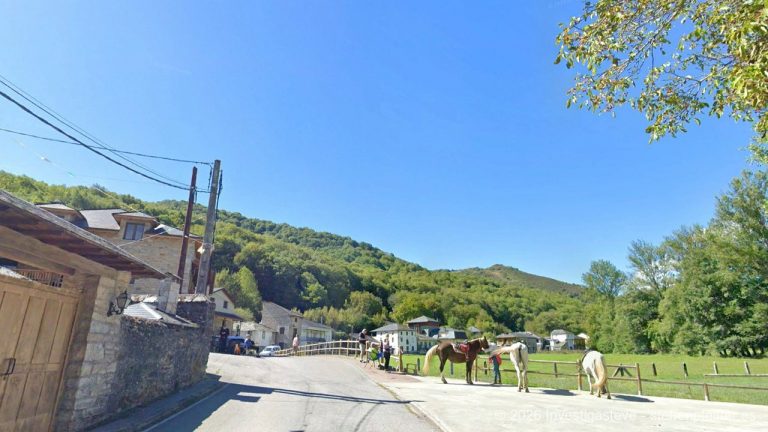
When you leave the dense canopy of the forests behind Zubiri and the path leads you slowly but steadily out of the cool embrace of the Esteríbar Valley, Zabaldika appears like a mirage of constancy. It is that moment on the Camino Francés when the rugged wilderness of the Pyrenean foothills gives way to a gentler, almost maternal hill landscape. From afar you perceive the silhouette of the Iglesia de San Esteban, perched like a stone guardian on a hilltop, watching over the valley of the Río Arga. The light here in Navarre has a special quality – it is clear, refracting in the silvery green of the olive trees and bathing the light limestone facades of the hamlet in a warm, almost sacred gold.
The auditory experience when approaching Zabaldika is characterized by a deep, meditative caesura. The rushing of the Arga River below the hill forms a constant, soothing bass that mingles with the rhythmic clicking of your hiking poles on the gravel path. But what truly distinguishes Zabaldika is the sound of its bells. It is not ordinary ringing; it is a call that echoes through the centuries. When the Sisters of the Sacred Heart of Jesus pull the ancient ropes, the air vibrates in a way you feel to your very bones – a tactile resonance that makes your body vibrate and instantly forces your mind to stillness. It is a moment of psychological metamorphosis: the pilgrim leaves the haste of the kilometers behind and prepares inwardly for the upcoming encounter with the big city of Pamplona.
Olfactorily, Zabaldika welcomes you with the tart freshness of damp earth and the sweetish aroma of wild thyme thriving in the crevices of the walls. Near the church, this scent mingles with a note of old wood and the cool breath of stone that has stored the night’s chill. When you finally reach the small square in front of the church, you experience an emotional spaciousness that stands in stark contrast to the narrowness of the preceding forest paths. Zabaldika is not a place you simply pass through; it is a threshold where you pause to shake off the dust of the first stages and clothe yourself in silence. The texture of the rough limestone under your fingers, as you lean against the church wall, grounds you and reminds you that you are part of a 1200-year-old narrative.
What This Place Tells
Zabaldika is a living archive of the Navarrese soul. Its history is inextricably woven with the spiritual lifeline of the Camino Francés, yet it reaches deeper, into a time when the village was an important outpost of the Kingdom of Navarre against the changing powers of the region. The heart of this narrative is the Iglesia de San Esteban, a building from the 13th century that embodies the transition from Romanesque to Gothic with a simplicity that humbles the modern observer. The historical causality is tangible here: the church was conceived not only as a house of God but as a spiritual lighthouse. The massive walls tell of wars, plagues, and the unshakable faith of those who have sought refuge here for over 800 years.
Particularly fascinating is the story of the bells of Zabaldika. They are considered the oldest still-functioning bells in Navarre and were cast in the 13th century. One must imagine the tactile mastery of the craftsmen of that time, who, in an era without modern measuring instruments, created an alloy whose sound today is still as pure as on the first day. The bells tell of communication between the villages of the valley – they warned of danger, celebrated the harvest, and rang the way for the pilgrims. When you enter the church today and climb up to the bells, you feel the psychological weight of time. It is a privilege to touch these instruments of history, whose metal, through countless hands, has acquired a smooth, almost silky patina.
Another chapter of the narrative is written by the community of the Sisters of the Sacred Heart of Jesus (Sagrado Corazón de Jesús), who in recent decades have turned Zabaldika into a place of the “church with open doors.” This historical metamorphosis from a shrinking rural community to an international center of spirituality is impressive. The sisters have initiated the “Path of Peace” (Camino de la Paz) – a series of reflection panels around the church that invite the pilgrim to surrender their inner conflicts to the wind of the Esteríbar Valley. Zabaldika tells us that history does not consist only of dead stones, but of continuous care for the stranger. It is a narrative of hospitality recorded in the ancient registers of the brotherhoods of San Esteban and still alive today in the shared meals of the hostel. Whoever passes through Zabaldika recognizes that progress here means driving the roots of charity deeper into the soil of the present.
Addresses & tips in Zabaldika
Camino Distances
Zabaldika lies strategically in the last third of the stage to Pamplona. After the strenuous ascent to the Alto de Erro in the morning, the place offers a welcome rest before the terrain transitions into the suburban regions of the capital.
| Previous Place | Distance (km) | Next Place | Distance (km) |
|---|---|---|---|
| Iroz | approx. 0.6 km | Arre | approx. 4.6 km |
Sleeping & Arriving
Arriving in Zabaldika is a ritual act of relief. As soon as you set down your backpack at the door of the “Albergue Parroquial de Zabaldika,” you feel the physical relief all the way to your spine. This hostel, housed in the former rectory, is one of the few places on the Camino that still breathes the original spirit of “Donativo” – a voluntary donation as an expression of community. Upon entering, you are enveloped by a smell of freshly baked bread, floor wax, and a subtle hint of lavender. The tactility of the place is characterized by creaking wooden floorboards and thick stone walls that retain a lifesaving coolness in summer.
Psychologically, arriving here offers a profound emotional security. The sisters welcome every pilgrim not as a customer, but as a brother or sister. You hear the muted murmur of conversations in the communal kitchen, an auditory tapestry of dozens of languages conveying the feeling of having arrived at the end of an inner search. In the dormitories, the atmosphere is marked by mutual respect; the tactile experience of the simple but clean blankets and pillows is a true luxury after the often impersonal mass quarters of the larger towns. Here, arrival is a conscious transition from “doing” to “being.”
A highlight of the stay is the evening community gathering or the communal prayer in the church of San Esteban. Even for pilgrims distant from the church, this moment has high psychological intensity. At dusk, when the light only weakly falls through the Romanesque windows, an atmosphere of absolute presence arises. The auditory experience of communal singing or silence is amplified by the knowledge that you are in a place that has absorbed sorrows and given hope for centuries. Staying overnight in Zabaldika is thus an emotional metamorphosis: you lie down as an exhausted wanderer and awaken as part of a larger whole.
For those who prefer solitude, the small park below the church offers a tactile retreat. You can sit in the soft grass, let your gaze wander over the wheat fields of Navarre, and feel how the wind clears the mind. Arriving in Zabaldika means outsmarting the hustle of Pamplona. While many pilgrims rush to reach the city, the guest in Zabaldika chooses the quality of silence. It is an arrival at oneself, supported by the simplicity of the furnishings and the warmth of the hostesses. Here, hospitality is not consumed but lived – an experience that sinks deeper into memory than any five-star hotel.
Eating & Drinking
Eating in Zabaldika means experiencing simplicity as the highest form of enjoyment. Since there are no restaurants or supermarkets in the hamlet, everything revolves around the communal meals in the hostel. The culinary experience often begins in the afternoon, when the scent of simmering lentils with chorizo or a hearty vegetable soup wafts through the house. It is an olfactory promise of regeneration. The texture of the heavy ceramic dishes and the communal setting of the long wooden tables create an atmosphere of familiar security. Psychologically, this communal meal is the most important social anchor point of the day.
The ingredients often come from the region – the crusty bread of Navarre, whose rough surface cracks under your fingers, the golden olive oil, and the robust red wine served in simple glasses. The taste is honest, unpretentious, and deeply nourishing. When you break bread together, national borders and social differences disappear. The auditory experience is marked by laughter, the clatter of cutlery, and the telling of stories about blisters, mountains, and encounters. It is a form of communication that goes beyond language – a universal language of sharing.
A special highlight is breakfast in Zabaldika. The smell of freshly brewed coffee and the warm light of the morning sun falling through the kitchen windows awaken the spirits. The texture of the warm cup in your hands and the sweetness of the regional jam prepare the body for the final kilometers to Pamplona. Eating in Zabaldika is a ritual act reflecting the historical causality of pilgrim food provision. You eat not only to be full; you eat to be part of the community. This feeling of satiety – both physical and emotional – is the fuel you need for the transition into the loud world of the city.
Supplies & Logistics
Logistically, Zabaldika is an oasis of minimalism. The place is small, almost modest in its offerings, but precisely therein lies its strength. There are no commercial structures, which forces the pilgrim to plan and reflect on the essentials.
Shopping: In Zabaldika itself there are no shops. If you need supplies, you should have already purchased them in Zubiri or Larrasoaña. However, the sisters in the hostel often offer basic products or a small snack in exchange for a donation.
Gastronomy: There are no public bars or restaurants. Catering takes place exclusively within the framework of the hostel. Pilgrims just passing through should carry enough water and provisions to bridge the stretch to Arre or Villava.
Accommodation: The “Albergue Parroquial de Zabaldika” is the only accommodation in the village. It is known for its warm atmosphere and is run on a donation basis. There are about 18 to 20 beds, guaranteeing an intimate group.
Public Facilities: You will look in vain for a pharmacy or ATM here. The nearest medical care and banking services are in Villava (about 4.5 km further) or Pamplona.
The logistical causality of Zabaldika requires psychological adjustment. You have to learn to get by with what is there. However, the drinking water from the village fountain in front of the church is of excellent quality – tactilely cool and refreshing on dusty skin. For the pilgrim, this means: Zabaldika is the place where you replenish your stores of inner peace while aligning your physical logistics for the coming stages in the city. It is a lesson in self-sufficiency and trust deeply rooted in the spirit of the Camino.
Don’t Miss
Zabaldika may be small, but its spiritual and visual treasures are invaluable. Take the time to grasp these points with all your senses:
– The bells of San Esteban: An absolute must. If circumstances permit, climb up to the bell tower. The feeling of touching the vibrating metal of a 13th-century bell is a tactile connection to eternity.
– The “Path of Peace” (Camino de la Paz): Walk around the church and read the reflection panels. They are psychological anchor points inviting you to shift focus from your feet to your heart.
– The interior of the church: Pay attention to the simplicity of the Romanesque arches and the special acoustics. The coolness of the air and the subtle scent of incense create an atmosphere of total presence.
– The view of the Arga: Go to the edge of the church hill. The view down to the winding river and the green meadows of Navarre is a visual pleasure that illustrates the vastness of the Way.
– The community evening: If you stay overnight, the evening discussion with the sisters is an emotional experience that many pilgrims call the highlight of their journey.
Insider Tips and Hidden Places
Away from the main route that leads directly through the hamlet, Zabaldika hides corners that only the attentive observer discovers. One of these places is the small path that leads steeply down from behind the church to the riverbank. Here, far from the clicking of hiking poles, you hear only the gurgling of the Arga and the rustling of willows. It smells of damp moss and river mint – an olfactory experience that makes you forget for a moment the proximity of civilization. It is a place of absolute psychological freedom, where you can wonderfully cool your feet and reflect on your own emotional metamorphosis.
Another insider tip is the small statue of Saint James in a niche of the church, often overlooked. The texture of the old, weathered wood and the gentle expression of the figure radiate a calm that is almost contagious. At times, pilgrims leave small notes here with their most secret wishes or burdens. It is an emotional focal point where the world’s worries are exchanged for the silence of the place. Those with an eye for detail will also find tiny, carved symbols in the church walls – protective marks of the medieval stonemasons that you can trace with your fingertips.
When you leave Zabaldika early in the morning, pay attention to the play of light in the olive groves on the western edge of the village. The morning dew glistens on the silvery leaves, and the auditory experience of the awakening valley is of indescribable purity. In one of the old stables, you can sometimes still find wooden farming tools, whose tactile weight and rough surface tell of the hard work on Navarrese soil. These hidden details make Zabaldika a place that teaches you that beauty often lies in the inconspicuous. Whoever is willing to slow down finds here those “hidden places” within themselves that are often drowned out by the noise of daily life.
Moment of Reflection
Zabaldika is the place of great preparation. When you sit on the stone wall opposite the church in the evening and watch the shadows of the pilgrims grow longer, a deeper reflection arises. You stand on the threshold of Pamplona – from the silence of nature to the noise of civilization. Psychologically, Zabaldika challenges you: how much of the peace you have found here can you take with you into the bustle of the city? The bells of San Esteban remind you that your own inner voice is often drowned out by the noise of the kilometers. In this silence, ask yourself: What is my own “Path of Peace”?
The historical causality of this place as a refuge shows us that we all need pauses to grow. The pilgrim’s emotional metamorphosis in Zabaldika consists of acknowledging one’s own vulnerability and understanding it as strength. The constancy of the limestone and the purity of the bell sound give you the confidence that your path has a solid foundation. In Zabaldika begins the understanding that the Camino is not a sporting competition, but a ritual walk to oneself. When you descend the hill tomorrow and continue along the Arga, take the echo of the bells in your heart. They are the compass that will guide you through the streets of Pamplona and far beyond.
Camino of the Stars
This place lies on the Camino Francés, on the stage from Zubiri to Pamplona. The sequence of places is:
Zubiri → Larrasoaña → Akerreta → Zuriáin → Zabaldika → Arre → Villava → Burlada → Pamplona
Did you also feel that incredible vibration in Zabaldika when the bells of San Esteban rang in the evening? Did the “Path of Peace” lead you to leave an old grudge by the riverbank, or did you have an encounter in the hostel that touched your heart? Share your experiences, your thoughts on the silence before the city, or your photos of the oldest bells of Navarre with us. Every story makes this place even more valuable for all those who come after you!
About the Author