A First Glance – Introduction & Atmosphere
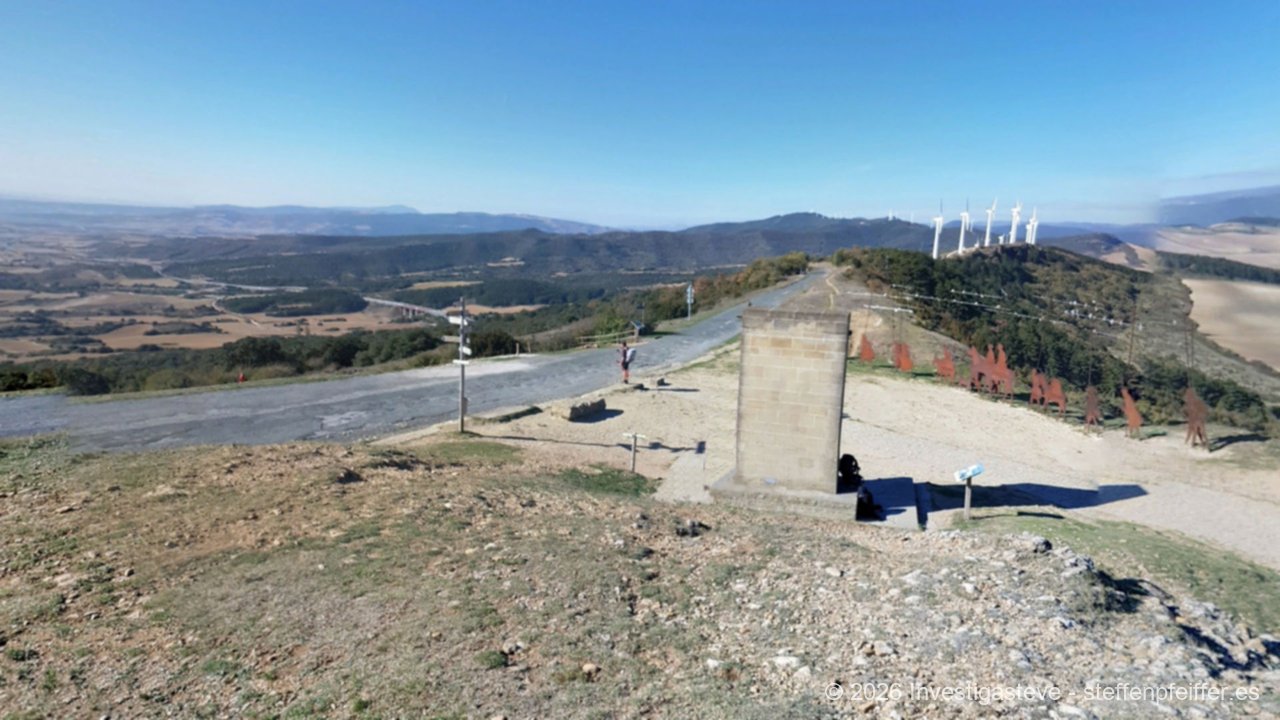
When you have mastered the arduous, stony ascent from Zariquiegui, that path where the loose earth seems to give way under your boots with every step, you reach a place that, like no other on the Camino Francés, marks the boundary between yesterday and tomorrow. The Alto del Perdón, the “Hill of Forgiveness”, greets you with an auditory force that takes your breath away. It is not only the silence of the height, but the incessant, lashing howl of the wind racing over the ridge of the Sierra. It clutches at your clothing, tugs at your backpack, and produces the metallic groaning of the gigantic wind turbines that loom like futuristic guardians over the crest. This rhythmic, low-frequency thrumming of the rotors mingles with the distant clatter of walking sticks on stone, creating an atmosphere that feels both archaic and technological.
Olfactorily, the summit offers an almost sterile purity. The air up here, at over 1030 metres altitude, is thin and carries the sharp smell of ozone and dried mountain grass. It smells of freedom, of the harsh earthiness of Navarre, and of the distant promise of the valleys to come. Tactilely, you feel the merciless force of nature: the coolness of the wind, which even in high summer freezes the beads of sweat on your forehead within seconds, and the rough, almost vibrating texture of the rusty iron of the famous pilgrim sculptures. When you place your hand on the metal, you feel the stored warmth of the sun, in stark contrast to the cutting air. It is a moment of physical boundary experience that shakes you deeply psychologically – you stand on the crest of your journey so far, look back on the wide basin of Pamplona, and recognise that you have left a part of your old self behind in the valley.
The view is a visual symphony of contrasts. Behind you lies the urban, often hazy basin of the capital of Navarre, a symbol of the beginning and of civilisation. Before you opens the Valle de Izarbe, an undulating sea of green and ochre that in the distance merges into the misty blue tones of the Pyrenean foothills. This view triggers an emotional metamorphosis; the pilgrim recognises up here their own insignificance in the face of the earth’s history, while simultaneously feeling the pride of having climbed this summit under their own power. The Alto del Perdón is not a place of lingering, but a place of decision and transition, where the soul begins to shed the burden of the first days.
What This Place Tells
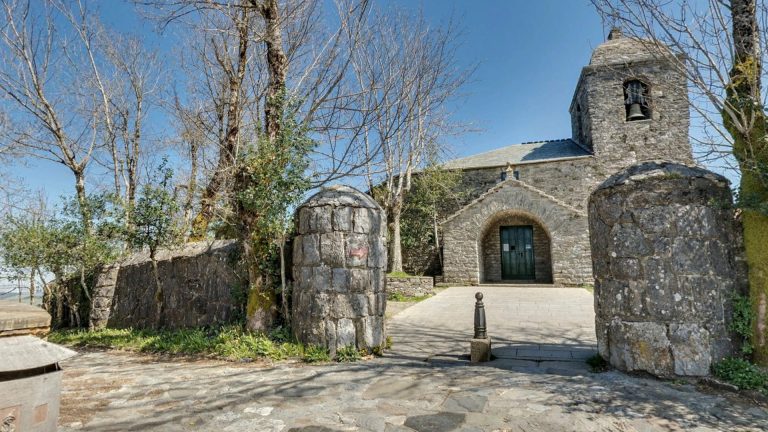
The Alto del Perdón tells a story that goes far beyond what the eye sees today. Historically, this ridge was a strategic anchor point for the Kingdom of Navarre since the 11th century. Where today the wind turbines harvest the energy of the air, there once stood the Ermita de la Virgen del Perdón, a small chapel that, together with a pilgrim Hospital, offered protection to walkers. This sacred causality is crucial: the name “Hill of Forgiveness” derives from the fact that pilgrims who would no longer make it to Santiago could receive a general absolution up here. It was a place of grace for those whose bodies failed prematurely. When you walk across the ridge today, you step into the invisible footsteps of millions who knelt here before the ruins of the chapel to exchange their sins and their exhaustion for the hope of redemption.
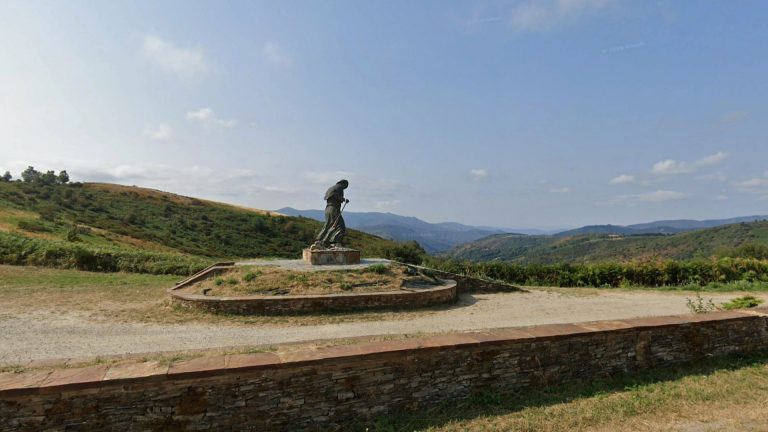
The famous sculpture group by Vicente Galbete from 1996, titled “Donde se cruza el camino del viento con el de las estrellas” (Where the Path of the Wind Crosses the Path of the Stars), is the memory of the Way made stone – or rather made iron. In the tactile weight of the life-size procession of pilgrims from different eras, historical continuity is reflected. You see the medieval pilgrim with his staff, the mounted nobleman, and the modern walker with the backpack. The psychological effect of these figures is immense: in the solitude of the ridge, they appear like frozen witnesses of time, stoically enduring the wind and the centuries. They tell of the evolution of pilgrimage, of the necessity of movement, and of the immutability of change. The iron is marked by the weather, just like the faces of those who dare the ascent.
Yet the hill also tells a story of technological progress and ecological metamorphosis. The construction of one of the first large wind farms in Spain on this historic ground in the 1990s was a radical break with visual tradition, but created a new historical causality. Today, the white giants symbolise the modern burden of responsibility towards creation, while the old legends continue to live beneath their feet. One of these legends tells of the “Fuente de la Reniega” at the foot of the mountain, where the devil offered a thirsty pilgrim water if he would deny God and the Virgin. The steadfastness of the pilgrim, who preferred to die of thirst rather than betray his faith, is the moral foundation of this place. The Alto del Perdón teaches us that forgiveness and steadfastness are two sides of the same coin, forged in the fire of exertion and cooled by the eternal wind of the Sierra.
Addresses & tips in Alto del Perdón
Camino Distances
The crossing over the Sierra del Perdón marks the physical climax of the stage between Pamplona and Puente la Reina. The distances are short, but the topographical intensity demands full commitment.
| Previous Place | Distance (km) | Next Place | Distance (km) |
|---|---|---|---|
| Zariquiegui | ca. 2.4 km | Uterga | ca. 3.8 km |
Sleeping & Arriving
Technically speaking, there is no possibility to sleep on the Alto del Perdón. There are no hostels, no monasteries, and no permanent buildings that could offer the pilgrim shelter. Yet “arriving” on this summit is one of the most intense experiences of the entire Camino Francés. It is an arrival in the here and now, a ritual shedding of physical weight. As soon as you have conquered the last slope and step onto the plateau, you feel a psychological relief that is almost physically tangible. It is the end of the vertical torment and the beginning of a horizontal expanse. The absence of beds forces the pilgrim to humility and concentration on the essentials: the moment of triumph on the ridge.
In the summer months, a small, mobile catering van (food truck) often parks at the edge of the path, which for many pilgrims becomes the “only hostel of the mountain”. Here you can sit on a dusty stone bench, hold a hot coffee or a cool drink in your hands, and enjoy the auditory spectacle of nature. Arriving here is defined by the community of other walkers, all sharing the same gasping and the same pride. You look each other in the eyes, nod to each other, and without words it is clear: we made it. The wind dries the sweat on your skin, a tactile purification that prepares you for the impending, treacherous descent.
For overnight accommodation, you must either head back to Zariquiegui or continue down into the Valle de Izarbe. The psychological feeling of security is only found again in Uterga or Muruzábal, yet the memory of “arriving on the summit of forgiveness” will accompany you through the night. It is an emotional home carried in the heart, a place where you realise that you need no fixed roof to feel safe. The vastness of the sky above the Sierra serves for this brief moment as your cathedral nave, and the soft moss between the rugged rocks as your fleeting bed. Whoever pauses up here comprehends that the Camino is a constant arriving and letting go.
Eating & Drinking
Eating on the Alto del Perdón means celebrating a picnic with a view. There are no restaurants, no tapas bars, and no Menús del Peregrino. Everything you consume up here, you have either carried up the mountain yourself or purchased at the small catering van. The tactile experience of a simple slice of bread, which you cut with your pocket knife while the wind whistles around your ears, is of an archaic intensity. It tastes of dust, of exertion, and of pure life. The taste of an apple, whose juice moistens your dry throat, becomes a culinary revelation up here. It is a lesson in gratitude and minimalism.
The olfactory appeal of the food mingles with the scent of the Sierra – a note of resin and dry rock. When the food truck is present, the smell of freshly ground coffee beans and sweet croissants fills the air, almost like a mirage in this barren environment. Psychologically, this is a reward system for the senses: the body craves sugar and fluids to replenish glycogen stores for the descent. The wine or water from your canteen feels cooler and purer up here, as if the altitude had filtered out all impurities. It is a meal of kings on the balcony of Navarre, without silver cutlery, but with the richest backdrop in the world.
Drinking is particularly important. The legend of the Fuente del Reniega reminds us that thirst can be a spiritual challenge. Those who share their water up here live the true spirit of the Camino. The coolness of the water in your mouth, the slow swallowing as your gaze sweeps over the vines in the valley, is a meditative act. It is a preparation for the delights awaiting you in the bodegas of Navarre, yet up here the water is the true wine. Every roll, every energy bar becomes a tactile anchor in a fleeting world of wind. You do not eat just to become full; you eat to connect with the power of the mountain.
Supplies & Logistics
Logistically, the Alto del Perdón is a challenge of self-sufficiency. Since it is not a settlement, there are no pharmacies, no ATMs, and no shops. Provisioning is purely temporary and weather-dependent.
Shopping: There are no shopping facilities. The pilgrim must ensure they bring sufficient provisions and above all water from Zariquiegui or Pamplona. In emergencies, the occasionally present food truck offers small snacks and drinks at slightly higher prices.
Gastronomy: No permanent gastronomy available. The small van, however, offers coffee, cold drinks, and filled rolls (Bocadillos).
Accommodation: Absolutely no sleeping facilities on site. The nearest hostels are in Zariquiegui (approx. 2.4 km back) or Uterga (approx. 3.8 km ahead).
Public Facilities: No toilets, no running water. The pilgrim is entirely on their own. However, there is often a small stamp for the pilgrim passport at the sculpture monument.
The logistical causality of the Alto del Perdón lies in its role as a pass height. It is a point of transit. Important is the psychological preparation for the descent: the path down to Uterga is extremely steep and strewn with loose scree (“Garbancillo”). This requires a tactile sensitivity to the ground; walking sticks are not a luxury here, but a necessity to protect the joints. Those who act logistically wisely plan about 30 to 45 minutes for the stay on the summit to recharge their batteries before concentration is demanded for the technical descent. There is no mobile phone reception everywhere, which intensifies the meditative isolation. The Alto del Perdón is a place that shows you whether your backpack is really well packed.
Don’t Miss
Although the summit is small, there are details you should by no means overlook. They are the visual and tactile milestones of this place:
– The Pilgrim Monument (Monumento al Peregrino): Look at each individual figure. Feel the layer of rust on the iron and pay attention to the inscription on the base. It is the most photographed motif in Navarre and symbolises the journey through time of the Camino.
– The 360-degree panoramic view: Take the time to turn around on your own axis. To the north, Pamplona and the Pyrenees; to the south, the Valdizarbe and the distant Moncayo. It is a visual orientation aid for your entire journey.
– The ruins of the old Ermita: Slightly off the path, there are still stone remnants of the former chapel of the Virgen del Perdón. A tactile contact with the medieval history of the place.
– The wind turbines up close: Stand directly under one of the towers. Hear the powerful hum of the blades and feel the vibration in the ground. It is a fascinating encounter with modernity.
– The orientation board: A metal plate on the ground informs you about the surrounding peaks and distances. It helps you complete the psychological map of your hike.
Insider Tips & Hidden Places
Most pilgrims take their photo at the monument and move on immediately, yet the Alto del Perdón conceals treasures only the patient walker finds. If you follow the mountain ridge about 100 metres westwards, away from the main path, you reach a small rocky niche where the sounds of the wind farm almost completely fall silent. Here, sheltered from the gusts, wild lavender and thyme grow. The olfactory intoxication here is captivating, far from the dusty track. It is an ideal place for a silent meditation, a psychological retreat where you can enjoy the vastness of Navarre in absolute solitude. Here you hear only the distant whistling of the wind in the crevices of the rocks, an auditory experience of pure wilderness.
Another insider tip is the search for the “fossil stones” on the edge of the path during the descent. The Sierra del Perdón was a seabed millions of years ago. If you are attentive, you can find imprints of prehistoric shells and marine life in the calcareous stones. The tactility of these millions-of-years-old structures in your palm puts the historical causality of your own journey into a completely new perspective. You are not just a walker on a path, but a brief flash in the earth’s history.
Those beginning the descent should look out about halfway down to Uterga for a small, almost overgrown path leading to a hidden spring. It is not the official Fuente de la Reniega, but a small seepage, whose water is crystal clear and ice-cold. Here it smells of damp moss and shade, a stark contrast to the exposed heat of the summit. This place is a tactile blessing for overheated wrists and necks. These small, hidden oases of coolness make the Alto del Perdón more than just a windy hill; they make it a journey of discovery for those willing to look beyond the obvious. It is these moments of discovery that most deeply shape the pilgrim’s emotional metamorphosis.
Moment of Reflection
When you stand at the Monumento al Peregrino and your gaze sweeps over the wide land, it is time for a moment of inner contemplation. The name of this place is programmatic: Forgiveness. Psychologically, this is the most important threshold of the first week. In the violence of the wind, ask yourself: What do I want to leave behind up here? What guilt, what resentment, or what old patterns do I want to surrender to the wind so that it scatters them over the plains of Navarre? The Alto del Perdón is the symbolic place of relief. The exertion of the ascent has softened your mind, your defence mechanisms have melted in the heat of the morning. Now you are ready for forgiveness – of yourself and of others.
The historical causality that pilgrims could receive their absolution up here if they could not continue reminds us of our own fallibility. It is no shame to be weak, but it is a grace to acknowledge it. The permanence of the iron pilgrim figures, who continue their path despite rust and storm, gives you the emotional strength for the onward journey. You recognise that the Camino consists not only of kilometres, but of the shedding of burdens. When you cross the summit and begin the descent, you should feel lighter – not only because it is downhill, but because you have created inner space for new things. The Alto del Perdón teaches you that every new beginning presupposes a forgiveness of the past. Take this lightness with you into the Valle de Izarbe, for it is your true provisions.
Camino of the Stars
This place lies on the Camino Francés, on the stage from Pamplona to Puente la Reina. The sequence of places is:
Pamplona → Cizur Menor → Zariquiegui → Alto del Perdón → Uterga → Muruzábal → Obanos → Puente la Reina
Did you feel the wind on the Alto del Perdón, as it tried to blow your thoughts away, or did you place your hand on the rusty iron of the pilgrim sculptures and feel the power of the centuries? Which part of your burden did you surrender to the wind up there? Share your experiences on this magical ridge of Navarre, your photos of the iron walkers, or your thoughts on the theme of forgiveness with us. Every story enriches the path for those still on the ascent!
About the Author