A First Glance – Introduction & Atmosphere
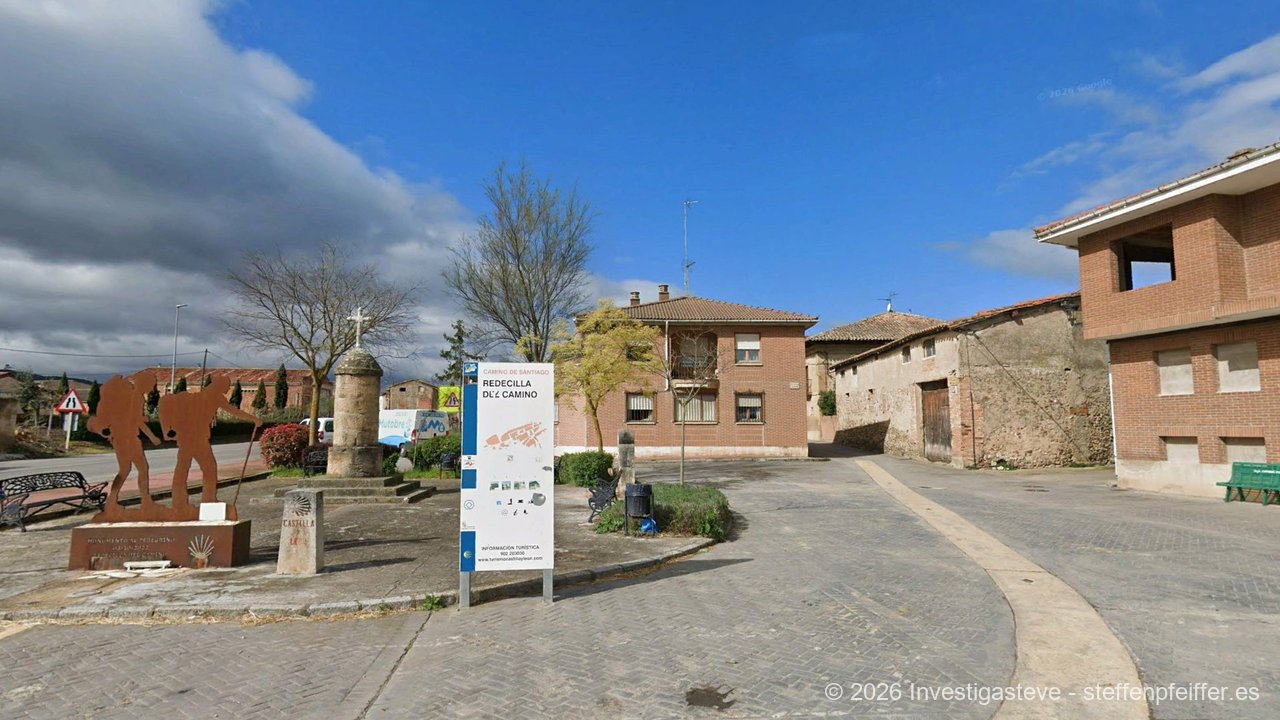
When the pilgrim leaves the gentle, often mist-shrouded hills of the Rioja behind and the path inexorably steers him toward the invisible border with the province of Burgos, something happens to perception. It is not just a change of administrative unit, it is an atmospheric rupture. Here, at the eastern tip of the so-called Riojilla Burgalesa, Redecilla del Camino welcomes you as a proud border guardian. Even from a distance, the striking silhouette of the church of Nuestra Señora de la Calle is recognizable, resting like a massive anchor in the undulating landscape of grain fields and rows of poplars. The ground beneath the feet, often a mixture of bright limestone dust and fine gravel, crunches softly with every step and sends a tactile confirmation upward: you have left the soft soil of the vineyards, you are now entering the tart, honest world of the Meseta.
The air in Redecilla carries a special signature. It is an olfactory mosaic of the freshness of the nearby Río Reláchigo, the scent of dry straw, and a subtle note of incense that seems to waft from the open doors of the old houses. Acoustically, the steady, rhythmic clattering of the storks, which have built their huge nests on the bell towers and chimneys, dominates – a sound that acts like a wooden echo of your own hiking poles. Psychologically, Redecilla marks the moment of “threshold anxiety” and at the same time of deep anticipation. You feel the historical causality of this place as a gateway to Castile. Here, at just under 630 meters elevation, the view becomes wider, the horizon expands, and the soul begins to adjust to the infinite slowness of the coming weeks. Those who enter the main street, Calle Mayor, feel the cool pavement beneath their soles and the protective closeness of the thick stone walls that store the heat of the day and gently release it again in the evening.
It is a five-dimensional immersion into the medieval heritage of Spain. The rough surfaces of the limestone walls, which you almost unconsciously brush with your fingers as you pass, tell of centuries of resistance against wind and weather. You hear the distant roar of the national highway, which, however, is quickly replaced in the narrow alleys of Redecilla by the murmuring of flowing water at the fountains. The pilgrim’s psychological metamorphosis reaches a new level here: away from the charming accompaniment of the vines, towards the existential vastness of the Castilian plateau. Redecilla is not a place you simply pass through; it is a psychological caesura, a deep inhalation before the path loses itself in the infinity of the Meseta.
What This Place Tells
The history of Redecilla del Camino is inseparably interwoven with the rise of the Way of St. James in the 10th and 11th centuries. Originally founded as a strategic outpost on the border between the kingdoms of Navarre and Castile, the village quickly developed into an indispensable stop for the growing number of pilgrims. The name “Redecilla” is probably derived from “Radicella,” which suggests a small root or a clearing – a sign that humans laboriously wrested this place from nature. Historically, the place was the scene of constant territorial shifts. Those who stroll through the alleys today encounter the architectural causality of these turbulent times: defensive church walls and massively built houses that offered not only living space but also protection.
The absolute centerpiece of the narrated history, however, lies inside the church of Nuestra Señora de la Calle. It is the legendary Romanesque baptismal font from the 12th century, a work of art of world significance. This baptismal font is far more than a sacred object; it is a stone vision of the Heavenly Jerusalem. When you stand before this massive limestone block, history becomes tactilely tangible. The intricately detailed carvings show towers, walls, windows, and battlements of an idealized city resting on the shoulders of apostles and saints. The tactile quality of the roughly hewn stone in contrast to the fine details of the architectural representation is overwhelming. It is as if the stonemasons of the Middle Ages had tried to physically burn the hope of redemption into the stone. The smell of old rock and the cool, almost monastic acoustics of the church interior intensify the feeling of witnessing a timeless truth.
Historically, Redecilla is also the place where Aymeric Picaud warned the pilgrims in the 12th century in his Codex Calixtinus. He described the region as a zone of transition where one must be vigilant. Yet for the modern pilgrim, Redecilla is a place of deep hospitality. The historical role as the “gateway to Castile” is continued today through the warm welcome in the hostels. The emotional metamorphosis takes place here in dialogue with the past. You feel that every step on the pavement of the Calle Mayor carries the echo of millions of feet that sought shelter here before us. Castildelgado, the next place, is already in sight, but Redecilla forces you to pause. The psychological weight of the journey is tempered here by the beauty of the stone and the depth of tradition. It is a story of constancy and unshakeable faith in the path.
Addresses & tips in Redecilla del Camino
| Accommodation | 4 |
| Bars & Cafés | 1 |
| Sights | 4 |
| Services | 2 |
Show all 11
Camino Distances
The stage leads the pilgrim from the gentler regions of the Rioja into the wide plains of Castile. The paths here are often straight as an arrow and, through their monotony, demand mental strength, but are lightened by the short distances between the villages.
| Previous Place | Distance (km) | Next Place | Distance (km) |
|---|---|---|---|
| Grañón | ca. 3.9 km | Castildelgado | ca. 1.8 km |
Sleeping & Arriving
Arriving in Redecilla del Camino has a very own, almost solemn quality. After crossing the border to the province of Burgos, often marked only by a simple stone or a sign, the village opens up like a protective arm. The first psychological impulse upon entering the Calle Mayor is relief. You feel the tension of the open fields subsiding and the body looking forward to the cool shadows of the rows of houses. The tactile experience of arrival begins with putting down the backpack on the cool tiled floors of the hostels. The sudden loss of weight on the shoulders leads to an almost dizzying lightness, while the feet gratefully accept the firm, smooth ground after the dusty tracks of the day.
The Albergue de Peregrinos San Lázaro, often the first port of call, breathes the spirit of tradition. When you step through the heavy wooden gate, you are greeted by a smell of freshly washed laundry, mixed with the tart aroma of disinfectants and the scent of cool stone – an olfactory signature that is inseparable for every pilgrim from the feeling of security. In the dormitories, an acoustic backdrop of muted whispers, the rustling of sleeping bags, and the distant clatter of dishes from the kitchen prevails. These sounds form the soundtrack of regeneration. You become more aware of your own breathing again and feel the psychological metamorphosis from wanderer to resting guest taking place.
In the evening hours, arriving transforms into a social ritual. The pilgrims gather on the benches in front of the hostels or on the Plaza Mayor. You feel the rough texture of the stone walls at your back, while the setting sun bathes the facades in a warm gold. The conversations revolve around blisters, the beauty of the baptismal font, and the expectations of Castile. It is a moment of collective reflection. The tactile quality of the surroundings – the cold water from the fountain with which you wash your face, the firm surface of the dining table at which you break your bread – grounds the mind. In Redecilla, you do not just arrive at a place; you arrive in a community of seekers who all have the same goal in mind.
The night’s rest in Redecilla is marked by a deep, almost physical silence, interrupted only occasionally by the call of an owl or the distant rustling of the wind in the grain fields. Those who fall asleep here do so with the awareness of having overcome the first major hurdle after the Rioja. The thick walls of the buildings act like a protective wall against the infinity of the world outside. This feeling of security is essential for psychological recovery. You smell the freshness of the night air streaming in through the small windows and feel the smooth coolness of the sheets. Arriving in Redecilla is thus far more than just the end of a stage; it is the preparation of the soul for the spiritual vastness that now lies ahead.
Eating & Drinking
The culinary world of Redecilla del Camino is an honest homage to rustic Castilian cuisine. When you sit down at the table of a local bar or the hostel after a long day, you are often greeted by an olfactory bouquet that immediately makes your mouth water. The dominant scent is that of “Sopa de Ajo,” the traditional garlic soup, prepared with particular devotion in this region. The combination of toasted bread, local olive oil, plenty of garlic, and the smoky aroma of Pimentón de la Vera creates an olfactory experience that leads deep into the peasant tradition of Castile. When the first spoonful of hot soup touches the palate, you feel the warmth spreading haptically to your fingertips – a blessing for the body that has fought against the wind all day.
Another heart of the local diet is the “Pan de Redecilla.” The bakeries in the village maintain a tradition that is equally impressive haptically and in taste. The bread has a crust so thick and crackling that you feel you can sense the power of the Castilian sun in it, while the inside is as soft and fragrant as a freshly mown field. Breaking the bread with your hands is a ritual act that underscores the simplicity of pilgrim life. It is often served with “Queso de Burgos,” a fresh sheep’s cheese whose cool, creamy texture forms a perfect contrast to the hearty soup. Acoustically, the meal is often accompanied by the clinking of heavy wine glasses and the hearty laughter of the hospitaleros, who proudly present the products of their region.
For dinner, when the pilgrim community gathers at the long wooden tables, the “Lechazo,” the suckling lamb that is a delicacy in the Riojilla Burgalesa, often dominates. The aroma of meat roasted in a wood-fired oven mingles with the scent of rosemary and thyme growing wild in the vicinity. Haptically, the enjoyment of the tender meat, which almost falls off the bone, is a reward for every physical exertion. It is accompanied by a robust red wine from the immediate vicinity, glowing deep red in the glass and tasting of dark berries and the tart earth of the Meseta. This wine carries the strength of the region and promotes psychological relaxation. Eating in Redecilla is not merely an act of satiety, but a five-dimensional celebration of constancy. You taste the history, smell the landscape, and feel the warmth of the community before retreating, satiated and content, into the coolness of the night.
Supplies & Logistics
Logistically speaking, Redecilla del Camino is a small but highly efficient hub on the way to Burgos. Supplies here are concentrated on the essentials, which helps the pilgrim maintain focus on what is important. You will not find glittering supermarkets, but small, owner-run shops where the smell of fresh pastries and dried ham fills the air. Here, shopping becomes a social interaction. The tactile contact with the local products – weighing a ripe tomato in your hand or feeling the firmness of a local cheese – connects the wanderer with the fertile earth of the Riojilla Burgalesa.
Shopping: In the small “Tiendas de Ultramarinos,” you find everything for daily needs: from hiking provisions to blister plasters. Particularly noteworthy is the bakery, whose bread is famous far beyond the village boundaries and is considered an ideal companion for the coming kilometers.
Gastronomy: The bars on the main street offer, in addition to the classic pilgrim menu, also tapas and raciones. Here you can enjoy the first “Café con Leche” in the morning, whose aroma awakens the spirits while you watch the first rays of sunlight bathe the Calle Mayor in light.
Accommodation: Redecilla offers both a public and private hostels. Capacities are sufficient, but in the high season, an early arrival is recommended to experience the special atmosphere of the Albergue San Lázaro.
Public Facilities: There are several drinking water fountains in the village where you can replenish your supplies for the path to Castildelgado. A pharmacy and a small medical post provide basic medical care, while ATMs and larger facilities are only found again in Belorado, about 5 km away.
The logistical significance of Redecilla lies primarily in its function as the first resting station in the province of Burgos. You check your equipment here, care for your feet, and mentally prepare for the longer, lonelier sections that now follow. The paths within the village are short, sparing tired joints. Tactilely, logistics are supported by the well-marked yellow arrows that safely guide you through the labyrinth of narrow alleys. Psychologically, Redecilla conveys the feeling that everything is taken care of. It is an island of stability in the constant movement of the pilgrim journey. You leave the place not with a feeling of lack, but with the certainty of being excellently equipped for the heart of Castile.
Don’t Miss
– Baptismal Font in the Church of Nuestra Señora de la Calle: Admire the “City of God” in limestone – a masterpiece of Romanesque art that will touch you haptically and spiritually.
– The Calle Mayor: Stroll along the main street with its historic houses and feel the heritage of the medieval pilgrim stream.
– The Stork Clattering: Pause and listen to the characteristic sound of Redecilla echoing down from the rooftops.
– The Sunrise at the Río Reláchigo: Experience the five-dimensional renewal when the light bathes the rows of poplars on the riverbank in a magical green.
– The Border Marker: Make a brief stop at the border between Rioja and Castile – a psychologically important moment of the journey.
Insider Tips & Hidden Places
Away from the magnificent baptismal font and the busy Calle Mayor, Redecilla del Camino hides quiet corners that only those willing to slow their pace even further will discover. One of these places is the old washhouse (Lavadero), somewhat hidden near the river. Formerly, this was the acoustic center of the village, where the women exchanged news under the rhythm of beating laundry on the stone. Today, an almost eerie silence reigns there. When you sit on the rough stone edge and dip your hands into the ice-cold, clear water, you feel a tingling that immediately enlivens the senses. The sound of the steadily flowing water has a meditative quality that calms the mind. The smell of damp moss and old stone offers a welcome contrast to the dry heat of the surrounding grain fields.
Another insider tip is the narrow path leading behind the church to a small viewpoint from which you have an unobstructed view of the mountains of the Sierra de la Demanda on the horizon. Especially at dusk, when the light bathes the landscape in a deep violet, this place unfolds a psychological magic. You hear only the soft rustling of the wind in the ash trees and your own heartbeat. It is a place of absolute immersion in nature, far from the clatter of hiking poles on asphalt. Up here, you can grasp the historical causality of the landscape – how the mountains have guided and protected the stream of pilgrims for millennia. The scent of wild lavender and rosemary is particularly intense here, as the essential oils rise in the cooling air and intoxicate the senses.
Those who take the time should also look for the small, carved signs on the doorsteps of some of the oldest houses. They are often protective symbols or markings of former inhabitants, barely perceptible haptically, but establishing a deep connection to the popular piety of the region. When you run your fingertips over these grooves in the stone, you directly touch the fears and hopes of generations. These hidden details make Redecilla a living history book. In a small alley north of the plaza, you can also often find an old blacksmith whose workshop smells of iron and coal. The rhythmic striking of the hammer on the anvil is an acoustic relic from a time when craftsmanship was the backbone of village life. Such encounters are what complete the pilgrim’s emotional metamorphosis.
To conclude a day in Redecilla, a visit to the small chapel of San Roque on the edge of the village is recommended. It is often locked, but the space in front of it offers a tactile grounding par excellence. The turf here is soft, the air pure, and you look directly at the further course of the Camino, stretching like a thin ribbon into the distance. Here you can transform the “threshold anxiety” before Castile into quiet determination. Redecilla does not reveal its secrets to the hasty wanderer; you must approach it with humility and curiosity to grasp the true depth of the hidden places. It is the quiet tones, the cool shadows, and the rough surfaces that make this place an incomparable experience.
Moment of Reflection
In Redecilla del Camino, the pilgrim often reaches a point of inner consolidation. The physical exertion of the first days has shaped the body, and now the mind begins to sort the impressions. The baptismal font in the church serves as a powerful psychological symbol here: it represents the “City of God,” a goal firmly anchored in stone. For the wanderer, this reflects the search for one’s own goal – whether Santiago or an inner insight. When you stand before this font, you recognize the historical causality of your own path. Millions of people have paused here, had their children baptized, or prayed for protection. This collective energy is haptically tangible in Redecilla. It gives the pilgrim the feeling of not being alone, but part of an infinite chain.
Perhaps you sit on the Plaza Mayor in the evening and watch the interplay of light on the facades. The emotional metamorphosis from the hurried everyday person to the calm pilgrim becomes particularly clear here. The silence of the village acts like a filter that keeps the noise of the world outside. You begin to think about the meaning of boundaries – not only those between Rioja and Castile, but your own, inner boundaries. Redecilla teaches us that every transition requires courage, but also offers the chance for rebirth. The cool water of the fountains and the scent of fresh bread are tactile anchors that hold us in the here and now. In Redecilla, you learn that the path consists not only of kilometers, but of moments of deep presence. It is the preparation for the solitude of the Meseta, a psychological armor of stone and faith that you put on here before finally passing through the “gate” the next morning.
Camino of the Stars
This place lies on the Camino Francés, on the stage from Santo Domingo de la Calzada to Belorado. The sequence of places is:
Santo Domingo de la Calzada → Grañón → Redecilla del Camino → Castildelgado → Viloria de Rioja → Villamayor del Río → Belorado
Did you also admire the “City of God” in the baptismal font in Redecilla del Camino and feel the tactile power of the millennia-old stone? Perhaps the clattering of the storks on the church tower woke you in the morning, or you found a moment of absolute peace at the hidden washhouse? Share your personal impressions, your photos of the fascinating Romanesque art, or your thoughts on the transition to Castile with us. Your story is a valuable part of the infinite Camino mosaic!
About the Author