A First Glance – Introduction & Atmosphere
When the pilgrim finally leaves the gentle vineyards of the Rioja behind and the path leads him inexorably deeper into the province of Burgos, a place announces itself whose very name carries a paradox. Viloria de Rioja – a village that bears the Rioja in its name, but already belongs with every fiber of its stone being to the infinite vastness of Castile. It is a moment of atmospheric border crossing. The air here becomes drier, sharper, and carries the aroma of sun-scorched earth and withered grain. Those who approach Viloria feel a peculiar simplicity that is almost a provocation to the senses. It is as if the landscape had decided to strip away everything superfluous to make room for the pure essence of walking. The wide plains stretch to the horizon, only occasionally interrupted by the gentle waves of the hills, which appear like frozen swells of an earthly ocean.
The psychological effect of this arrival is remarkable. You feel small, almost insignificant under the mighty azure canopy of the Castilian sky, yet at the same time a deep, archaic sense of security resonates. Acoustically, the steady whistling of the wind dominates, sweeping through the sparse poplars along the wayside, and the rhythmic crunch of the bright gravel beneath the hiking boots. It is a tactile experience of great intensity: the resistance of the ground, the dry heat that weighs like an invisible cloak on the shoulders, and the fine dust that settles into every fold of clothing. Viloria de Rioja is not a place of spectacle; it is a place of pausing. You smell the distant rain hanging over the mountains of Oca and taste the tart note of wild thyme on the tongue. Here, in this small hamlet that nestles so modestly against the slope, the pilgrim is thrown back upon themselves before facing the great stage destinations of the coming days.
What This Place Tells
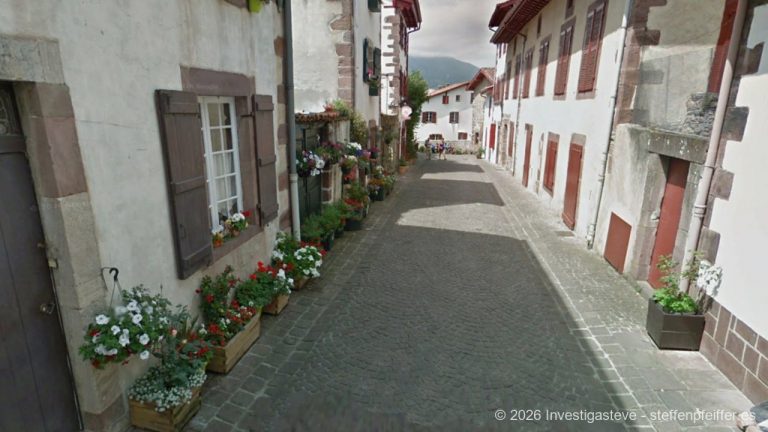
Viloria de Rioja is far more than just a point on a map; it is the spiritual germ cell of one of the most significant legends of the Way of St. James. In this inconspicuous village, Domingo García was born in the year 1019, the man whom the world today venerates as Santo Domingo de la Calzada. Historical causality is palpable here. Imagine life in the 11th century: this region was fiercely contested borderland of the Reconquista, a rough, dangerous wilderness where survival meant daily toil. From this barren earth grew the spirit of a man who made world history not with the sword, but by building bridges, roads, and hospitals. Those who walk through the village’s single main street literally walk in the footsteps of a visionary who made the Camino Francés possible in its current form.
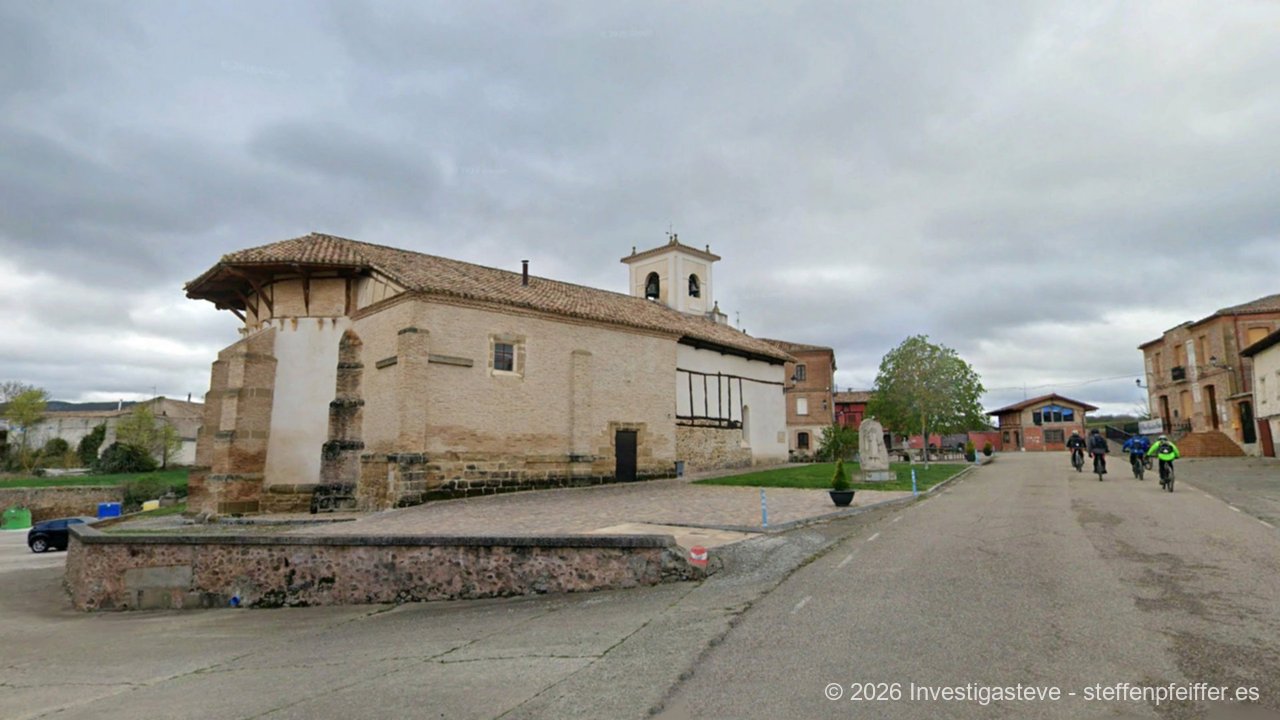
The architectural heart of the place is the Iglesia de San Saturnino. Although the current building dates from later periods, it rests on foundations that already witnessed the birth of the saint. Inside lies what is probably the most valuable tactile relic for every pilgrim: the Romanesque baptismal font in which Santo Domingo was baptized. When you run your fingertips over the cold, roughly hewn stone, you feel a direct connection across a millennium. The coolness of the church, the smell of old incense, and the absolute silence inside form an acoustic contrast to the shimmering heat outside. It is a place of metamorphosis; here began the journey of a man who revolutionized pilgrimage. The ruins of his presumed birthplace, now integrated into modern walls, tell of the transience of the worldly and the constancy of deeds.
Historically, Viloria was also an important strategic point on the Via Italia, the old Roman road that connected the empire. This layering of time is readable in the walls of the village. You see stones that perhaps already saw Roman legionaries, built into farmhouses that now serve as hostels. The emotional weight of history is tempered here by the simplicity of village life. The inhabitants, whose numbers are steadily declining, preserve a heritage that radiates far beyond their small community. Viloria tells us that greatness does not arise from magnificent palaces, but from the power of an idea and the perseverance of the spirit. It is the story of a bridge builder who teaches us that every path needs a foundation – and that this foundation is often laid in the most unassuming places.
Addresses & tips in Viloria de Rioja
| Accommodation | 4 |
| Sights | 4 |
| Services | 1 |
Camino Distances
The stage through Viloria de Rioja is characterized by wide, open paths and a moderate topography, which, however, due to the exposed location, can be very windy and sunny.
| Previous Place | Distance (km) | Next Place | Distance (km) |
|---|---|---|---|
| Castildelgado | ca. 1.9 km | Villamayor del Río | ca. 3.5 km |
Sleeping & Arriving
Arriving in Viloria de Rioja has an almost monastic quality. You turn off the wide country road and find yourself in a world determined by the rhythm of agriculture and the silence of the Meseta. There is no mass tourism here; those who stay in Viloria seek intimacy. One of the best-known addresses is the hostel of Acacio and Orietta. Those who cross the threshold here leave the anonymous pilgrim routine behind. The welcome is both tactile and emotional: often you are greeted with a hug or a cool glass of water. The smell in the hostel is a beguiling mix of Italian cuisine – a greeting from the owners’ homeland – and the scent of dried herbs from the garden.
In the sleeping quarters, you feel the history of the old walls. The thick stone walls keep the heat of the day out, and the acoustics are characterized by muffled conversations and the distant bleating of sheep. Psychologically, Viloria offers the possibility of deep regeneration. You are away from the hustle of the larger stage towns like Belorado or Santo Domingo de la Calzada. Arrival becomes a ritual act: taking off shoes, washing off the dust of the day, and reflecting on the essentials. The simplicity of the beds, the roughness of the sheets, and the warm light falling through the small windows create an atmosphere of security often lacking in modern hotels.
A special moment of arrival is the communal dinner, often celebrated in Viloria. When pilgrims from all over the world gather at a long wooden table, a community emerges that transcends national borders. The clatter of cutlery on the ceramic plates, the laughter, and the sharing of stories form the soundtrack of an evening that heals the soul. You feel the physical relaxation in your limbs and the mental spaciousness that this place bestows. Those who spend the night in Viloria consciously decide against haste. It is a place of silence, where you hear your own heart beating and see the stars over Castile shine as brightly as in hardly any other place on the path.
Eating & Drinking
The culinary experience in Viloria de Rioja is shaped by the encounter of two worlds: the rustic Castilian tradition and the culinary heritage of the international hospitaleros. When you sit down at the table in the evening, you should not expect gourmet cuisine, but honest, nourishing food prepared with love. The scent of freshly baked bread, whose crust cracks so wonderfully when broken, is the first greeting from the kitchen. It is often accompanied by a hearty soup that smells of garlic, olive oil, and seasonal vegetables. Tactilely, it is a pleasure to hold the warm bowl in your hands while the evening wind sweeps over the fields outside.
A highlight is the combination of regional Rioja wine and local specialties. The wine, deep red and full-bodied, tastes of dark berries and the sun of the region. It warms from within and loosens the tongue for the evening’s conversations. It is often served with “Chorizo” or local cheese, whose spicy aroma harmonizes perfectly with the wine. The texture of the cheese, sometimes creamy-soft, sometimes hard and crumbly, is a tactile feast for the palate. You hear the rich sound of wine being poured and the satisfied sighs of fellow pilgrims. It is a meal that not only satisfies the body but also strengthens the social community.
In Viloria, you learn to appreciate the simple things. An apple straight from the tree, a piece of dark chocolate for dessert, or a strong “Café Solo” in the morning – all of this gains a new intensity here. The smell of coffee wafting through the cool corridors of the hostel in the morning is for many the signal to set off. It is an olfactory anchor that fuels anticipation for the next kilometers. Eating in Viloria means absorbing the strength of the earth and fortifying yourself for the challenges of the Castilian plateau. It is an honest, unadulterated cuisine that offers exactly what a pilgrim needs: energy, warmth, and a piece of home for a while.
Supplies & Logistics
Logistically speaking, Viloria de Rioja is a challenge that is, however, compensated for by charm. There are no large supermarkets or shopping centers here. Supplies are reduced to the absolute minimum, forcing the pilgrim to plan ahead. The village lives on self-sufficiency and the small offerings of the hostels. Psychologically, this is an important experience: you realize how little you actually need when your basic needs for sleep, water, and food are met.
Shopping: There is no conventional shop in the village. Pilgrims should stock up on the essentials in Belorado or Santo Domingo de la Calzada. Small items like blister plasters or snacks can sometimes be purchased in the hostels.
Gastronomy: Meals are primarily provided in the accommodations. There are no standalone restaurants, but the communal pilgrim menus in the hostels are of high quality and marked by warmth.
Accommodation: Capacities are limited to two or three hostels and private accommodations. In the high season, an early arrival or reservation is advisable to enjoy the special atmosphere.
Public Facilities: A small village square with benches and the church are the central points. Medical care or ATMs are only found in Belorado, about 10 km away.
The logistical significance of Viloria lies in its function as a tranquil haven. It is not a place for quick errands, but a place for the essentials. The paths in the village are short, everything is reachable within a few minutes on foot. You hear the clattering of storks on the roofs and see the farmers’ tractors setting the rhythm of the day. Tactilely, logistics are supported by the well-marked paths within the village; you do not get lost, the yellow arrows are safe and present. Viloria teaches the pilgrim patience and the art of making do with what is there – a lesson invaluable for the onward path through the Meseta.
Don’t Miss
– The Romanesque Baptismal Font in the Iglesia de San Saturnino: Touch the stone that already witnessed the birth of a saint a thousand years ago – a tactile moment of deep connection.
– The Ruins of Santo Domingo’s Birthplace: Observe the archaeological remains, now integrated into modern residential architecture, telling of the continuity of life.
– The Sunset over the Meseta: Find a spot at the western edge of the village and watch the sky turn into liquid gold – a visual spectacle of rare beauty.
– The Stork Clattering on the Church: Pay attention to the acoustic backdrop of the nesting storks, which have been an integral part of village life for centuries.
– The Commemorative Plaque for Santo Domingo: A small but significant point for a souvenir photo at the birthplace of perhaps the most important bridge builder of the Middle Ages.
Insider Tips & Hidden Places
Off the main street, Viloria de Rioja hides small treasures that only the attentive hiker discovers. One of these places is the old washhouse at the edge of the village. Formerly, this was the social center of the women, today it is a place of absolute silence. The water is ice-cold and clear; when you dip your hands in, you feel a tingling that immediately revitalizes the senses. The sound of the steady dripping into the stone basin has an almost hypnotic quality. It is a place of ritual cleansing, where you can symbolically wash off the dust of the journey, not only physically but also symbolically. The smell of damp moss and old stone offers a soothing contrast to the dry heat of the fields.
Another insider tip is a narrow path leading behind the church to a small viewpoint. From there, you have an unobstructed view of the mountains of Oca on the horizon. Especially early in the morning, when the mist still hangs in the valleys, this place unfolds a psychological magic. You see the Camino as a thin ribbon stretching through infinity and recognize your own smallness in the fabric of time. The scent of wild rosemary and lavender is particularly intense here, as the essential oils rise in the cool morning air. It is a place of absolute immersion in nature, where you hear only your own breath and the distant ringing of the church bell.
For history enthusiasts, it is worth searching for the small boundary stones marking the provincial border. They are often covered with lichens and half-sunken in the ground, yet they tell of the centuries-old rivalry and exchange between the Rioja and Castile. When you run your fingers over the carved coats of arms, you directly touch the history of the Reconquista. It is a tactile experience that makes the historical causality of the region tangible. These hidden markers are the silent witnesses of a tumultuous past that made Viloria what it is today: a place on the border of worlds.
To conclude a day in Viloria, a visit to the tiny community garden on the edge of the village is recommended. Here grow old fruit varieties and herbs, lovingly tended by the residents. The smell of ripe tomatoes, basil, and damp earth is a balm for the nose. Sometimes you are allowed to taste – the flavor of a sun-warmed tomato is an experience that makes all artificial flavors of civilization forgettable. This garden is a symbol of the fertility that can be wrested even from this barren soil when met with love. It is a place of hope and joy that strengthens the spirit for the onward path.
Moment of Reflection
In Viloria de Rioja, the pilgrim often reaches a point of inner clarity. The simplicity of the place and the connection to the legend of Santo Domingo force reflection on one’s own calling. Why am I walking this path? Am I a bridge builder in my own life? Psychologically, this is the phase of acceptance: you accept the exertion, the blisters, and the solitude. The historical causality – millions of people before me had the same thoughts – gives a feeling of security and connection. In the silence of Viloria, you recognize that growth often occurs in reduction. The place gives us the space of emptiness to fill it with new insights.
Perhaps you sit on a stone wall in the evening and watch the shadows grow longer. The emotional metamorphosis from the hurried everyday person to the calm wanderer happens here almost unnoticed. It is the realization that every place on the Camino, no matter how small or inconspicuous, is an important mosaic piece on the path to the goal. Viloria de Rioja teaches us patience and the beauty of the simple. It prepares us mentally for the challenges that wait beyond the horizon and at the same time gives us the certainty that we already carry everything we need within ourselves. The cradle of the saint is also a place of rebirth for the pilgrim – a moment of pausing before the path leads us further into the heart of Spain.
Camino of the Stars
This place lies on the Camino Francés, on the stage from Santo Domingo de la Calzada to Belorado. The sequence of places is:
Santo Domingo de la Calzada → Grañón → Redecilla del Camino → Castildelgado → Viloria de Rioja → Villamayor del Río → Belorado
Did you also feel the connection to the holy bridge builder in the silence of Viloria de Rioja when you touched the ancient baptismal font? Perhaps you had an encounter in one of the cozy hostels that changed your view of the path, or you discovered one of the hidden corners of the village? Share your personal impressions, your photos of the baptismal font, or your thoughts on the infinite vastness of Castile with us. Your story is a valuable part of the great Camino mosaic that makes this small place so alive!
About the Author