First Glance – Introduction & Atmosphere
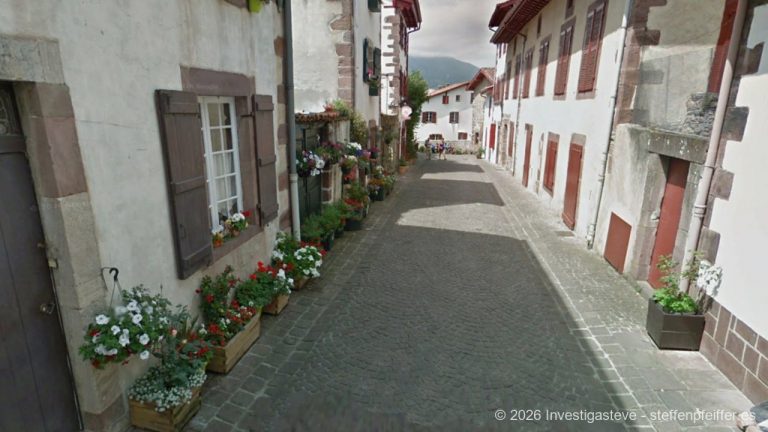
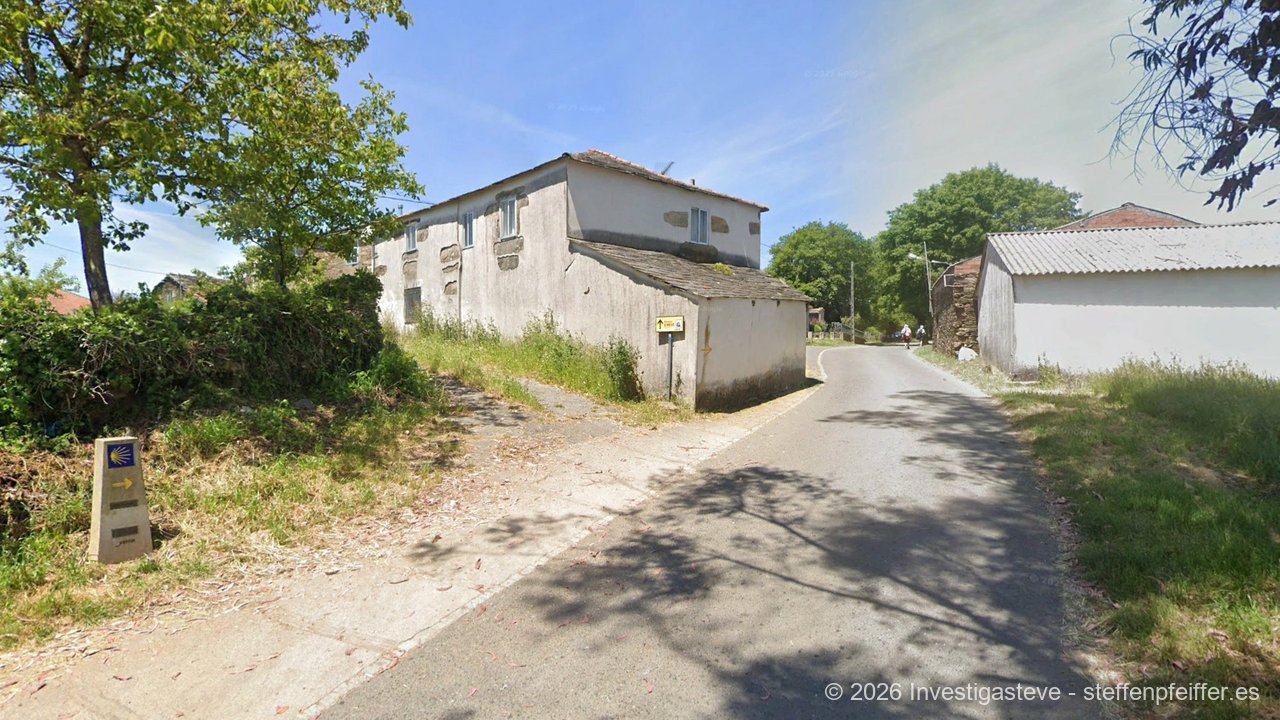
When you have left the dusty paths behind Portomarín and the gentle slopes near Ligonde behind you, the path opens into a landscape that captures the essence of Galicia in its purest, almost sacred form. Airexe, often affectionately called Eirexe by the locals, is not a place that welcomes you with triumphal gates or the noise of a busy town. It is, rather, a quiet, almost reverent pause in the midst of the green infinity of the Comarca Ulloa. From afar, the hamlet announces itself through the grey silhouette of its Romanesque church tower, which rises like a stone finger from the dense sea of pine and mixed forests. The air here has a completely unique consistency; it is cool, almost crystalline, and carries the heavy, resinous scent of fresh conifers and the earthy note of damp fern and moss, which saturate the air in Galicia almost all year round.
When you set foot on the soil of Airexe, the acoustic backdrop of your journey changes. The rhythmic, constant click of your pilgrim staff on the uneven cobblestones is swallowed here by a silence so deep that you think you can hear the whisper of history in the cracks of the ancient granite walls. It is an auditory immersion only occasionally interrupted by the distant, melancholic rustle of the Rio Airexe below the village or the orchestral chirping of forest birds. The tactile reality of the place is characterised by the cool, rough texture of Galician granite, which shapes every house, every wall, and every cross here. You feel the humidity of the region, the fine Galician drizzle – the orballo – which settles on your skin like an invisible, gentle veil and softens the world around you. Psychologically, Airexe marks the moment when the physical exertion of the preceding 17 kilometres gives way to a deep, contemplative peace. Here, you are no longer just a walker on a stage; you become part of a timeless ensemble that has welcomed pilgrims on their way to the tomb of the Apostle for over eight hundred years.
What This Place Tells
Airexe is a stone chronicler whose narratives reach back to the time of the Romans. The name itself is an etymological riddle that only reveals its gleaming core upon closer inspection: it is probably derived from the Latin “Aeregium”, which means something like “gold mine”. This historical causality leads us back to antiquity, when Roman engineers prospected for the precious metal in the deep veins of the Ulloa landscape. Even though the gold has long since disappeared from the mines, the spiritual yield of this place for the modern pilgrim is all the richer. Airexe tells of a time when faith and survival were inextricably intertwined. In the 12th century, during the heyday of the Camino de Santiago, the Iglesia de Santiago was built here – not only as a house of God, but as a defensible refuge and Hospital.
The heart of the narrative is undoubtedly the Romanesque portal of the church. When you stand before this portal, you feel historical immersion in its purest form. The stonemasons of the Middle Ages, possibly Benedictine monks, created iconographies here that offered protection and orientation to the weary traveller. You see Saint James depicted as a pilgrim, flanked by lions and eagles – symbols of divine protection and the sublimity of the spirit over the material world. It is a theological pictorial language that speaks directly to the pilgrim’s heart. Opposite the church, the former pilgrim Hospital recalls the tradition of caritas, Christian charity. It is an architectural testimony to those wealthy local families who made it their mission to provide shelter and food to those who were seeking – a practice that continues today in modern hostels.
Particularly fascinating is the connection to the Suebian king Rechila from the 5th century. Local legend says that the historic baptismal font inside the church was already used for the baptism of this powerful warrior king. This link spans a bridge over one and a half millennia and makes Airexe one of the oldest Christianisation sites in the region. The Sarcófago semiantropoide, a human-shaped funerary stela inside, reinforces this feeling of timeless presence. It is the story of knights and high-ranking pilgrims who found their final rest here. In Airexe, history is not consumed as a dry date, but experienced as a tactile and visual reality. Those who walk through this hamlet hear the echo of the legionaries, the knights, and the millions of pilgrims who stood here before them. It is a place that whispers to you that, although you are a walker, within the continuity of this place you occupy a firm place in history.
Addresses & tips in Airexe
| Accommodation | 3 |
| Bars & Cafés | 1 |
| Sights | 1 |
| Services | 3 |
Camino Distances
On the 30th stage from Portomarín to Palas de Rei, Airexe is a strategic resting point in the last third of the route.
Sleeping & Arriving
Arriving in Airexe is a process of emotional grounding, almost ritual in character. When you climb the gentle hill and stand before the Albergue municipal de peregrinos, you feel an immediate psychological relief. There are no anonymous bunkhouses here; the municipal house is a modern building from the 1990s, yet it fits harmoniously into the stone ensemble. With only 20 beds, this place preserves an intimacy often lost in larger centres. The tactile experience begins when you set down your backpack on the cool wooden benches and take the first deep breath of the clear forest air. Arriving here is defined by silence – you hear no engine roar, only the soft rustle of sleeping bags and the muffled conversations of those who, like you, seek the essential.
For pilgrims desiring a deeper spiritual immersion, the Albergue La Fuente del Peregrino in the immediately neighbouring Ligonde sector is a revelation. This private donativo hostel, run by a Christian community, offers an atmosphere of security that goes beyond mere accommodation. Here, arriving is associated with a welcome ritual; you feel the tactile warmth of a house where meals are still shared at a large table. The scent of freshly prepared dinner and the warm light falling through the windows onto the rough stone walls create a feeling of home away from home. It is the psychological metamorphosis from “customer” to “guest” that is celebrated here. Those seeking peace and personal guest care find an anchor for the soul here.
A comfortable alternative is offered by the Albergue-Pensión Eirexe. Here, you have the choice between classic multi-bed dormitories and private single or double rooms, which caters to the need for privacy after weeks on the path. The tactile quality of en-suite bathrooms and the warmth of the heating in the cool Galician nights are physical comforts that regenerate the body for the final stage to Santiago. The owner, Cruz Díaz, runs the house with a personal touch felt in every detail – from the fresh flowers on the table to the cleanliness of the sanitary facilities. Arriving at this guesthouse is an act of self-care.
Psychologically, staying overnight in Airexe marks a conscious decision against the current. While most pilgrims try to reach the larger Palas de Rei, the “Airexe pilgrims” find a quality of silence that is almost meditative. When the sun sinks behind the forested hills and the cemetery next to the church is bathed in a soft, golden light, a peace settles over the place that is almost tangible. The acoustic backdrop of the night consists only of the distant rustling of the trees and the occasional call of a tawny owl. Those who sleep here wake up the next morning with a clarity that will carry them lightly over the last five kilometres to the stage destination. It is arriving at one’s own centre, made possible by the simplicity and constancy of a place that pretends nothing.
Eating & Drinking
The culinary experience in Airexe is a journey to the roots of Galician country cooking, where freshness and honesty are the most important ingredients. Here, Casa Mariluz stands out, a restaurant that has earned a legendary reputation among pilgrims. As you approach the house, the scent of burning oak wood mixes with the irresistible aroma of boiling octopus and fresh Caldo Gallego. It is an olfactory promise that immediately revives the spirits. The tactile experience of taking a seat at a solid wooden table in the rustic dining room and feeling the warmth of the room on your often-chilled skin is the perfect start to regeneration.
The Menú del Peregrino in Airexe is a homage to the products of the Comarca Ulloa. The Caldo Gallego, a hearty soup of cabbage, potatoes and beans, is served here in heavy ceramic bowls that retain the warmth for a long time. You taste the minerality of the soil and the care of the preparation. As a main course, Pulpo á Galega is an absolute must – tender octopus, refined with coarse sea salt, finest olive oil, and the typical spiciness of Pimentón. The tactile texture of the octopus on the tongue, combined with the soft-boiled potatoes (cachelos), is a sensory feast. Those who prefer meat will find in the pork dishes at Casa Mariluz a quality that comes directly from the surrounding farms.
To accompany this, the heavy, crusty Galician country bread is served, whose smell of yeast and fire completes the meal. Drinking a cool Estrella Galicia or a local country wine from the traditional cuncas (white ceramic bowls) is a tactile and taste experience that underscores the down-to-earth nature of the place. The acoustic panorama while eating is shaped by the polyglot murmuring of the pilgrims and the clatter of cutlery – a soundtrack of community. The Restaurante Ligonde also offers an excellent, less touristy alternative with a focus on fresh fish and traditional meat dishes. Eating in Airexe means literally absorbing the power of the region. It is “food for the soul” that teaches you that true enjoyment lies in simplicity and closeness to the source.
Supplies & Logistics
Logistically, Airexe is a place of concentration on the essentials. As a pilgrim, you must be aware that this hamlet is not a shopping centre. The strategic causality lies here in reduction; there are no supermarkets, no pharmacies, and no ATMs. This requires forward planning, which is easily managed due to the proximity of Ligonde and Palas de Rei. The supply of drinking water is always secured by the public fountains and the hostels. The tactile coolness of the spring water on a hot summer day is one of the simplest but most valuable resources of the place.
The logistical strength of Airexe lies in its status as a mansio – an intermediate stop that comes at exactly the right time when the energy of the Portomarín–Palas de Rei stage begins to wane. The hostels offer basic services such as laundry; the tactile feeling of freshly washed, sun-dried clothes is a small luxury you can enjoy here.
Shopping: No direct shops in the village. Pilgrims should stock up in Portomarín or use the mobile bakery that visits the place daily, delivering fresh bread and pastries.
Gastronomy: Two excellent restaurants (Casa Mariluz, Restaurante Ligonde) cover the need for hot meals and breakfast, with opening hours reliably adapted to the rhythm of the walkers.
Sleeping: Three hostels/guesthouses with a total of about 45 beds offer sufficient capacity, provided you do not arrive very late in the absolute high season.
Public Facilities: No banks or medical centres. In an emergency, Palas de Rei (5 km away) is the logistical point of contact, reachable via local taxis that can be called by the hostels.
Safety in Airexe is exceptionally high due to the small size and social control by the few residents. It is a pure pilgrim zone where the community looks out for each other. The logistical processes – from luggage transport to stamping the credential – function smoothly and professionally. Airexe is proof that good logistics on the Camino do not consist of the number of shops, but of the reliability of basic services at a historically significant point.
Don’t Miss
- The Romanesque portal: Examine the details of the 12th-century stonemasonry – the lions and pilgrim depictions are masterpieces of Romanesque art.
- The Sarcófago semiantropoide: Look inside the church for this rare, human-shaped funerary stela – an archaeological highlight of Galicia.
- The Cruceiro of Airexe: The 18th-century wayside cross on the church square is a symbol of centuries of pilgrim presence.
- The former pilgrim Hospital: The building opposite the church tells of the medieval tradition of hospitality and charity.
- The cemetery (Cementerio): A walk among the historic graves offers contemplative peace and a wide view over the forest landscape.
- A Menú del Peregrino at Casa Mariluz: Enjoy authentic Galician cuisine in an atmosphere that has nourished pilgrims for generations.
Insider Tips & Hidden Places
Away from the marked main path, if you follow the small paths below the church after a short descent, you reach the Rio Airexe. Here you will find a place of almost untouched natural beauty. The steady, soothing gurgle of the water over the mossy stones forms an acoustic oasis that immediately washes away the stress of the kilometres. In the air lies an intense scent of water mint and damp alder. The ground is soft and cushions your steps – a tactile blessing for tired feet. This is the perfect spot for a private meditation, far from the conversations of fellow pilgrims. It is the primordial landscape, just as the Roman gold prospectors saw it two thousand years ago, a space where time stands completely still.
Another hidden treasure inside the church is the historic baptismal font. While most pilgrims only glance briefly at the altar, it is worth observing the tactile nature of this stone. It is roughly hewn, cool, and carries the legend of the Christianisation of the Suebi. It is said that the water in this stone never completely dries up, even in the driest summers – a symbol of the inexhaustible source of faith and hope on the Way. In the evening hours, when the light only falls through the small window gaps, shadows form on the stone that look like ancient runes. Such details reveal themselves only to the pilgrim who is willing to adapt their pace to the speed of the soul.
Did you know that the tombstones in the cemetery of Airexe often contain symbols that go far beyond the Christian cross? If you read the inscriptions closely, you will find references to the professions of the deceased and small symbols of death and resurrection typical of Galician folklore. The visual experience of this “city of the dead” in contrast to the living green of the forest offers a deep psychological insight into the cycle of life. Up here, on the hill, the wind is often stronger and carries the smell of freedom and vastness to you. It is a place for the flow of your own thoughts, a space without distraction where the history of Galicia whispers in every crack of the granite.
Finally, there is a small stone wall on the edge of the village towards Portos, into which a single, unusually smooth white quartz stone is set. Local legends say that this is a “stone of light”, a remnant from the Roman gold mines. When you place your hand on this stone, you feel a different temperature than the surrounding granite – a tactile mystery of nature. It is said that pilgrims who touch this stone are blessed with a special clarity for the last kilometres to Santiago. Such small, inconspicuous wonders make Airexe more than just a transit point; they make it a place of discovery for those who see and feel with the heart.
Moment of Reflection
In Airexe, you stand at a point of maximum spiritual density. The place, whose name recalls hidden gold, challenges you to explore your own “inner gold mine”. In the silence of the Romanesque church, ask yourself: “What are the true treasures I have unearthed on this path so far?” The psychological metamorphosis that takes place here is the change from external kilometre performance to inner value. The constancy of the 800-year-old walls and the humility of the knightly funerary stelae give you the necessary grounding for this reflection. In the seclusion of the forest, you become aware that wealth on the Camino does not lie in possessions, but in experiencing the moment.
The historical causality of your being here connects you with the millions of seekers for whom Airexe was a place of healing. The legend of the healed pilgrim is a psychological memento mori for your own resilience. What in your life needs healing, and which burdens would you like to symbolically leave behind at this sacred threshold? Airexe teaches you the art of frugality. The tactile reality of the rough stone and the simplicity of life here are a counterbalance to the complex world you came from. Use this moment of calm to recalibrate your inner compass. When you leave Airexe tomorrow, absorb the “light of the quartz” within you. It will be your anchor when the hustle of Santiago finally reaches you. Here, in the silence of the Ulloa, you have found the strength to continue your journey with a new, golden clarity.
Camino of the Stars
This place lies on the Camino Francés, on the stage from Portomarín to Palas de Rei. The sequence of places is:
Portomarín → Gonzar → Castromaior → Hospital da Cruz → Ventas de Narón → Ligonde → Airexe → Portos → Lestedo → A Calzada → Palas de Rei
Did you also feel that moment of absolute peace in the Romanesque silence of Airexe, or touch the depth of history at the baptismal font of the Suebian king? Perhaps the enjoyment of a pulpo at Casa Mariluz strengthened you for the final kilometres? Share your personal impressions, your photos of the portal, or your thoughts on the “gold of Airexe” with us. Every story enriches the magic of this small hamlet on the Camino and helps other pilgrims discover the spiritual treasures of the Ulloa!
About the Author