First Glance – Introduction & Atmosphere
When you leave the narrow path that has led you through the last foothills of the province of Lugo and your boots touch the soil of A Coruña for the first time, O Coto welcomes you with a very own, almost solemn simplicity. It is not a place of monumental cathedrals or sprawling market squares, but a hamlet of transitions, a promise carved deep into Galician granite that the destination of your long journey is now within reach. The air here has a different quality; it feels cooler, saturated with the moisture of the nearby eucalyptus and pine forests that mark the border like a green curtain. You hear the rhythmic click of your pilgrim staff on the rough asphalt of the small village street, a sound that mingles with the distant, melancholic ringing of cowbells in the surrounding meadows. It is an acoustic signature that tells you: you have crossed a threshold.
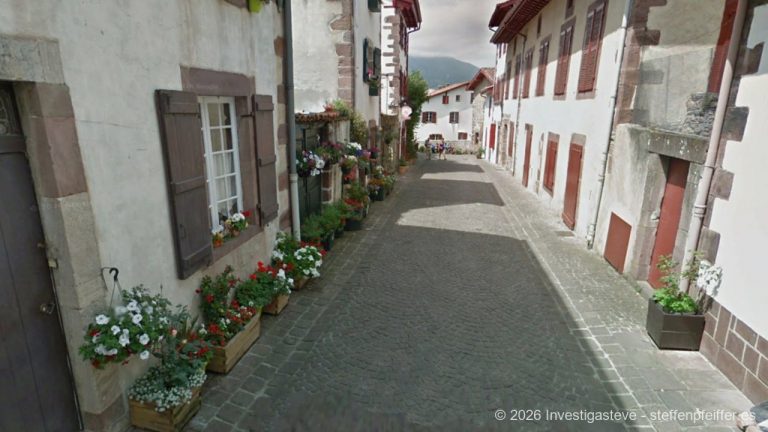
The atmosphere in O Coto is characterised by a tangible constancy. The walls of the houses are made of dark, lichen-covered granite that stores the coolness of the night and releases it only hesitantly to the passing pilgrims in the morning. When you run your flat hand over these stones, you feel the rough texture of the centuries, the indestructibility of a material that has seen generations of walkers come and go. Psychologically, this place marks a decisive turning point. Behind you lies vast Lugo, ahead of you the final chapter of your path. It is the moment when physical exhaustion often gives way to a sudden, euphoric clarity. The smell of damp earth, mixed with the bitter aroma of broom and the first scent of freshly brewed coffee from the small bar by the wayside, forms the olfactory backdrop for this moment of pause. In O Coto, you are not simply at another waypoint; you have arrived in the antechamber of Santiago.
What This Place Tells
O Coto is a silent chronicler of the administrative and spiritual borders of Galicia. The historical causality of its significance lies in its role as a provincial boundary. Here, for centuries, not only a political border ran, but also a psychological demarcation line for the pilgrim streams of the Middle Ages. The place tells of the necessity of rest before the last great exertion. In the stone structures of the traditional houses, the functional architecture of a region that must defy rain and wind is reflected. These “Casas de Piedra” are more than just dwellings; they are manifestations of a hard, earth-connected life that has hardly changed in its essence since the time the first pilgrims took this path. Historical immersion becomes tangible here through simplicity – there is no distraction by modern splendid buildings, only the essential remains visible.
The narrative of the place is inseparable from the logistics of the Camino de Santiago. O Coto has always functioned as a small but reliable anchor point. While larger towns like Palas de Rei or Melide fill the headlines of guidebooks, it is the constancy of small hamlets like O Coto that form the backbone of the Camino. Here you feel the historical continuity of hospitality in its most reduced form. A simple wall, a fountain, a small shelter – these elements have formed the safety net for millions of people over 1200 years. The psychological metamorphosis of the pilgrim who realises in O Coto that he has overcome the administrative hurdle into A Coruña is an echo of the feelings that medieval walkers must have felt at this very spot.
Architecturally, O Coto offers insights into traditional Galician construction, which manages without mortar and only by the precise layering of granite blocks. This tactile mastery is a testimony to the artisanal causality of the region. Every house, every barn tells of the symbiosis between man and nature. The smell of stored hay and the light haze that rises from the slate roofs in the morning when the first rays of sun dispel the moisture are sensory fragments of a history that is written anew here every day. O Coto reminds us that the Camino is not a path of great leaps, but a sequence of small, significant steps across invisible borders.
Addresses & tips in O Coto
| Accommodation | 4 |
| Restaurants | 1 |
| Bars & Cafés | 1 |
| Shopping | 1 |
| Services | 2 |
Camino Distances
O Coto lies directly on the provincial border and marks the entry into the last territory before the destination.
Sleeping & Arriving
Arriving in O Coto is a process of reduction. Since the place itself has no large hostels, for most pilgrims it is a place of short, intense lingering or a strategic rest stop between the larger stage destinations. Nevertheless, arriving here offers a psychological relief that hardly any other point on stage 31 can provide. The moment you cross the border often triggers a cognitive reassessment of the remaining distance. You feel the tactile change of the path – often the surface seems more well-kept here, the markings more prominent, as if the province of A Coruña wanted to welcome its guests in a particularly festive manner.
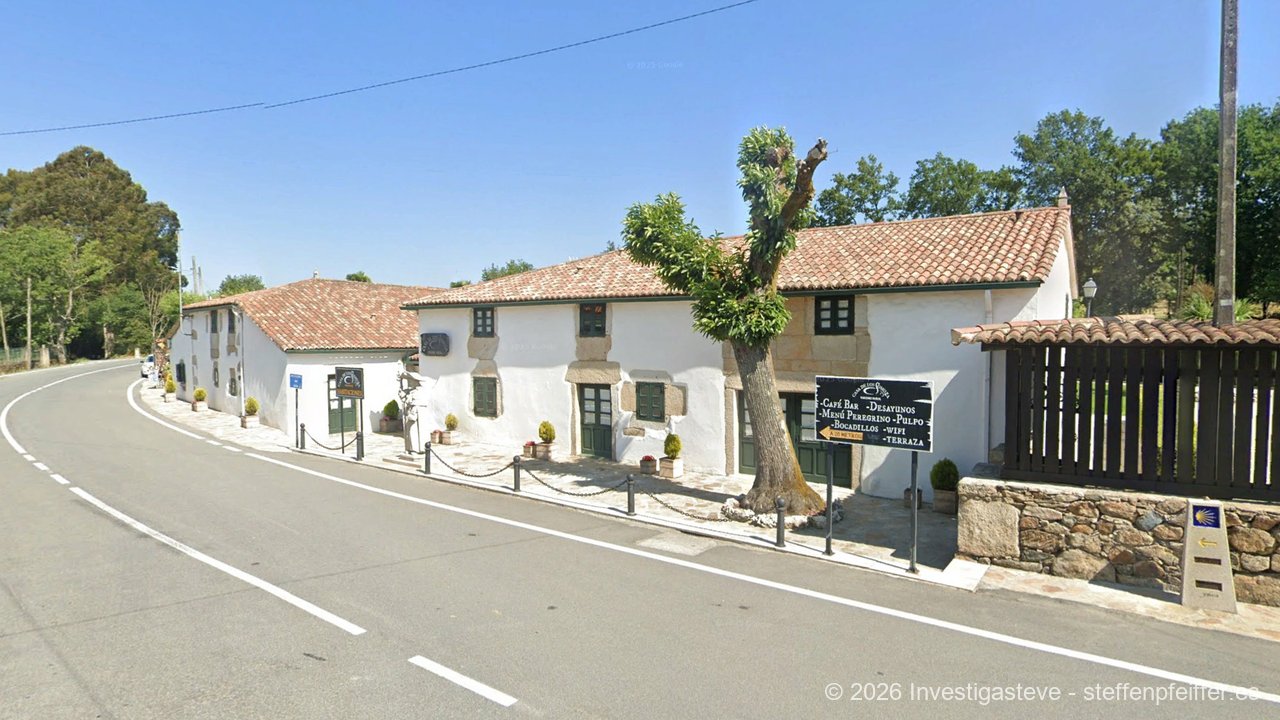
In O Coto, there are no loud welcoming committees, but the quiet certainty of a reliable infrastructure. The small bar of the place acts as an informal communication centre. Here pilgrims meet who have just left the solitude of the preceding forest sections behind them. The acoustic panorama is shaped by the hissing of the coffee machine and the scraping of chairs on the terrace, while the wind whistles softly through the cracks of the old barns. It is an atmosphere of preparation. You don’t check into a room, but you “check” your inner state. The tactile experience of sitting on a sun-warmed stone bench and lifting your burning feet off the ground for a moment becomes the highest form of luxury here.
For those who spend the night in the vicinity, for example in neighbouring Leboreiro or in private accommodations in the region, O Coto offers the perfect emotional buffer. It is the place where you shake off the dust of the province of Lugo and mentally prepare for the arrival in the “pulpo capital” Melide. The simplicity of the surroundings promotes a psychological metamorphosis: away from the performance thinking of the long kilometres, towards the conscious experience of the final phase. You smell the rain that often hangs in the air and feel the cool breeze that seems to blow over from the Atlantic, even though it is still miles away. Arriving in O Coto means consciously crossing the threshold to the completion of the Way.
Eating & Drinking
The culinary experience in O Coto is a lesson in honest frugality. The heart of the food supply is the local bar, which for many pilgrims appears like a saving island in the middle of the Galician expanse. No molecular cuisine is served here, but the power of the region in liquid and solid form. The scent of freshly toasted country bread, refined with local olive oil and a pinch of sea salt, fills the small dining room. It is an olfactory experience that immediately awakens childhood memories of simplicity and security. When you bite into a piece of the typical Galician empanada – perhaps filled with spicy tuna or tender meat – you experience a tactile texture of crispy dough and juicy filling that provides exactly the energy needed for the next kilometres.
To drink, the main thing is café con leche, served in heavy glass cups. The tactile warmth of the cup in the often chilly fingers of an early morning is a small but significant moment of self-care. The acoustic accompaniment consists of the murmuring of the locals taking their first schnapps or coffee of the day and the occasional laughter of pilgrims exchanging their experiences. It is a place of sensory grounding. You taste the minerality of the water and the freshness of the milk from the cows you see standing in the meadows only a few metres away.
Those who rest in O Coto often do so with an eye on the small supplies in the attached tienda. A piece of local cheese, the creamy Arzúa-Ulloa, combined with a handful of nuts, becomes the perfect provisions. The psychological component of eating is closely linked here to reward: you have made it across the border, you are in A Coruña, and this bite seals the success. The taste of ripe tomatoes on bread or a simple piece of tortilla is heightened by the physical exertion and the historical atmosphere of the place into a culinary revelation that cannot be found in any Michelin-starred restaurant.
Supplies & Logistics
O Coto is a prime example of highly efficient, small-scale logistics on the Camino Francés. Although the hamlet is tiny, it fulfils a critical supply function at a geographical turning point. The strategic causality lies in its position immediately after a longer forest section, making it the ideal first port of call in the new province.
Shopping: On site there is a small tienda that provides pilgrims with the essentials – from water and fruit to simple snacks and walking supplies. For everything beyond that (pharmacy, bank, special equipment), nearby Melide (approx. 8-9 km) is the logistical destination.
Gastronomy: The local bar offers a solid basic supply of drinks, coffee and small dishes (bocadillos, tortilla, empanadas). Opening hours are reliably adapted to the flow of pilgrims.
Sleeping: O Coto itself does not have any large public albergues; overnight stays are concentrated in Leboreiro, only one kilometre away, or in private guesthouses in the immediate vicinity.
Public Facilities: There are no medical facilities or banks directly in the village. In an emergency, however, the connection to Melide is excellent, where there is a large health centre and all other urban services.
The psychological security that O Coto radiates is remarkable. Since the place is small and manageable, you immediately feel at home here. The bar staff are often trained to provide small first aid or give information about the further route. The acoustic calm, interrupted only by sparse local traffic, contributes to mental regeneration. Logistically, O Coto acts as a “safety valve” – here you can replenish your water supplies and catch your breath before continuing the stage to Melide or Arzúa. It is a place that shows that good logistics do not always have to be big, but above all have to be in the right place at the right time.
Don’t Miss
- The provincial border: Pause at the marker between Lugo and A Coruña – a tactile and psychological milestone of your journey.
- The granite architecture: Look at the old barns and residential houses, whose stones are stacked without mortar.
- The view back: From the height in O Coto, look back to the east and mentally say goodbye to the mountains and forests of Lugo.
- The traditional tienda: Buy a little something in the tiny shop to support the local economy of this small hamlet.
- Pausing at the stone wall: Sit on one of the old walls and feel the sun on the stone – a moment of pure Camino deceleration.
Insider Tips & Hidden Places
Away from the asphalt main road that cuts through O Coto, there are small, almost invisible paths that lead into the adjacent fields. If you go only fifty metres behind the first row of houses, the noise of the Camino almost completely disappears. Here you often find small, ancient watercourses channelled through stone gutters – a testament to the historical causality of Galician irrigation art. The ground beneath your feet is soft here, covered by a thick layer of pine needles and moss, which is a tactile blessing for your strained tendons. In the air lies an intense scent of resin and wild mint, often overlaid in the official pilgrim zone by the smell of coffee. This is the perfect place for a five-minute forest meditation, far away from the cameras and the hustle of fellow pilgrims.
Another hidden place is a small, ruined stone wall at the western exit of the village, almost completely overgrown with bramble bushes and ivy. If you look closely, you often find small cairns or symbols that pilgrims have carved into the softer layers of lichen. It is a silent, tactile communication across time. Here you can feel the psychological depth of the Way – the certainty that you are not the first to hesitate or hope at this threshold. This place offers no spectacular view, but an emotional density that turns the transition into A Coruña into a personal ritual. It is the “real” O Coto, which only reveals itself when you lift your gaze from the ground and perceive the details in the periphery.
Finally, it is worth looking for the old fountain, which lies a little away from the bar in the shade of a mighty oak. The water there is ice-cold and clear, and the acoustic splashing acts like a natural sedative. Whoever washes their hands here feels the tactile freshness of the Galician subsoil. It is a place of purification before the final chapter. Such hidden corners make O Coto more than just a transit point; they make it a place of small wonders that only those who are willing to adapt the speed of their journey to the speed of their soul will find.
Moment of Reflection
In O Coto you stand on an invisible but powerful line. The transition from Lugo to A Coruña is only an administrative boundary on paper, but for your inner self it is a caesura. In this moment of silence, ask yourself: What from the province of Lugo – what burden, what worry, what old pattern – would you like to symbolically leave behind at this border? O Coto offers you the space for this psychological detoxification. The rough granite of the houses reminds you of your own resilience. You have overcome hundreds of kilometres to stand exactly at this point. The tactile reality of the stone under your hands is proof of your physical presence and your success.
The psychological metamorphosis that takes place here is the change from “journey” to “arrival”. You are now in the catchment area of Santiago. Every breath in the cool air of O Coto brings you closer to the cathedral. Use this moment of reflection to sharpen your focus. Do you feel the anticipation, or is there a quiet fear of the end of the Way? O Coto teaches you that every transition takes time. Sit down for a moment, close your eyes and listen only to the wind and your own breath. In this acoustic isolation, you will realise that the most important border you have crossed on this Way was not between provinces, but between who you were and who you are now. O Coto is the witness of your transformation.
Camino of the Stars
This place lies on the Camino Francés, on the stage from Palas de Rei to Arzúa. The sequence of places is:
Palas de Rei → San Xulián → Ponte Campaña → Casanova → O Coto → O Leboreiro → Furelos → Melide
Did you also feel that sudden goosebump moment when crossing the border in O Coto, when you realised that you are now in A Coruña? Was the small bar also the saving oasis for you after the forest paths of Lugo? Share your personal impressions, your photos of the border marker, or your thoughts about this special threshold place with us. Your story helps others to consciously perceive the significance of this small hamlet on the Camino!
About the Author