A First Glance – Introduction & Atmosphere
When you have left the last, often noisy outskirts of Burgos behind you, the geometry of your journey changes. The transition to Tardajos is far more than just a change of kilometers; it is a psychological shedding. You walk through a landscape that slowly widens, while the basin of the Río Urbel receives you with an almost maternal security. The air here already smells different than in the city – it carries within it the tart, dry aroma of limestone, mixed with the scent of sun-scorched wheat and the fine, dusty note that only the marl soil of Castile can produce. You hear the rhythmic echo of your own hiking poles, echoing louder on the hard ground as soon as the urban background noise fades. It is an auditory proof of your arrival in the “real” Meseta.
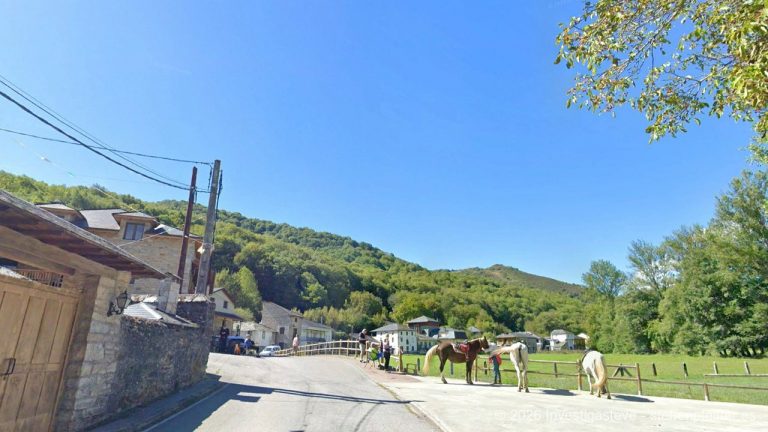
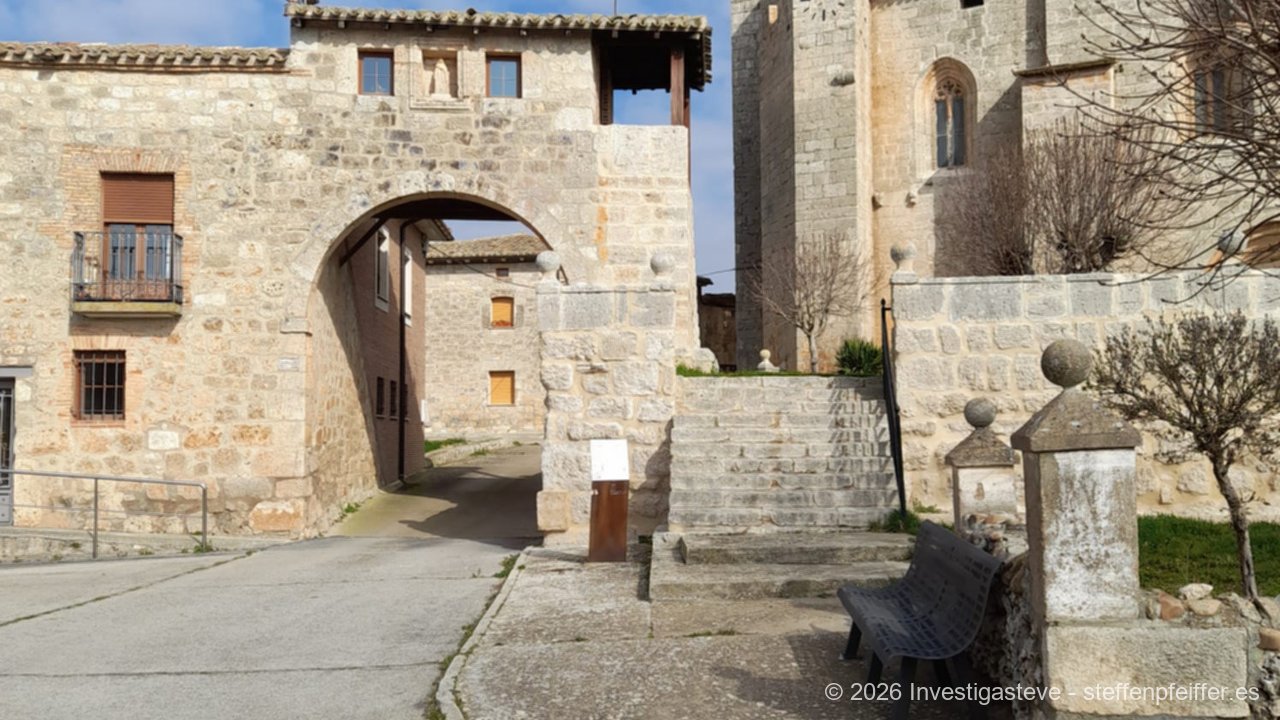
Tardajos welcomes you with a texture that speaks of constancy. Beneath your boots, you feel the shift from modern asphalt to the firm, history-laden stones of the village center. The light here, at about 860 meters elevation, possesses a cutting clarity that outlines every contour of the Iglesia de Santa María with razor-sharp precision against the deep blue of the sky. When you place your hand on the rough, sun-warmed walls of the old houses, you feel the stored energy of a thousand summers. It is a tactile anchor that reminds you that this place has offered people shelter since the Iron Age. Psychologically, you experience here the moment of great liberation: urban stress has fallen away, and before you lies the promise of an infinity that tolerates no lies.
In the midday heat, Tardajos appears like a silent guardian on the river course of the Urbel. The soft rustling of the poplars on the bank forms a gentle contrast to the shimmering silence of the fields. You smell the distant smoke of a wood fire and the aroma of freshly roasted garlic wafting from the open windows of the small bars – an olfactory promise of the honest hospitality of Castile. Arriving here means taking the first real step into the inner metamorphosis of the pilgrim. You feel small before the monumental vastness that rises behind the village, and at the same time uplifted by the certainty that you are now part of a millennia-old procession passing through this strategic bottleneck.
What This Place Tells
The earth beneath Tardajos is a vast archive of human history. Long before the first Christian pilgrim planted his staff in the ground, this place was known as “Deobrigula” – the “City of the Gods” or the “Bridge over the Great Water.” Celtiberian tribes of the Turmogi settled here on the heights of El Castro, followed by the Roman legions, who made Tardajos an indispensable hub of their infrastructure. The famous Roman road, known today as the Via Aquitana, still forms the invisible backbone of your path. Historical causality is palpable here: Tardajos exists not despite the landscape, but because of its strategic mastery of the Urbel Valley. Whoever controlled Deobrigula controlled access to the west of the peninsula.
During the Reconquista, the role of Tardajos changed once again. In the 9th century, Count Nuño Núñez fortified the place to secure the Christian flank against the Moorish advances. This time of constant vigilance is still palpable in the massive, defensive architecture of the church of Santa María. The church, a structure that combines elements of Gothic and Renaissance, appears less like a house of God and more like a spiritual fortress. Its thick walls have absorbed the sighs of millions of seekers. Inside, the magnificent altarpiece tells of the hope that drove people here even in the darkest times. It is the story of a place that has learned to reinvent itself time and again without losing its roots in the Roman limestone.
A fascinating phenomenon of modern times is the demographic resilience of Tardajos. While almost all villages in the “España Vaciada,” the depopulated Spain, struggle with declining populations, Tardajos has grown in recent decades. This vitality is almost physically palpable – in the well-tended gardens, the renovated facades, and the lively activity on the Plaza Mayor. It is the continuation of a 2000-year success story. Psychologically, this conveys to the pilgrim a feeling of security and continuity: one does not enter a museum, but a living organism that breathes the Camino and has nourished generations. The historical depth of Deobrigula merges here with the modern energy of a community that knows its future lies in preserving its past.
Addresses & tips in Tardajos
Camino Distances
🗺️ After leaving the urban belt of Burgos, Tardajos offers the first real village breathing space in the valley of the Río Urbel, before the path continues into the lonely Meseta.
| Previous Place | Distance (km) | Next Place | Distance (km) |
|---|---|---|---|
| Villalbilla de Burgos | ca. 5.5 km | Rabé de las Calzadas | ca. 1.5 km |
Sleeping & Arriving
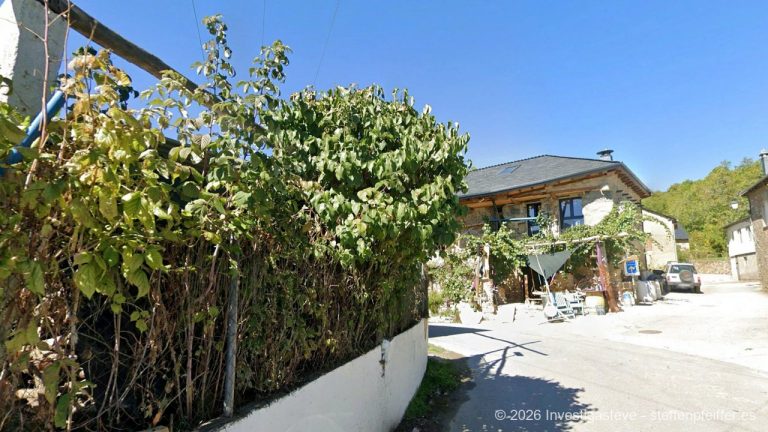
Arriving in Tardajos marks the psychological turning point of their journey for many pilgrims. If you come from Burgos, you have the first ten kilometers behind you – often the most strenuous, as they lead through industrial areas and along highways. Reaching the village threshold of Tardajos therefore feels like a ritual-cleansing act. Arrival is a tactile process: putting down the heavy backpack in one of the hostels such as the “Albergue Municipal” or private houses like “La Casa de Elvira” triggers a physical relaxation that spreads through the body like a warm wave. You feel the coolness of the massive stone walls that keep out the heat of the day, and hear the distant, soothing murmur of other pilgrims already tending to their wounds.
The atmosphere in the accommodations of Tardajos is marked by a warm professionalism. Here, one knows what a pilgrim needs who has just left the city. The smell in the dormitories is a mixture of fresh laundry, disinfectant, and the cool, damp note of old cellar vaults. Psychologically, you experience an emotional metamorphosis here: the hustle of the city gives way to a focused tranquility. You sit in the garden or on the stone steps in front of the hostel, stretch out your legs, and feel the pulse of the Meseta slowly taking over your own rhythm. It is the feeling of finally having arrived in the “real” Camino daily life, where time is measured not in hours but in steps.
At night, the place transforms into a sea of silence. Since Tardajos lies in a slight hollow by the river, no disturbing sounds of civilization reach you. You hear only the occasional striking of the church clock and the soft rustling of the poplars in the night wind. Sleeping here is deep and regenerative, carried by the certainty that you are in a place that has protected travelers for two thousand years. When you wake the next morning while the mist still hangs over the Río Urbel, you feel a tactile freshness on your skin. You do not leave your bed as a tourist, but as part of an infinite chain of seekers, strengthened by the security of a place that has learned to celebrate silence.
Eating & Drinking
The cuisine in Tardajos is an honest homage to the treasures of the Castilian plateau. Here, the food tastes of the earth over which you walk. When you sit down in the evening in one of the bars on the plaza, the intense aroma of “Morcilla de Burgos” greets you – that legendary blood sausage with rice, fried here so crispy that it melts on the tongue. It is served with the heavy, crusty country bread, whose crust gives a characteristic crack when broken – an auditory pleasure that heightens anticipation. It is a tactile pleasure to break the bread with your hands and feel the warmth of the freshly prepared dishes.
A classic is the “Sopa de Ajo,” the garlic soup that revives the spirits after the first stage from Burgos. It tastes of sweet paprika powder, high-quality olive oil, and the power of garlic – a flavor explosion that warms the body from within and replaces lost salts. In Tardajos, food is celebrated as a communal experience. The heavy red wine of the region, served in simple glasses, has a dark, almost violet color and a note of ripe berries and dry wood. You taste the sun of Castile in every sip, a sensory connection to the landscape that surrounds you.
Those with a sweet tooth should try the “Rosquillas,” small pastry rings often baked according to family recipes and delicately scented with anise. These small delicacies are the perfect provisions for the onward path. The gastronomic experience in Tardajos teaches the pilgrim gratitude for the simple. In the simplicity of the ingredients lies a clarity of taste that you often miss in the gourmet temples of the big cities. Here, you take in not just calories, but the essence of a land that has learned to create the highest pleasures from barren nature. It is a culinary grounding that prepares you physically and mentally for the coming kilometers of solitude.
Supplies & Logistics
Logistically speaking, Tardajos is a strategic anchor point of inestimable value. Since the place has grown in recent years, it offers an infrastructure that goes far beyond what one would expect from a village of this size. It is the last place with comprehensive supplies before the truly lonely sections of the Meseta begin. You feel a logistical professionalism here born from the necessity of efficiently channeling the flow of pilgrims. The shops along the main street are perfectly adapted to the needs of long-distance hikers; you find everything from high-quality blister plasters to sunscreen to special trekking snacks.
Shopping: Several well-stocked supermarkets and “Tiendas” offer fresh local products and pilgrim supplies. Opening hours are designed to be pilgrim-friendly, often with a short siesta break.
Gastronomy: The density of bars and restaurants is high, making Tardajos an ideal place for a hearty second breakfast or an early dinner.
Accommodation: With several hostels and guesthouses, capacity is considerable. Nevertheless, a reservation is advisable in high season, as many pilgrims use Tardajos as an alternative accommodation for often overcrowded Burgos.
Public Facilities: There is a health center (Consultorio), a pharmacy, and a bank with an ATM – services that will often be lacking in the next small hamlets.
In summary, Tardajos logistically forms the bridge between the urban abundance of Burgos and the rural reduction of the Meseta. You should definitely check your supplies here and maximize your water reserves. The psychological security created by this good supply allows you to look relaxed at the upcoming stages. Tardajos takes away your worries about material things so that your mind can become free for the vast silence that will inevitably follow. It is the perfect place for a final dress rehearsal of your equipment before you finally immerse yourself in the heart of Castile.
Don’t Miss
– Iglesia de Santa María: Enter this monumental structure and pay attention to the mix of Gothic and Renaissance. The Baroque altarpiece is a visual masterpiece that unfolds an almost magical effect in the cool silence of the nave.
– The Roman spirit of Deobrigula: Search at the edge of the village for traces of the old excavation sites. Even if much lies beneath today’s earth, you feel the strategic location that the Turmogi already appreciated.
– Plaza Mayor: Sit on one of the benches for ten minutes and observe village life. Here you feel the rare vitality of a growing Castilian village, an auditory pleasure of laughter and lively conversations.
– Río Urbel: Take a short walk to the riverbank. The tactile experience of dipping your hands into the cool water is the best therapy for the heat of the day.
– Calle Real: Walk the entire length of the main street. Every house, every door lintel tells a story of arrival and departure, a linear documentation of pilgrim life over centuries.
Insider Tips & Hidden Places
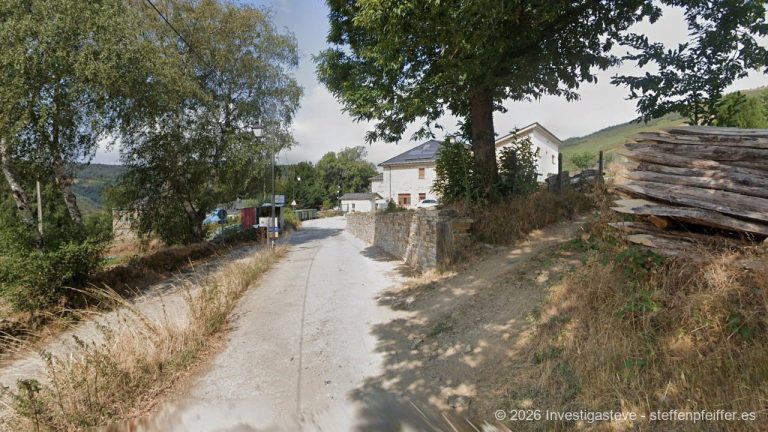
A true insider tip in Tardajos is the small, often overlooked park area directly on the banks of the Río Urbel, a little off the main route. While most pilgrims hurry directly to the hostel, this place offers an almost unreal tranquility. You hear here only the rhythmic rustling of the leaves and the distant splashing of the water. It is a place of absolute psychological deceleration. When you sit down there in the grass, you feel the damp coolness of the ground, which stands in stark contrast to the dry heat of the Meseta paths. It is the perfect place to write in your journal or simply to breathe in the breath of the river, which has been the lifeline here for millennia.
Another hidden place is the small niche at the back of the church of Santa María, where one can often discover fragments of old stonemason marks. When you run your fingertips over these centuries-old indentations, you touch the personal signature of a craftsman who built this monumental work stone by stone. It is a tactile link to the medieval working world. These small details tell more about the endurance and faith of the people than any history book. In Tardajos, the hidden becomes the essential when you are willing to turn your gaze away from the obvious.
Pay attention to the small, almost faded religious symbols above some door lintels in the side alleys. They testify to a time when the house was not just a dwelling, but a sacred space of protection. The olfactory experience in these narrow alleys, where it smells of damp stone, mint, and old wood, is a journey back to a time when the world still breathed to the rhythm of footsteps. These alleys are the true pulse of Deobrigula, far from the tourist hustle of the Plaza Mayor.
Finally, there is a viewpoint west of the place, shortly before the path rises towards Rabé. From there, you have a perfect view back on Tardajos, nestled in the hollow of the Urbel, while the cathedral of Burgos is still visible as a distant silhouette on the horizon. This visual transition – the city behind you, the village below you, and the vastness before you – is psychologically immensely powerful. It is the moment when you realize that you are now finally leaving the world of people and entering the world of nature.
Moment of Reflection
Do you stand in Tardajos to prepare for the Meseta, or do you recognize that you are already in the midst of your greatest transformation? The village on the Urbel bridge is a powerful metaphor for transition. It teaches us that every new beginning needs a solid foundation – just as Deobrigula rests on Roman foundations. The infinite vastness that now lies before you is not an obstacle, but a mirror of your own soul. What will you see in this mirror when the noise of civilization falls silent for good?
Perhaps you recognize here that true strength does not result from resistance against the landscape, but from the ability to adapt to its rhythm. Tardajos challenges you to lay down modern haste at the medieval gates and to understand that even a growing place – or a growing person – can only endure through the cultivation of its roots. When you take the first steps on the path to Rabé the next morning, you take not only water and bread with you, but the peace of the stones and the constancy of the fields. Are you ready to entrust yourself to the great silence?
Camino of the Stars
This place lies on the Camino Francés, on the stage from Burgos to Hornillos del Camino. The sequence of places is:
Burgos → Villalbilla de Burgos → Tardajos → Rabé de las Calzadas → Hornillos del Camino
Did the spirit of ancient Deobrigula in Tardajos touch you just as deeply, or was it the hearty Morcilla on the Plaza Mayor that remained in your memory? Perhaps you found a very special moment of peace on the banks of the Río Urbel or discovered a hidden stonemason’s treasure? Share your experiences, your photos, and your personal reflections with us via the contact form – we look forward to your story, in any language of the way!
About the Author