First Glance – Introduction & Atmosphere
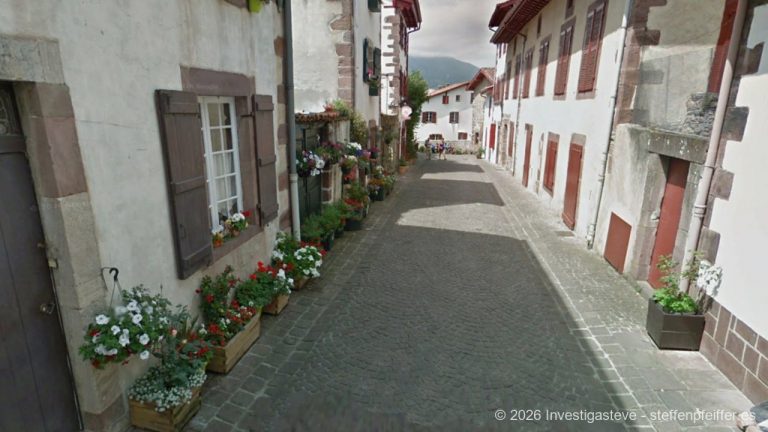
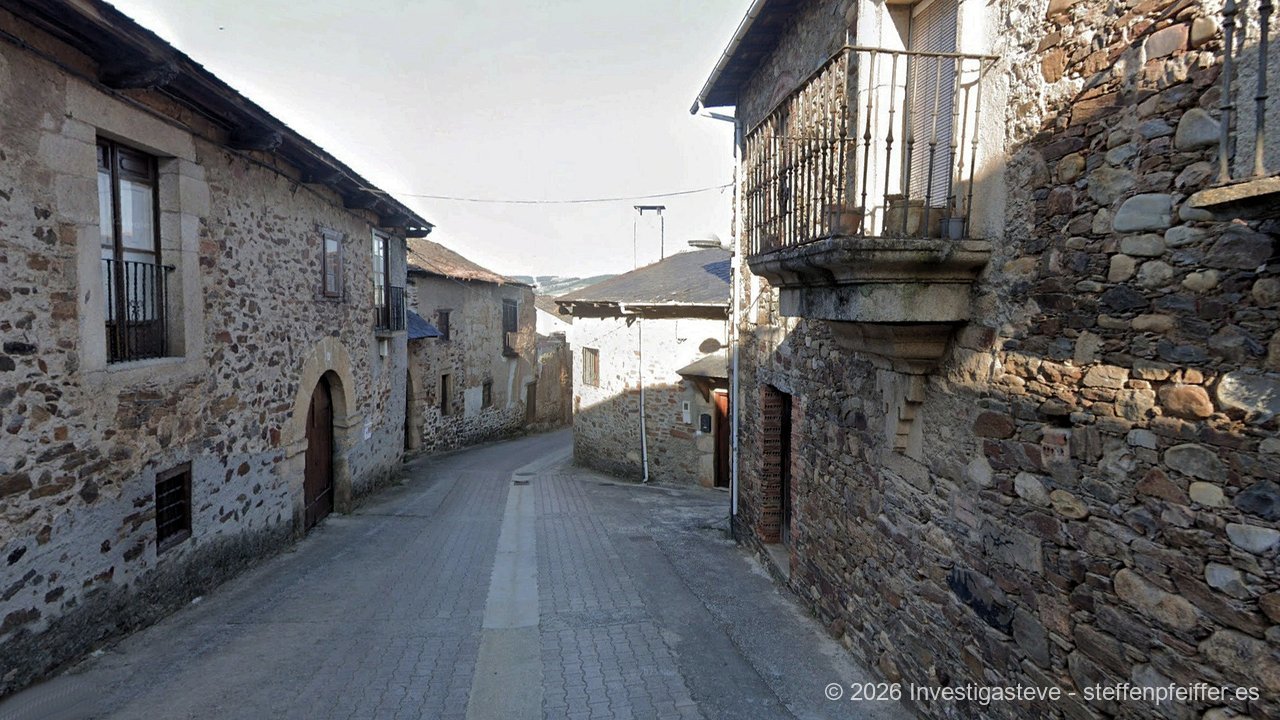
When you leave Molinaseca behind and the path gradually leads you out of the wild mountain world of the Montes de León, the valley widens and opens the view to Campo. It is a place that does not impose itself loudly, but rather welcomes the pilgrim with an archaic, almost solemn calm. You feel here how the ground beneath your feet becomes firmer; the dusty path gradually gives way to the hard, sun-warmed stone of the old village street, the Calle Real. The air smells here of dry earth, the sweetish aroma of ripe apples from the surrounding gardens, and a hint of incense that still seems to linger in the crevices of the massive granite facades. Campo appears like a stone island in the green sea of the Bierzo, a place where time does not flow but has been preserved in the thick walls of the casonas, the old manor houses.
Your hearing adjusts to a new frequency in Campo: the distant, metallic ringing of the bells of the Iglesia de San Blas mingles with the gentle gurgling of the nearby Boeza and the occasional, deep barking of a farm dog. Haptically, you experience the place through the coolness of the water at the Fuente Romana, whose stone arch has provided refreshment for centuries. It is a moment of psychological grounding – you feel the proximity of the city of Ponferrada, yet Campo holds you back once more to give you the essence of the rural tradition of the Bierzo on your way. The visual force of the gray stone, contrasted by the bright red geraniums on the wooden balconies, creates a feeling of permanence that calms you inwardly before the urban roar of the Templar city demands you again.
What This Place Tells
Campo is a living archive of the El Bierzo region, a place that proudly bears its coats of arms on its facades. The historical causality is palpable here in every corner: once this place was an independent administrative center before it became a district of Ponferrada in the course of modern times. Yet those who wander through the core, the “Castro,” immediately recognize that Campo has preserved its soul. The powerful manor houses, above all the Casona de los Lunas with its proud stone coats of arms, tell of a time when the landed nobility and the church determined the fate of the valley. It is a narrative of wealth extracted from the earth, and of a faith carved in stone. The Iglesia de San Blas, perched on a slight hill, has watched over the fields since the 17th century, reminding us that every step on this path is under a higher protection.
Particularly fascinating is the connection to antiquity, manifested in the Fuente Romana. This fountain is far more than just a water source; it is a haptic link to the Roman engineers who once developed the gold mines of Las Médulas. It is said that the water here is so pure that it washes the fatigue from the bones of pilgrims – a legend that proves true in the coolness of the stone and the clarity of the stream with every sip. Campo was always a place of transit, a bottleneck through which merchants, soldiers, and pilgrims streamed. The metamorphosis of the place from a fortified outpost to a peaceful suburb reflects the eventful history of Spain. When you stand before the Ermita del Santo Cristo, you feel the psychological weight of the prayers spoken here for centuries to ask for protection for the onward way.
In Campo, tradition is not exhibited in museums but lived. The “Encina,” the mighty holm oak often at the center of local narratives, symbolizes the indomitability of the people here. It is a place of thresholds: here you finally leave the solitude of the mountains and prepare for the monumental presence of the Templar castle in Ponferrada. The historical depth of Campo lies in the layering of times – Roman foundations beneath Baroque walls, Celtic legends in Christian churches. It is this stone echo that reminds the pilgrim that he is only a tiny part of a vast, thousand-year-old movement.
Addresses & tips in Campo
| Restaurants | 1 |
| Bars & Cafés | 1 |
| Sights | 1 |
| Services | 1 |
Camino Distances
Campo marks the last quiet moment of Stage 25 before you plunge into the bustling urbanity of Ponferrada. The paths here are largely flat and lead through a suburban idyll.
| Previous Location | Distance (km) | Next Location | Distance (km) |
|---|---|---|---|
| Molinaseca | approx. 4.5 km | Ponferrada (center) | approx. 3.5 km |
| Riego de Ambrós | approx. 9.3 km | Columbrianos | approx. 6.3 km |
Sleeping & Arriving
Arriving in Campo is characterized by a strange mixture of anticipation and melancholy. Since the place does not offer dedicated pilgrim hostels in the immediate vicinity, it is for many hikers the point of the last decision: do you stop here for a rest, or do you mobilize your last reserves for the final sprint to Ponferrada? The psychological effect of this decision is palpable; in Campo, the rhythm of walking often becomes slower, almost as if wanting to hold onto the rural silence a little longer. There are no dormitories here where the rustle of sleeping bags dominates the night, but rather the private silence of residential houses. Those lucky enough to find accommodation in one of the few private rooms experience a haptic quality of security rooted in thick walls and heavy wool blankets.
Arriving in Campo also means confronting the haptic reality of water. The Fuente Romana is the ritual meeting point. Pilgrims sit on the stone steps, cool their wrists in the flowing stream, and exchange glances of understanding. It smells here of wet stones and freedom. The pilgrim’s metamorphosis takes place in this moment: you are no longer the seeker in the mountains, but the one arriving in the valley. In Campo, you feel the proximity of civilization, but you are still protected by the village structure. It is a breather for the soul. The creaking of the old gates in the casonas forms the acoustic backdrop for an afternoon when the destination seems within reach, but the peace of the moment still prevails.
Eating & Drinking
The cuisine in Campo is an honest declaration of love to the products of the Bierzo, reduced to the essentials and served with a warm directness. When you settle down at the Mesón San Isidro on the Plaza Mayor, the first sensory impression is olfactory: the scent of spicy fried chorizo, mixed with the aroma of robust red wine from the Mencía grape, fills the air. Here, the food tastes of earth and tradition. A must is carb-loading the regional way: a portion of homemade empanada, whose pastry is so crumbly that it quietly cracks with every bite, provides the necessary energy for the last kilometers. The taste is savory, often with a fine note of smoked paprika, Pimentón de la Vera.
You drink the water from the Fuente Romana with it – a haptic pleasure that clears the senses. Those who prefer something stronger should try the local wine, whose deep, ruby-red color in the glass captures the intensity of the evening sun. It carries the minerality of the slate and lets you understand the historical causality of the Bierzo wine region with every sip. In Campo, eating becomes an act of ritual strengthening. You sit among locals, hear the loud, lively Spanish, and feel the warmth of the food flooding your body. For dessert, there are often cherries or apples straight from the neighborhood trees – a sensory immersion into the fertility of the valley. It is a cuisine without frills, offering exactly what the pilgrim needs: strength and a moment of unadulterated enjoyment on the village square.
Supplies & Logistics
Logistically, Campo is a place of concentration and preparation for the city. Since there are no large supermarkets or pharmacies in the village, the pilgrim depends on what he carries or on the hospitality of the mesón. It is a lesson in foresight. Here you critically check your supplies one last time. The water supply is excellently assured thanks to the Fuente Romana and other fountains in the village – it is the logistical lifeline of Campo. Haptically, you experience logistics through the weight of your backpack, which you might rearrange once more here before tackling the last four kilometers.
Medical care in Campo is purely preventive – those needing blister plasters or painkillers are referred to the pharmacies in Ponferrada. This infrastructural scarcity sharpens awareness of one’s own autonomy. Being in Campo means leaving the logistical security of the mountains behind and slowly adjusting to the complex infrastructure of the city. There are no ATMs, which reminds the pilgrim to manage his resources – a psychological exercise in frugality that fits perfectly with the essence of the Way of St. James.
Shopping: No shops available. Shopping for the next day must be done in Ponferrada.
Gastronomy: The Mesón San Isidro on the Plaza Mayor is the central place for food and cool drinks.
Accommodation: No pilgrim hostels in the village; accommodation is primarily in Ponferrada (3.5 km further).
Public Facilities: No local offices or banks; the place functions primarily as a residential neighborhood with a historic core.
In summary, Campo is logistically the “last post” before urbanity. Those who fill their water bottles here and have a small snack are well equipped for the march into the Templar city. The place teaches you that logistics on the Camino often means knowing the right moment for a break.
Don’t Miss
– The Fuente Romana: A MUST stop directly on the path. Drink the ice-cold water and touch the ancient stones – a direct contact with Roman history. – Iglesia de San Blas: A short climb to the church rewards with wonderful silence and architectural details from the 17th century. – Casona de los Lunas: Admire the massive stone coats of arms on the facade of this historic manor house – a symbol of the former splendor of the place. – Ermita del Santo Cristo: A small, often overlooked chapel in the center that radiates a very own, intimate spiritual power. – The view of Monte Pajariel: Look west and see the mountain that frames Ponferrada – a landmark for the next kilometers. – The traditional wooden balconies: In the alleys of “El Castro” you still find the typical architecture of the Bierzo with its dark slate tiles. – The murmur of the Boeza: The river accompanies you on the edge of the village; an ideal spot for a short meditative break in the grass. – The stone coats of arms: Search the facades for the carved symbols of the past – they are the silent storytellers of Campo.
Insider Tips & Hidden Places
Beyond the Calle Real, where the alleys become narrower and the asphalt turns into cobblestones, hides the old cemetery, the “Campo Santo.” It is a place of absolute silence, only the distant cawing of jackdaws and the rustle of the cypresses in the wind can be heard. It smells of dry stone and eternity. It is a place for total auditory immersion; no traffic noise reaches here, only the voice of the past. Those who sit here and look at the old tombstones with the local names feel the historical causality of the region most deeply: life in the Bierzo has always been a struggle with the earth and a victory through constancy.
Another hidden treasure is a small path that branches off behind the Iglesia de San Blas toward the fields. If you follow this path just two hundred meters, you reach a spot from which you look over the roofs of Campo, while in the background the modern towers of Ponferrada appear like a mirage. This contrast is psychologically fascinating – it marks the point where you find yourself between two worlds. Up here, framed by wild thyme, you can experience the haptic pleasure of simply sitting in the tall grass and watching the clouds drift over the Sierra. Those who look closely often find tiny ferns in the crevices of the old barn walls, thriving only in this specific microclimate – a botanical secret right by the wayside.
Moment of Reflection
In Campo, you encounter your own impatience. Located only a few kilometers before Ponferrada, this place asks you the question: Are you in a hurry to arrive, or can you inhale the last rural silence once more? Campo is a mirror of your inner peace. The psychological effect of the massive stone walls can be oppressive, yet they also offer an incredible opportunity for centering. There is no distraction here from souvenir shops or tourist staging. The historical weight of the coats of arms and manor houses reminds you that greatness is often preserved in silence.
It is a time of mental inventory. As you drink the cool water of the Fuente Romana, you reflect on the metamorphosis you have undergone since setting out from the mountains of León. What did you leave up there? What are you taking with you into the city? Campo gives you the necessary emptiness to prepare yourself for the impressions of Ponferrada. The historical causality of your being here – millions of pilgrims before you sought the same refreshment at this fountain – gives you deep humility. You recognize: you are only a tiny part of a vast movement, yet your own path is unique. In Campo, you learn that the value of a place is measured not by its size, but by the peace it gives your heart.
Camino of the Stars
This place lies on the Camino Francés, on the stage from Rabanal del Camino to Ponferrada. The sequence of locations is:
Rabanal del Camino → El Acebo → Riego de Ambrós → Molinaseca → Campo → Ponferrada
Did you pause at the Fuente Romana in Campo and feel the coolness of the ancient water on your skin? Perhaps you found a moment of peace in the alleys of the “Castro” before the city of Ponferrada received you? Share your experiences of this stone guardian of the Bierzo with us. We look forward to your personal story of Campo!
About the Author