First Glance – Introduction & Atmosphere
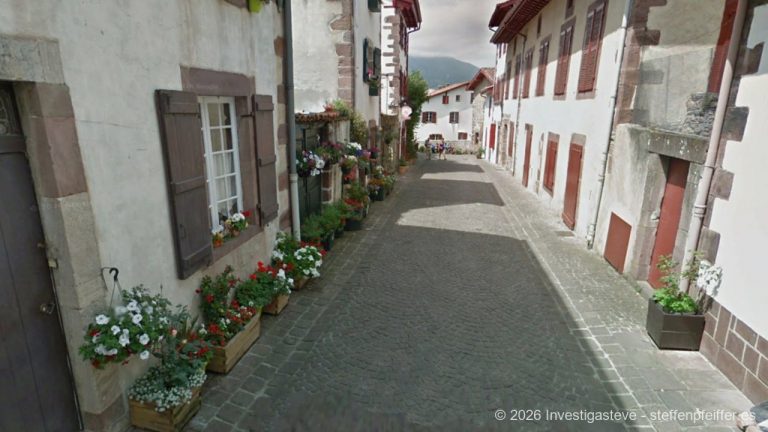
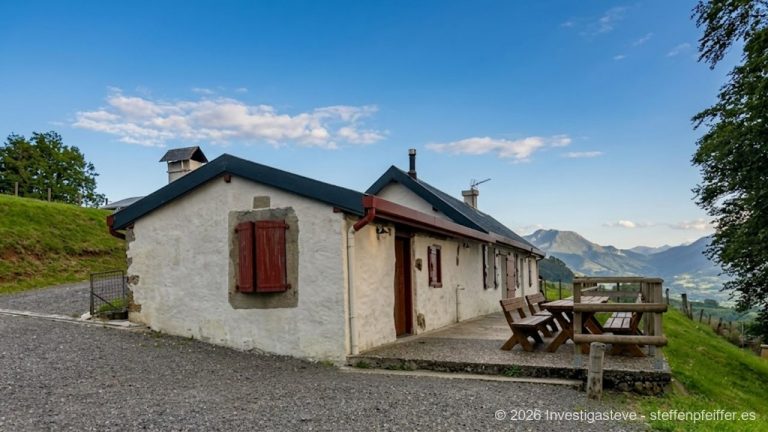
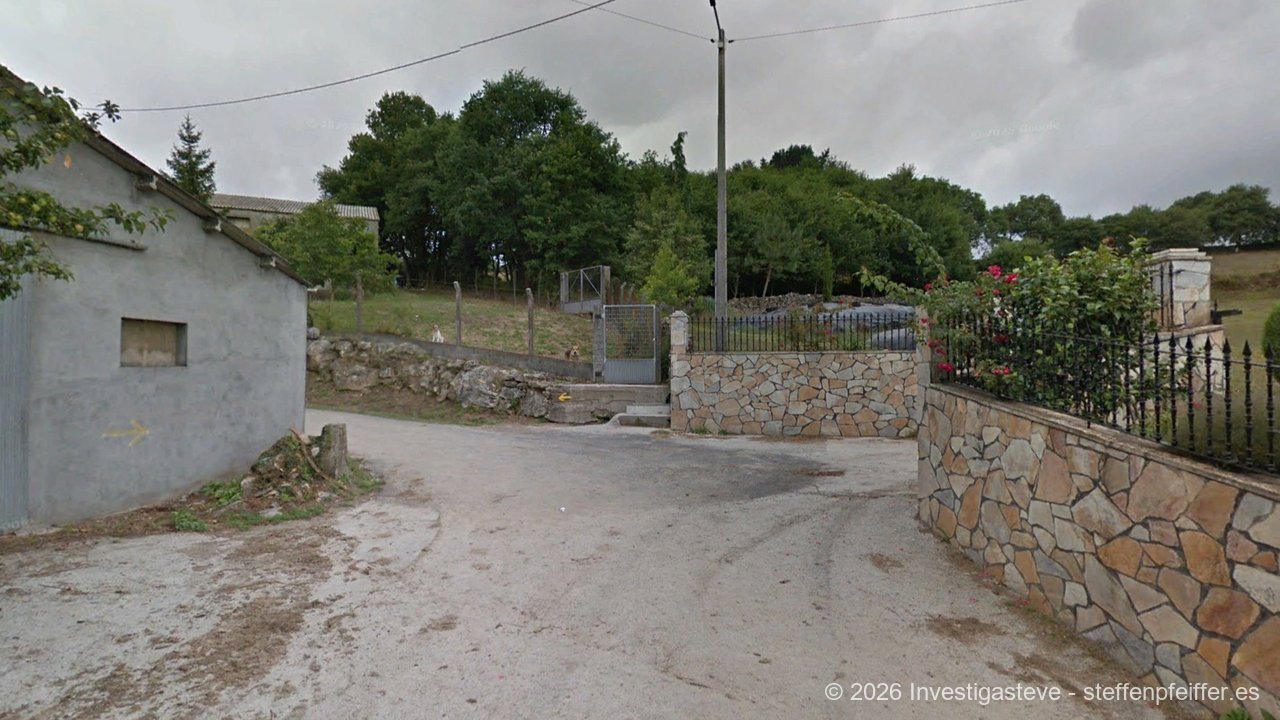
When you have traversed the dense, often mysteriously mist-shrouded oak and chestnut forests behind Sarria and the path slowly but steadily leads you uphill, you reach Ferreiros, a place that seems carved like an archaic sculpture from Galician granite. It is a hamlet of transitions, a pause of the world on an exposed plateau of the Ribeira Sacra that has defied the Atlantic winds for millennia. As soon as you enter the settlement, you feel a radical change in the atmosphere. The air up here, at almost 600 metres above sea level, is clearer, often sharper, and carries the tart, spicy scent of wild broom, wet ferns, and the heavy aroma of damp earth. You hear the rhythmic, almost meditative click of your pilgrim staff on the uneven ground, a sound that finds a soft echo in the wide, open landscape and is interrupted only by the distant, melancholic ringing of cowbells drifting through the valley like a relic from another time.
In Ferreiros, you feel the power of the earth in its most unadulterated form. The ground beneath your feet changes from soft forest paths to rough stone slabs and compacted earth that stores the coolness of the night and releases it only hesitantly to the passing walkers in the morning. When you place your hand on the lichen-covered granite walls of the old farmsteads, you touch material that has seen generations of pilgrims come and go. Psychologically, this place marks a decisive threshold: it is the moment when the physical exertion of the first kilometres gives way to a sudden, euphoric vastness. The visual panorama is of an almost painful beauty – a sea of deep green hills, softened by the milky Galician mist, which dips the contours of the world in a timeless silver. Here, you are no longer just a walker on a stage; you become part of a timeless continuum, a spiritual viewpoint that urges you to shed your inner ballast. It smells of freedom, of burnt oak wood from distant chimneys, and of the promise that the destination, Santiago, has now moved into tangible, three-digit proximity.
What This Place Tells
Ferreiros is a silent chronicler whose name already carries the essence of its history. Derived from the Galician word for smithy, the place tells of a time when craftsmanship ensured survival on the Camino. The historical causality of its significance lies in the existential necessity of maintenance: here were the workshops that shod the travellers’ mules and repaired the iron-tipped staffs of the pilgrims. When you walk through the narrow lanes, you can almost hear the distant echo of the heavy hammers striking the anvil in the silence. It is a story of fire and iron, of flying sparks and hard labour, which made Ferreiros a logistical lifeline in the Middle Ages. Historical immersion becomes tangible when you look at the massive stone blocks of the buildings, whose architecture is purely functional yet marked by an unshakeable dignity.
A particularly weighty chapter of local history is the connection to the Knights Hospitaller, those warrior monks who controlled and protected this section of the Way from Portomarín. Ferreiros was part of their commandery, and their spirit of knightly hospitalitas still resonates in the walls of the former pilgrim Hospital. The heart of the sacred narrative, however, is the Iglesia de Santa María de Ferreiros. Its history is marked by a curious migration: originally it stood further up in the hamlet of Eirexe, but in the 18th century it was dismantled stone by stone and rebuilt at its current location in Mirallos, directly on the Camino. When you stand before the Romanesque portal from the 12th century, you touch stones that carry a double history of construction. The simple design of the arch and the weathered capitals tell of a faith that needed no cathedrals to touch infinity.
But Ferreiros also tells of the psychological sharpness of the number one hundred. Not far from the village lies that symbolic marker that heralds the last tenth of the Way. This historical causality has made the place a myth. In Ferreiros, history is told not only through buildings, but through the collective experience of those who realise here that they have long since passed the “point of no return”. The constancy of the place, which has preserved its identity as a servant of the soul despite the depopulation of the Galician hinterland, is a testimony to human endurance. The smell of old stone, the whisper of the wind in the tall oaks, and the tactile coolness of the Romanesque apse connect you directly with the millions of seekers who have bent their knees here since the Golden Age of the Camino de Santiago to pray for the success of the final kilometres.
Addresses & tips in Ferreiros
| Accommodation | 3 |
Opening hours
Opening hours
Camino Distances
Ferreiros lies as a prominent resting point on the 29th stage of the Camino Francés, strategically nestled between Sarria and Portomarín.
| Previous Town | Distance (km) | Next Town | Distance (km) |
|---|---|---|---|
| Mirallos | ca. 0.2 km | A Pena | ca. 1.2 km |
Sleeping & Arriving
Arriving in Ferreiros is like entering a protected space of rural silence, radically different from the hustle of the starting point, Sarria. While the mass of “hundred-kilometre pilgrims” often hurry past the small hamlets, those who decide to spend a night in Ferreiros find a quality of regeneration that reaches deep into the soul. The selection of accommodation is remarkably personal for a place of this size. The private Albergue Casa Cruceiro is the emotional heart of hospitality here. When you step through the heavy gate, a microclimate of security welcomes you. The architecture of restored granite and dark wood radiates a warmth that defies the often cool evenings on the plateau. Arriving here is defined by silence – you hear no engine roar, only the soft rustle of bed linen and the muffled whispers of those who, like you, seek the special energy of this place of smithies.
The rooms and dormitories in Ferreiros are places of acoustic purity. Since there is no significant through traffic, at night you perceive sounds you have long forgotten in everyday life: the distant rustling of the wind in the treetops, the rhythmic chirping of crickets, and your own calm breathing. This auditory isolation is an essential part of psychological transformation. Those who stay here consciously choose the quality of being over the quantity of comfort. It is a sensory experience to snuggle into the clean sheets while outside the mist creeps over the fields of the Ribeira Sacra, enveloping the world in a soft white. Sleeping in Ferreiros means drawing strength from the stone and using the seclusion as a valuable gift for inner contemplation.
Particularly noteworthy is the tactile quality of the sanitary facilities in the private hostels, where hot water on tense shoulders after a day in the Galician hills feels like a blessing. Arriving in Ferreiros also means reconciling with your own exhaustion. You wash your clothes in the provided troughs, smell the scent of fresh soap, and let them dry in the steady wind of the high plateau. It is a ritual shedding of the load, a process of mental purification. Those who come to rest here wake up the next morning with a clarity that will carry them light-footedly through the coming descent to the Miño. The accommodations in Ferreiros offer a contrast that regenerates the body and focuses the mind on the essential: the next step, the next conversation, the next breath.
For pilgrims preferring a more monastic atmosphere, the public Albergue de Peregrinos de Ferreiros (Xunta) offers a solid base in a functional stone building. Here, the social metamorphosis within the community is emphasised. In the dormitories, an unwritten law of mutual respect prevails, carried by the centuries-old tradition of hospitalitas. Stories about blisters and encounters are shared while the light of the setting sun breaks through the small window gaps and bathes the grey walls in a warm gold. Arriving in Ferreiros means taking a step back to a simpler time, when the basic needs – a safe camp, a warm meal, and a kind word – were the most important milestones of the day. It is the ideal place to sort out your journey so far before the final phase to Santiago begins.
Eating & Drinking
The culinary experience in Ferreiros is a journey to the roots of Galician country cooking, where freshness and honesty are the most important ingredients. The culinary heart of the hamlet beats in the kitchen of Casa Cruceiro, which for many pilgrims is considered one of the best food points in the entire province of Lugo. As you approach the house, the scent of burning oak wood mixes with the irresistible aroma of boiling octopus and fresh Caldo Gallego. It is an olfactory promise that immediately revives the spirits. The experience of taking a seat at a solid wooden table in the rustic dining room and feeling the pleasant warmth of the room on your often-chilled skin is the perfect start to physical regeneration.
The pilgrim’s menu in Ferreiros is a homage to the products of the Ribeira Sacra. The Caldo Gallego, that hearty soup of cabbage, potatoes, and white beans, is often served here in heavy ceramic bowls that retain the warmth for a long time. You taste the minerality of the soil and the care of the preparation in every spoonful. As a main course, the meat richness of Galicia is present: tender pork or the famous Galician beef is served with cachelos – the incomparable local potatoes – which unfold their full flavour with the addition of coarse sea salt and sweet paprika. To accompany this, the heavy, crusty country bread is served, whose crust cracks loudly when broken – an auditory sign of freshness and traditional baking craft.
To drink, there is often the local country wine, served in the typical white ceramic bowls, the cuncas. The cool weight of the bowl in your hand and the earthy taste of the wine form the perfect end to a strenuous day of walking. Eating in Ferreiros means literally absorbing the power of the region. It is “food for the soul” that teaches you that true enjoyment lies in simplicity and closeness to the source. The acoustic panorama while eating is shaped by the polyglot murmuring of fellow pilgrims and the clatter of cutlery – a soundtrack of community that feels particularly intense up here on the plateau. Those who dine here take a piece of Galician joy of life with them on their onward path towards Portomarín.
Supplies & Logistics
Logistically, Ferreiros acts as a zone of specialisation and as a strategic safety valve on the way to Portomarín. Those who come here must be aware that this hamlet is not a shopping centre in the modern sense; rather, it offers concentration on the essentials at a geographically important point.
Shopping: There are no large supermarkets or shops in Ferreiros. The supply of snacks, drinks, or small travel items is exclusively through the points of sale within the hostels or the small bars. Pilgrims should have already replenished their main supplies of special hygiene items in Sarria or wait for Portomarín, about 9 km away.
Gastronomy: Catering is excellently covered by the restaurant of Casa Cruceiro and the offerings of the public hostel. Here you get hot meals, breakfast, and provisions tailored specifically to the rhythm and needs of long-distance walkers. Opening hours are reliably aligned with the flow of pilgrims.
Sleeping: With the private hostel Casa Cruceiro and the municipal albergue, solid capacity is available. Nevertheless, advance reservation is strongly recommended in high season for psychological planning security, as Ferreiros is a popular peaceful stop for those wishing to avoid the overcrowded mass quarters.
Public Facilities: There are no medical facilities, banks, or post offices in Ferreiros. All formal administrative and health infrastructure must be used in nearby Sarria or later in Portomarín. In an emergency, however, the connection via the nearby country road is excellent, and the emergency services are quickly reachable via 112.
Safety in Ferreiros is exceptionally high due to the clarity of the site and the social control of the small community. You immediately feel part of a protected world. Acoustically, the place remains an oasis as long as you stay away from the immediate vicinity of the country road. Logistically, the hamlet acts as a “check-in of attention” – here you do not check your luggage weight, but your mental state for the coming descent to the Miño. Ferreiros proves that good pilgrim logistics sometimes consist of needing nothing but what you carry in your own heart. The efficiency of the on-site supply ensures that you can concentrate entirely on the spiritual preparation for the next stage.
Don’t Miss
- Iglesia de Santa María de Ferreiros: Visit the Romanesque portal in Mirallos and pay attention to the artistic capitals – a masterpiece of stonemasonry from the 12th century.
- The stone of one hundred kilometres: Look for the famous milestone monument not far from the village and pause – a psychological milestone of your entire journey.
- The view from the plateau: Linger at the edge of the village and enjoy the visual panorama over the green infinity of the Ribeira Sacra – a moment of total freedom.
- The Caldo Gallego at Casa Cruceiro: Try this traditional soup right here; it is considered one of the best fortifications on this section of the Way.
- The stone walls of the hamlet: Touch the rough stones of the ancient dry stone walls that line the fields around the village – a testimony to centuries of labour.
- The old pilgrim fountain: Refresh yourself with the cool spring water that has nourished thirsty walkers here for generations.
Insider Tips & Hidden Places
Away from the marked pilgrim path, just a few steps behind the Iglesia de Santa María in Mirallos, a narrow, almost invisible path leads to a small hill hidden by dense broom bushes. Here you will find a flat stone slab that looks almost like a natural altar. It is a place of extreme acoustic isolation, where even the wind is only heard muffled. The ground here is covered with a thick layer of dry grass and soft moss, offering a tactile blessing for your strained feet. In the air lies an intense scent of wild thyme, often overpowered on the official pilgrim paths by the dust of walkers. This is the perfect spot for a private reflection or a small meditation, far from the cameras of other walkers. Here you feel the primordial power of the landscape, just as the Celtic ancestors saw it two thousand years ago.
Another hidden treasure in Ferreiros is a small stone carving on one of the corner pillars of a decayed barn on the edge of the village towards A Pena. It is not an official monument, but a decades-old engraving by an unknown pilgrim showing a simple cross and a date. When you run your fingertips over these cool, rough notches, you touch the individual history of a person who stood at this very spot long ago. This form of silent communication across time makes the psychological depth of the Camino tangible. Such small, unofficial traces often tell more about the essence of the pilgrimage than the great monuments. At dusk, when the mist rises from the valleys, this corner transforms into an almost unreal scene, where the shadows of the past seem to come alive.
Did you know that there is a spot in Ferreiros where the echo of your own voice is reflected back from the opposite hills in a very specific way? When you stand at the right point and speak softly, the wind seems to catch the words and bring them back as a gentle whisper. This auditory phenomenon intensifies the feeling of mystical presence that surrounds this place. It is as if the landscape itself is communicating with you. Those who take the time to explore these acoustic nuances discover a Ferreiros that is far more than just a hamlet by the road – it is a place of fine vibrations that only reveal themselves when you adapt your pace to the speed of your soul. Such discoveries are the true gold of the Camino de Santiago.
Finally, it is worth directing your gaze at dusk to the silhouettes of the old hórreos, which stand like stone guardians on the periphery of the hamlet. When the last daylight disappears behind the hills, these structures on their stilts appear almost alive, like relics of a forgotten civilisation. The smell of damp stone and the cool breeze whistling through the ventilation slots of the granaries create an atmosphere of timeless constancy. It is a space without distraction where the history of Galicia whispers in every crack of the granite. Those who lose themselves here often find a part of themselves that they had forgotten in the hustle of preparing for the Camino. Ferreiros offers the rare opportunity to integrate your own journey once more in absolute silence just before reaching the symbolic 100-kilometre mark.
Moment of Reflection
In Ferreiros, you stand at a threshold that goes far beyond the geographical. The hamlet, whose name recalls the blacksmith’s craft, challenges you to think about your own inner artistry. In the silence of this place, ask yourself: “What iron have I shaped on this path so far in the fire of exertion? What in me has become firmer, clearer, more constant through the heat of walking?” The psychological metamorphosis that takes place here is the transition from physical achievement to spiritual maturity. Ferreiros is the anvil on which your experiences so far are forged into a new identity.
The historical causality of your being here connects you with the blacksmiths of the Middle Ages and the millions of pilgrims for whom this place was a spiritual anchor. Do you feel the responsibility to carry forward this heritage of respect for hard work and endurance? In Ferreiros, you become aware that the Camino is not a race, but a search for your own centre. The coolness of the rough granite under your hands reminds you of your own resilience. Use this moment of reflection to recalibrate your inner compass. When you leave Ferreiros tomorrow and pass the symbolic 100-kilometre mark, take a piece of the stone calm and the craft dignity of this place with you. It will be your anchor when the hustle of Santiago finally reaches you. Here, in the silence of the smithy, you have found the strength to continue your journey with a new, clear sovereignty.
Camino of the Stars
This place lies on the Camino Francés, on the stage from Sarria to Portomarín. The sequence of places is:
Sarria → Barbadelo → Rente → Mercado da Serra → A Brea → Morgade → Ferreiros → Mirallos → A Pena → Mercadoiro → Vilachá → Portomarín
Did you also feel that deep moment of grounding in the archaic silence of Ferreiros, or find a place of peace at the Romanesque church in Mirallos? Perhaps the enjoyment of a Caldo Gallego at Casa Cruceiro strengthened you for the last 100 kilometres? Share your personal impressions, your photos of the symbolic milestone, or your thoughts on the knightly history of the Knights Hospitaller with us. Every story enriches the magic of this special threshold point on the Camino – we look forward to your tale!
About the Author