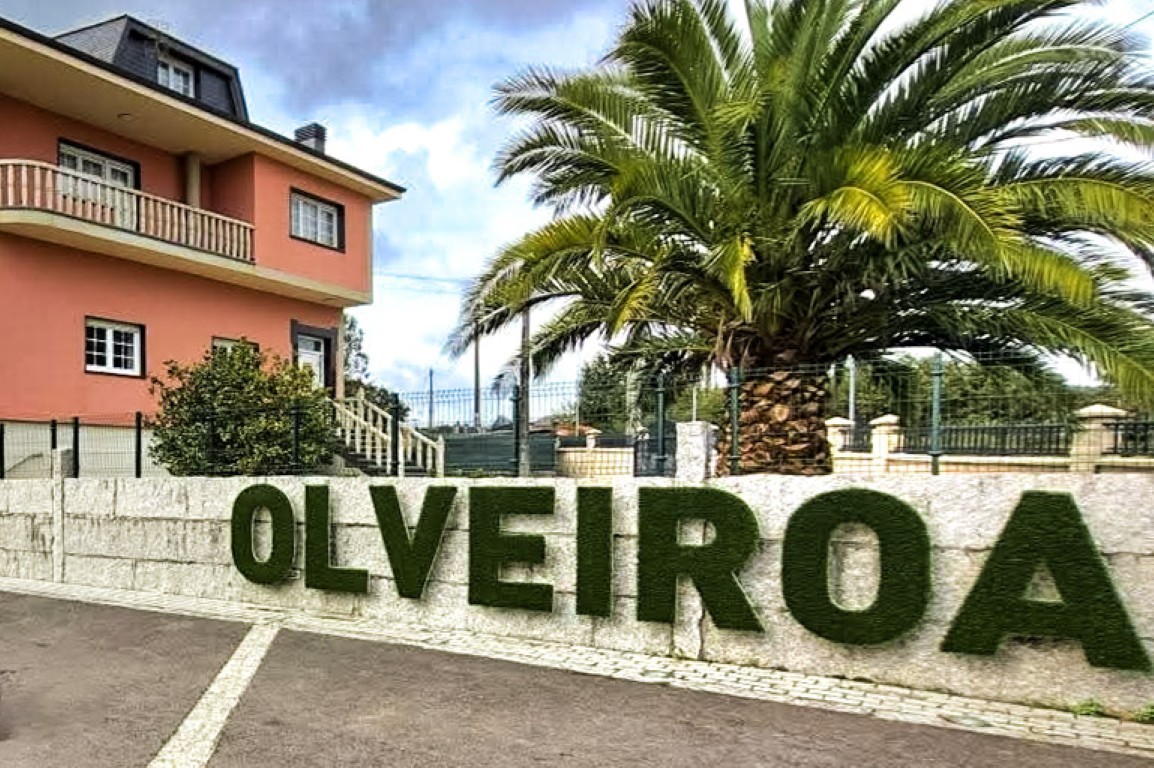
A new day on the trail – Entering the stage
The morning in Negreira begins with an almost solemn heaviness, while the first dim light bathes the massive granite arches of the Pazo do Cotón in a cool, bluish grey. As you pass through the monumental gate that spans the main street, you feel a physical transition: here the security of the small town ends, and before you opens the archaic heart of the Terra de Xallas. In these early hours, the air is saturated with a damp coolness that seems to rise directly from the nearby Barcala River, mixed with the tart, almost medicinal scent of the eucalyptus trees that stand like dark guardians on the slopes. It is a moment of absolute concentration. The rhythmic clicking of your trekking poles on the old asphalt, which still carries the moisture of the night, acts like a metronome for the upcoming, formidable distance of over 33 kilometers. You feel the resistance in your joints, a slight stiffness, which, however, immediately gives way to determination as your gaze wanders west, where the ridges blur in the fog like blank pages of a chronicle that you will fill today with your steps.
This departure from Negreira is a ritual leaving of the “we.” While on the Camino Francés you were often part of a large, breathing organism of pilgrims, here, on the way to the ocean, you notice how the group thins out and the “I” comes to the fore again. You feel the weight of your backpack, which today, in view of the impending solitude, rests a little more seriously on your shoulders, almost as if it wants to embed you deeper into the Galician soil. The historical dimension of this place, shaped by the pazo of the Mariño family, gives you the feeling of stepping through a time gate – away from the religious staging of Santiago, toward the raw, unadulterated natural force of the Galician hinterland. With every step up the hill, away from the last bakeries whose scent of freshly baked bread still holds you like an invisible bond, you dive deeper into a world that makes no compromises. Today is the day of endurance, a day on which the landscape becomes a metaphor for one’s own inner expanse, while the distant rustling of the wind in the treetops sounds like an ancient prayer intended only for you.
Route and elevation profile
- Distance: 33.4 km
- Elevation: ↑ 650 m / ↓ 480 m
- Difficulty: Difficult. The pure distance of over 33 kilometers makes this stage one of the longest and most demanding of the entire journey to the Atlantic.
- Special features: Crossing the Terra de Xallas; ascent to Monte Aro with panoramic views of the Xallas reservoir; historic stone bridge of Ponte Olveira; arrival in the “hórreo village” of Olveiroa.
Today’s route is a dramaturgical composition of constant wave movements that demands everything from the pilgrim, both physically and mentally. After we have left the protected valley of the Barcala, we climb up to a plateau characterized by intensive agriculture and deep forests. The elevation profile shows no extreme peaks, but an incessant succession of ascents and descents that, in the long run, challenge the tendons and psychological steadfastness. It is a “surfing on granite,” where the ground alternates between narrow forest paths, where the moss dampens every step, and long sections on paved side roads that reflect the heat mercilessly in the midday sun. This linearity of the asphalt is no relief here, but a test of monotony, mitigated by the constant scent of eucalyptus and the sight of lonely farmsteads.
The summit of the stage is reached at Monte Aro, a landmark that marks the transition into the catchment area of the Río Xallas. From here, the topography reveals itself as a vast, green labyrinth in which the river has carved its way through the rock. The descent to Ponte Olveira leads over stony paths that require maximum concentration before the flatter terrain on the banks of the reservoir allows for a brief breathing space. The challenge of these 33.4 kilometers lies not in a single steep pass, but in the sheer continuity of movement through a landscape that offers few landmarks. Anyone who starts too fast here will painfully feel the hardness of the last ten kilometers to Olveiroa, when the body is already crying out for rest, but the path still leads over gentle but relentless hilltops.
Variants and small detours
On this stage, there are hardly any significant landscape variants, as the route is largely predetermined by the geography of the high plateaus and the location of the few villages. Nevertheless, the attentive pilgrim is offered a small but fine decision in Vilaserío. One can choose whether to cross the village on the direct path or make a small detour to the church of San Antón. This short detour of only a few hundred meters is a decision for silence and against haste, a moment of pausing in a stage that otherwise urges hurry. Within the walls of the church, time seems to stand still, and the smell of cold stone offers a brief but intense recovery from the vastness of the high plateau.
Another subtle detour arises at Monte Aro. Instead of choosing the direct descent, it is worth lingering for a few minutes at the summit plateau and letting your gaze wander over the Fervenza reservoir. It is not a geographical variant, but a variant of perception – a conscious stop in the horizontal before gravity pulls you back down into the valley. Those who sacrifice this time gain a deeper connection with the Xallas region, which shows itself from up here in all its archaic splendor. In Santa Mariña, there is also the opportunity to briefly leave the path to study the structure of the old farmsteads, whose walls often consist of massive granite blocks obtained directly from the surrounding area. These small moments of deviation are what loosen the flow of the stage and allow the pilgrim not only to traverse Galicia but to absorb it in its material depth.


Description of the path – with all your senses
The path out of Negreira begins with a haptic experience of resistance. As soon as you have left the Pazo do Cotón behind you, the path rears up relentlessly. You feel the pull in your calf muscles as you ascend through the dense oak forest of A Barcala. The ground here is still soft, covered with a thick layer of damp leaves and ferns that almost completely swallow the sound of your steps. You hear the rhythmic dripping of dew from the leaves and the distant, shrill call of a buzzard circling above the treetops. The air here smells of earth, of rotting wood, and the freshness of a Galician morning that still wavers undecidedly between fog and sun. It is a phase of psychological purification; the noise of civilization fades, and all that remains is the gasping of your breath and the beat of your poles on the protruding roots that stick out of the ground like wooden veins.
In Zas, you encounter the architecture of rural solitude. The small hamlets seem to have fallen out of time, their massive stone walls covered with a thick patina of yellow and grey lichens that glisten almost silvery in the morning light. You hear the distant lowing of a cow from an invisible stable, a deep, primal sound that echoes in the vast landscape and reminds you of the archaic permanence of life here. The smell changes: away from the forest freshness toward the sharp, animal aroma of livestock farming and the sweet scent of freshly mown grass lying in the fields to dry. As you wander through these villages, you feel the historical causality of agriculture that has shaped this area for centuries. The haptics of the ground now become harder, the gravel paths challenge the soles of your feet, while the sun slowly dispels the fog and bathes the colors of the landscape in an intense, almost unreal green.
The path to Vilaserío is characterized by the absolute exposure of the high plateau. You enter a world where the wind sweeps unhindered over the barren areas. It tugs at your clothes, cools the sweat on your temples, and brings the distant scent of pine resin from the small forests. You hear the monotonous whistling of the wind in the power lines, a technological sound that seems almost surreal in this archaic environment, like a distant echo of a world you actually wanted to leave behind. The visual world reduces itself to the deep blue of the sky and the infinite green of the pastures. Arriving in Vilaserío, the acoustics change again: the clattering of dishes in one of the few bars and the murmuring of the few pilgrims offer a brief social refreshment. Here you taste the first strong coffee of the day, whose bitter note awakens your spirits and strengthens you for the next, even longer section of solitude.
Behind Vilaserío, the Camino leads through the land of a thousand shades of green. The ground under your feet is now often restless, small stones slip away under your steps, and the attention of your senses focuses on the next secure stride. The psychological strain of this enormous distance begins to make itself felt; the kilometers stretch like elastic bands, and the horizon seems hardly closer despite hours of walking. But in Santa Mariña, the stage reaches a historical depth that is almost physically palpable. As you pass the massive walls of the old farmsteads, you think of the battles against Napoleon’s troops that once took place here in this rugged landscape. You feel the energy of this soil, which has seen so much more than just wandering souls. The smell of burning eucalyptus wood wafts from a chimney, a sharp, homely scent that speaks of permanence and warmth.
The ascent to Monte Aro is the visual and haptic highlight of the day. Your lungs work hard, the air becomes thinner and clearer as you screw yourself up meter by meter to the summit plateau. Once at the top, a visual metamorphosis takes place. You stand on a platform of light and wind, and below you the Xallas reservoir spreads out like a giant mirror of liquid silver, breaking the sunlight into a thousand sparks. You hear nothing but the whistling of the wind in your ears and your own, now calming heartbeat. The historical dimension of the region gives way to a feeling of triumph; you have conquered the Terra de Xallas. The descent to Ponte Olveira leads you over steep, stony paths that challenge your knee joints and show you that the path to the ocean is no stroll, but a physical negotiation with the gravity of Galicia.
In Ponte Olveira, the atmosphere changes radically again. As you cross the historical stone bridge over the Río Xallas, you feel the massive coolness of the granite blocks under your hands when you hold onto the railing for a moment. Below you, you hear the deep, steady gurgling of the water – a powerful, soothing sound that seems to wash away all exhaustion for a moment. Here it smells of damp mud, algae, and the freshness of flowing water, an olfactory contrast to the dry heat of the plateau. The historical causality of the bridge, which since the Middle Ages has offered the only safe crossing over this often torrential river, becomes materially tangible. You feel small between the massive stones, but at the same time infinitely secure in the continuity of the path that has guided pilgrims over the floods here for generations.
The path now leads you along the edge of the valley, the sun burning at an angle from the side and casting long, dramatic shadows over the path. You hear the distant, monotonous humming of the wind turbines on the distant ridges, a deep bass rumble that marks the heartbeat of modern energy production in Galicia. The dust of the country road settles like a grey patina on your clothes and your skin, a haptic reminder of the kilometers covered. Your feet now burn with every step, and the spirit begins to flee into a trance to bridge the remaining distance. But then you suddenly see them on the horizon: the first hórreos of Olveiroa. They rise like small, stone temples above the roofs of the village, a sight that acts like an electric shock of hope.
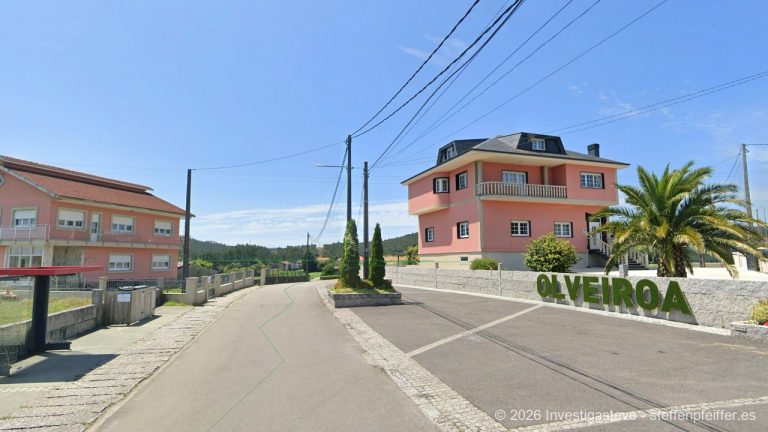
Upon entering Olveiroa, the haptics of the ground change for the last time today. You enter the village, and the change from asphalt to hard cobblestones massages your tired soles in an almost painful but somehow highly welcome way. The air becomes cooler, protected by the dense ensembles of the granaries, which are more numerous here than anywhere else. It smells of old stone, damp moss, and the enticing aroma of a warm dinner being prepared in the hostels. You hear the multi-voiced concert of arriving pilgrims, an acoustic mosaic of exhaustion, laughter, and deep relief. Your hand brushes over the rough wood of an hórreo door, weathered by wind and weather; you feel the grain and the cold of the iron fittings. You have arrived, exhausted to the bone, but fulfilled by the sheer distance you have conquered today with your own will.
The reflection in the evening usually takes place in the shadow of one of the many hórreos that make Olveiroa so unique. You sit on a stone bench, legs up, and watch as the setting sun bathes the granite pillars in a warm, almost glowing orange. You only hear the distant ringing of the village bell and the soft rustling of the wind in the nearby fields, a sound that no longer represents a threat but will lull you to sleep. The 33 kilometers have filtered you; they have washed everything unnecessary out of your head and made room for the silence of the stone. You realize that the way from Negreira to Olveiroa was no mere march, but a journey through the layers of time and your own resilience. In the cool darkness of the Galician night, you become aware: tomorrow you will smell the first breath of the ocean, and tonight you simply enjoy the simple happiness of standing still.
Refreshments, Accommodation & Supplies
The supply situation on this stage is a logistical challenge that requires exact planning and clever preparation. Since long sections lead over uninhabited highlands and through deep forests, carrying at least two litres of water and energy-rich snacks is absolutely indispensable. In the small hamlets between Vilaserío and Santa Mariña, there are hardly any opportunities for a stop, which increases the psychological burden of the distance. In Vilaserío and Santa Mariña, you will find traditional bars offering simple but hearty Galician home cooking – be sure to try the homemade omelette (“tortilla”), which is often served still steaming.
In Olveiroa, the hostel restaurants entice with excellent pilgrim menus that include regional specialties such as “pulpo á feira” or a hearty “caldo gallego,” which quickly replenishes spent power reserves. Olveiroa has an impressive infrastructure of accommodation for its size. The Albergue de Olveiroa (municipal) is housed in beautifully restored old stone houses and offers a unique, almost monastic atmosphere. Private hostels like the “O Logoso” shortly before Olveiroa are known for their high standard, family management, and excellent cuisine, making them an ideal anchor for excellent recovery.
In Negreira, there are pharmacies, ATMs, and all the necessary supply facilities of a small town. Along the rest of the route, services are reduced to an absolute minimum; basic services for pilgrims are only found again in Olveiroa, while for larger errands or medical emergencies, the town of Cee (in the next stage) represents the nearest large centre.
The highlight today
The absolute unique selling point of this stage is the monumental presence of the hórreos at the end of the stage in Olveiroa. These typically Galician storage granaries, perched on stone pillars to protect the valuable harvest from moisture and rodents, are not just functional buildings here, but stone witnesses to the will to survive of an entire region. The special feature is the density and the aesthetic perfection with which they shape the entire village image. When you wander between these stone giants in the evening and the light of the setting sun touches the granite pillars, you feel the historical causality of a culture that has adapted over millennia to the harsh conditions of the Atlantic. It is a haptic and visual shrine of permanence that leads the pilgrim deep into the archaic heart of Galicia and shows them that wealth was once measured here in grain and stone.
A second special aspect is the psychological effect of the “great distance” and the associated sensory deprivation. On the 33.4 kilometers between Negreira and Olveiroa, you will inevitably be confronted with your own exhaustion and inner monologue. The highlight today is the experience of the “second wind,” which often occurs when you exceed the 25-kilometer mark. At this moment, the mind often detaches from the physical pain, and a meditative state ensues in which the body only functions rhythmically. This stage is thus a school of mental strength and endurance. Anyone standing in front of the bridge of Ponte Olveira in the evening carries a new form of self-assurance – the deep knowledge that one’s own will is capable of overcoming vast landscapes and inner resistance alike.
The Terra de Xallas, in particular, is rich in sensory experiences for the visitor. The mixture of the sharp smell of eucalyptus, the incessant whistling of the wind on Monte Aro, and the powerful gurgling of the Río Xallas creates an atmosphere of wilderness. The special thing here is the feeling of being a real explorer again. While many parts of the St. James Way today seem tourisically polished, here you encounter the raw, unadorned natural power of Galicia. The encounter with this original landscape makes the second stage of the path to the ocean one of the most authentic and profound experiences of the entire journey, where the silence of the plateau becomes the actual goal.
Reflection at the end of the stage
When you stroll through the illuminated alleys of Olveiroa in the evening, the massive granite facades of the hórreos glistening in the warm light and the wind whistling softly through the narrow cracks of the slate roofs, you feel a deep transformation of your own state. Today’s stage has not only challenged you physically to your limits; it has gutted and reassembled you. The sheer distance of 33 kilometers has silenced the unnecessary noise in your head. In the stillness of the evening hours, surrounded by stones that have defied every storm for centuries, you realize that the Camino is not a race against the clock, but a slow, sometimes painful walking towards your own truth.
Olveiroa is a place of reward and pause. Here, in the shadow of the “cathedrals of the peasants,” the haste of the modern world is put into perspective. You notice that the path today has led you through all states of being – from the heroic silence of Santa Mariña to the majestic freedom of Monte Aro and the haptic security of the old stone bridge. In reflecting on the day, it becomes clear to you that the 33 kilometers of solitude were necessary to appreciate the security of the night in its full depth. You are ready for what is to come – the ocean is now calling unmistakably, and tonight you simply enjoy the simple, priceless happiness of arriving in the eternity of stone.
Camino of the Stars
This stage lies on the Camino de Fisterra y Muxía, on the stage from Negreira to Olveiroa. The sequence of places is as follows:
| Stage | Start | Destination | Distance (km) | Elevation (+/–) | Difficulty | Key Stops |
| 2 | Negreira | Olveiroa | 33.6 | +710 / –620 | moderate–demanding | A Pena, Vilaserío, Santa Mariña, Maroñas, Ponte Olveira |
Did you feel the moment when the wind on Monte Aro blew away your doubts, or did you find your very personal story in the deep shadows of the hórreos of Olveiroa? What face did your exhaustion have after 33 kilometers when you stepped onto the bridge of Ponte Olveira? Share your “wide” Camino moment with us – your experience is another star in the sky of the pilgrim community on the way to the end of the world.
About the Author


Negreira – The Stone Gateway to the Wild West of Galicia
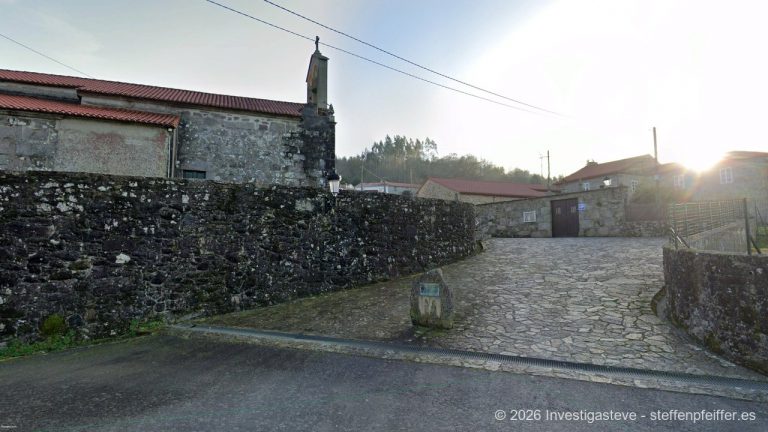
A Pena – The Stone Guardian Over the Barcala Valley
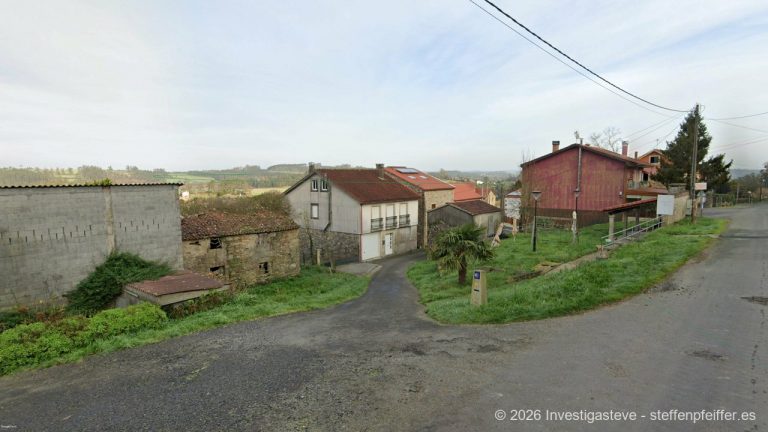
Vilaserío – The Stone Rest in the Heart of the Galician Hinterland

Santa Mariña – Where Granite Whispers Stories and the Vastness Frees the Mind
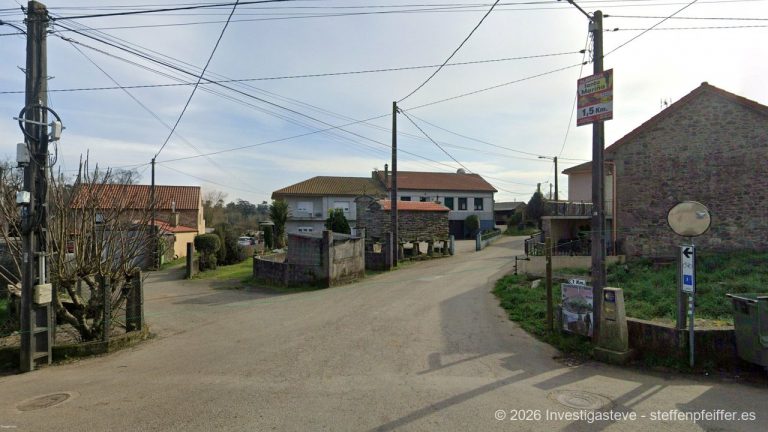
Maroñas – The Stone Echo of Terra de Xallas
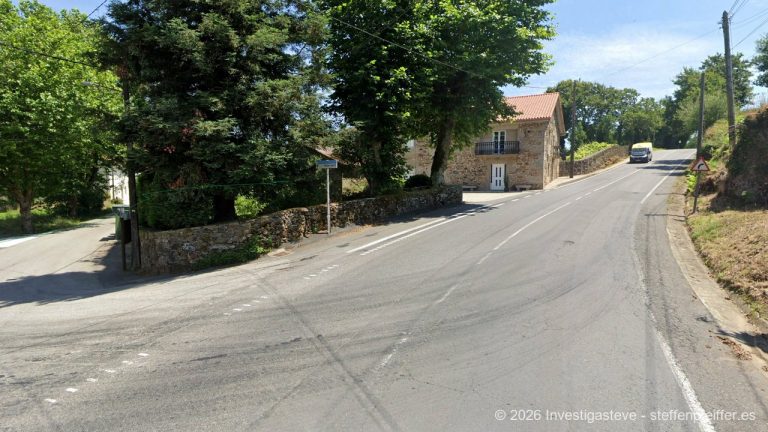
Ponte Olveira – Where the Stone Guards the Border Between Worlds