A First Glance – Introduction & Atmosphere
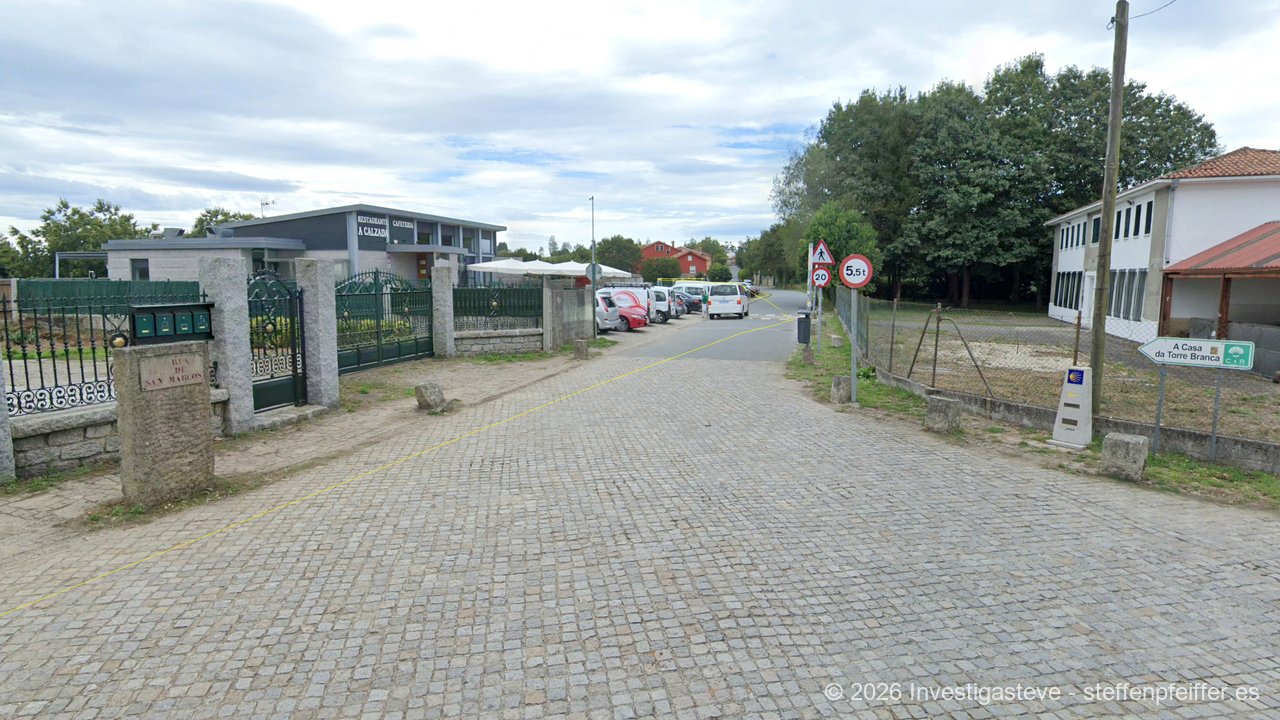
When you leave the dense, almost hypnotic eucalyptus forests behind Lavacolla and the ground under your feet gradually changes from soft forest humus to firm, often cracked asphalt, you reach San Marcos. It is a place of transitions, a threshold location where the rural solitude of Galicia meets the restless periphery of Santiago de Compostela. Here, on the last five kilometers before the cathedral, the atmosphere condenses in a way that is almost impossible to put into words. You feel the distant vibration of the nearby N-634 national highway, an auditory herald of civilization that mixes with the gentle rustling of the wind in the treetops. Here it smells of a peculiar mixture of damp earth, the sharp aroma of pine needles, and the distant, metallic scent of kerosene – an indication of the nearby airport, which for many pilgrims will later become the gateway back to their old world.
The psychological weight of the last weeks seems to take on a new quality here, in the modest alleys of San Marcos. It is no longer the pain of exhaustion, but an electrifying impatience that shoots through your limbs. Your hands, gripping the pilgrim’s staff, feel the rough texture of the wood, marked by the rain and sweat of the past hundreds of kilometers. In San Marcos, it suddenly becomes clear to you: The journey you once began in distant France or on the banks of the Ebro is nearing its inevitable end. The houses here seem functional, almost a bit sober, but for the pilgrim, they are the last guardians before the holy mountain, Monte do Gozo. It is a moment of pause, in which time stretches like a taut rubber band, just before you dare to make the final ascent.
What This Place Tells
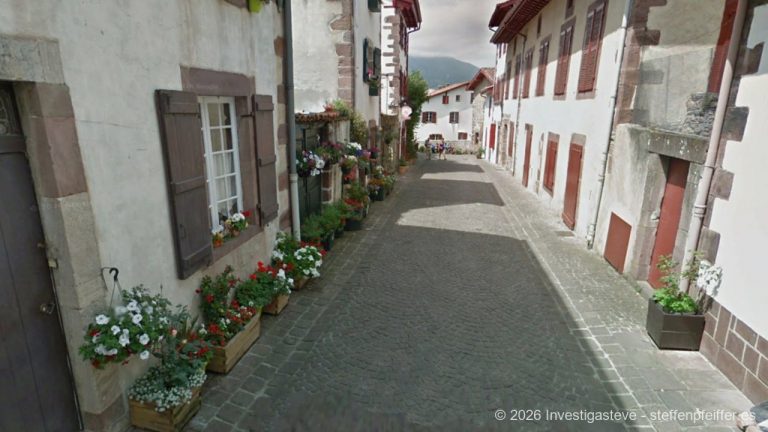
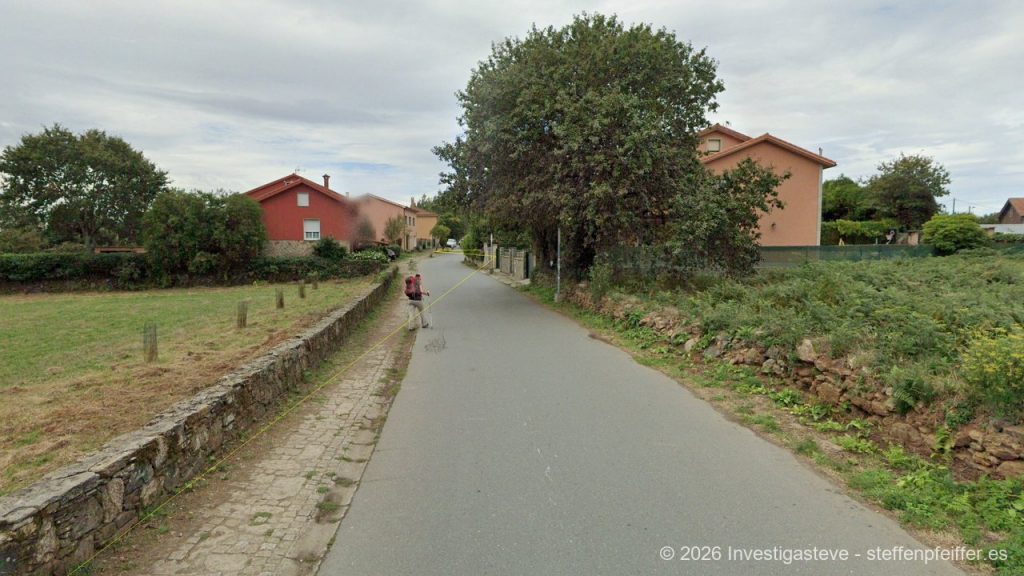
San Marcos is more than just a collection of houses on the edge of the city; it is the historical nucleus of the Parroquia de Bando. The history of this place is inextricably linked to its strategic location on the access route to the holy city. Even in the Middle Ages, this area was an important point of orientation. Whoever reached San Marcos knew that the hardships of the mountains and the solitude of the Meseta had been definitively overcome. Historically, the village was always a place of transit, a point where the paths of merchants, drovers, and pilgrims crossed. The architecture reflects this functional character: granite walls that withstand the harsh Galician weather, and small gardens where cabbage and potatoes grow, bear witness to a deep rooting in the soil, even though the big city of Santiago already casts its shadow far ahead.
The causality of the settlement can be traced back to pre-Christian times, when the strategic heights around Santiago were already used by Celtic tribes. San Marcos lies on one of these waves of the landscape that line the way to the cathedral like stone billows. Over the centuries, the hamlet transformed from a purely agricultural Aldea into an outpost of modernity. Today, San Marcos stands as an example of the contrast between tradition and progress. While on one side pilgrims with their archaic staffs and heavy backpacks move through the streets, on the other side planes thunder overhead – a psychological shock for anyone who has spent weeks in the silence of nature. But it is precisely this friction that defines the character of San Marcos: It is the place where you are forced to slowly leave the spiritual bubble of the Way and synchronize yourself again with the material world.
When you walk through San Marcos today, you feel the history in the small details. In the weathered inscriptions on old house walls or in the way the paths are laid out. It is a place that needs no great monuments to emphasize its significance. Its significance lies in its position as a psychological filter. Here, it is decided with which inner attitude you enter Santiago. The inhabitants of San Marcos have watched the coming and going for generations; they are the silent witnesses of a million-fold metamorphosis. In their eyes, a calm serenity is often reflected, a knowledge that everything flows and that every pilgrim, no matter how different, ultimately seeks the same view towards Monte do Gozo.
Addresses & tips in San Marcos
| Accommodation | 2 |
| Restaurants | 3 |
| Bars & Cafés | 1 |
| Services | 1 |
Show all 7
Camino Distances
In this final phase of the Way, the distances become shorter, while the emotional intensity increases exponentially.
| Previous Location | Distance (km) | Next Location | Distance (km) |
|---|---|---|---|
| Vilamaior | approx. 2.5 km | Monte do Gozo | approx. 0.5 km |
Sleeping & Arriving
Arriving in San Marcos is characterized by a strange intermediate world. There are no large pilgrim hostels here in the classical sense, since the gigantic center on Monte do Gozo is only a stone’s throw away. But that is precisely what makes the charm. When you arrive in San Marcos, you are usually not looking for a bed for the night, but rather a moment of orientation. The haptic experience of the terrain is crucial here: The path rises gently but steadily, and each step on the hard ground reminds your joints of the weight of what you have achieved. You feel the heat rising from the asphalt, or the clammy humidity of the Galician mist, which often spreads over the houses here like a protective veil.
Psychologically, San Marcos is a place of consolidation. Many pilgrims pause here to rearrange their backpack one last time, tighten their shoelaces, or simply take a deep breath before daring the final ascent to the viewpoint. It is not a place of staying, but a place of getting ready. The atmosphere is calm, almost a bit sleepy, which provides a pleasant contrast to the bustling activity that awaits you only a few kilometers further in the old town of Santiago. You feel a bit like being in an anteroom, smoothing your clothes before entering the ballroom.
The few private accommodations or room rentals in the area offer an intimacy that is often missing in the mass quarters. Those who stay here overnight usually do so consciously to avoid the hustle and bustle of Monte do Gozo. In the evening, you hear the distant roar of the city, which reaches the ears like a deep, monotonous hum, interrupted only by the occasional barking of a dog or the call of a bird from the nearby forests. It is a sleep in the certainty that the goal is within reach, which creates its own form of peace – or indeed sleepless anticipation.
Eating & Drinking
In San Marcos you will find no haute cuisine, but honest, functional refreshment precisely tailored to the needs of the exhausted hiker. The small bars and cafés along the way smell of freshly brewed, strong coffee and the sweetish aroma of “Bollería” – pastries that provide the necessary energy for the final meters. It is the taste of simplicity: a “Café solo” that runs down the throat hot and bitter, or a cool “Aquarius” that restores the mineral balance after the long march through the Galician humidity. Haptically, the smooth surfaces of the metal tables in the outdoor areas are a cool contrast to the warm, sweaty hands of the pilgrim.
A special experience is the brief, informal conversation with the innkeepers. They serve you your drink with a routine that is never impolite. They know you are one of thousands, yet they often give you that knowing smile that says: “You’ve almost made it.” The taste of a simple ham-and-cheese bocadillo, its bread crispy on the outside and soft on the inside, becomes a culinary reward here. It’s not about gourmet experiences, but about the psychological satisfaction of a basic need in a moment of highest emotional tension. Here, in the last bar before the summit, freedom already tastes a little like the wine you will later drink in the alleys of the old town.
Services & Logistics
Logistically, San Marcos acts as an important junction on the periphery of Santiago. Since the place is located directly at the junction to the Monte do Gozo grounds, the infrastructure is designed to channel the flow of pilgrims. It is a place for practical decisions: Do I walk the last kilometers on foot, or is my physical strength so exhausted that I take the bus? The acoustic backdrop here is complemented by the regular hissing of the pneumatic doors of the city buses that connect San Marcos with the center.
Shopping: There are small options for the most essential needs, like water or small snacks, but for larger errands, the journey into the city or to the nearby shopping center is necessary.
Gastronomy: Informal cafés and bars offer quick refreshments and simple meals, ideal for a short rest before the final exertion.
Overnight Stay: Local room rentals offer a quiet alternative to the large hostels, but are limited and should be checked in advance.
Public Facilities: The bus connection to the center of Santiago (Line 6 or 7) and to the airport is excellent and forms the backbone of local mobility.
San Marcos is the place where the logistics of the Way meet the logistics of the city. Here, you often have to decide whether to postpone the pilgrim existence a little longer or whether to surrender to the rhythm of urban life. For many, the bus stop is a place of temptation, yet the historical causality of pilgrimage almost demands covering these last kilometers under your own power. The roads are well-developed, the signage is complete – you can’t get lost here anymore, you can only get lost in your own thoughts.
Don’t Miss
- The Chapel of San Marcos: A small, often overlooked sacred place that invites a brief inner contemplation before the hustle and bustle of Monte do Gozo begins.
- The transition from forest to city: Pay close attention to the moment when the scent of eucalyptus gives way to the smell of civilization – a key sensory event.
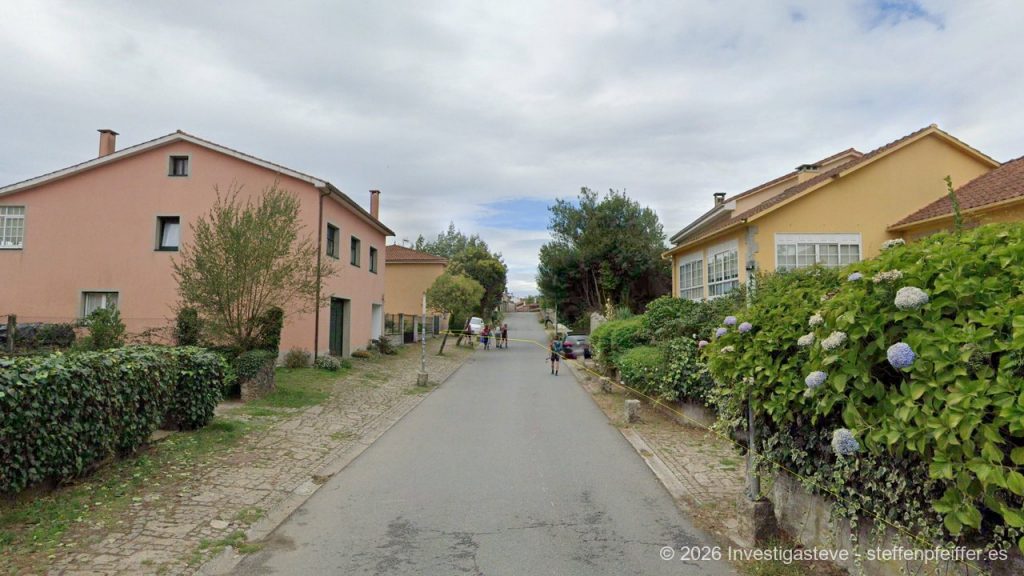
- The local flora: In the gardens of San Marcos, you often see magnificent camellias and hydrangeas, typical of the humid Galician climate.
- The interaction with the locals: A brief “¡Hola!” or “Buen Camino” up here often feels more heartfelt than in the anonymous crowd of the city.
Insider Tips and Hidden Places
Beyond the main road that cuts through San Marcos, there are small paths that lead into the old districts of Bando. If you take the time and deviate a few hundred meters from the official yellow arrow, you will discover a Galicia that has preserved its rural charm despite the nearby highway. Here you will find old walls of unhewn stone, covered with thick, emerald-green moss. It smells of damp fern and old wood. In these hidden corners, the distant rumble of the planes suddenly seems to fall silent, and you can hear again the gentle gurgling of small streams making their way through the hills. They are places of absolute silence, where you can close your eyes for five minutes and let the entire journey flash before your inner eye one more time in fast-forward.
Another hidden spot is a small viewpoint north of the village, from which you cannot see the cathedral, but can look back into the valley of Lavacolla. It is psychologically fascinating to see how the Way winds like a thin ribbon through the green landscape. In the distance, you can make out the contours of the hills you laboriously climbed hours earlier. This backward glance is often more important than the forward glance because it visualizes your achievement. The haptics of the ground here are more original, less shaped by man, and you feel the connection to the earth of Galicia one more time especially intensely before finally immersing yourself in the stone heart of the city.
Moment of Reflection
San Marcos forces you to take an inner inventory. In the psychology of pilgrimage, this is the phase of pre-acceptance of the end. You stand at an invisible boundary. Behind you lie eight hundred kilometers full of hardships, wonders, and pain. Ahead of you lies the goal you have so often longed for. Yet suddenly you feel a strange reluctance. Do you really want to arrive? In San Marcos, you become aware that the Way has created its own identity, which is now about to dissolve. The rough air filling your lungs carries the essence of your entire journey. You feel every muscle, every tendon in your body – a haptic awareness often lost in everyday life.
Here, at this unspectacular place, the actual transformation takes place. It is not the glamorous arrival on the Obradoiro square, but the quiet decision in San Marcos to take the last step with dignity and awareness. You reflect on the people you met, the conversations that have blown away in the wind, and the silence that often accompanied you. San Marcos is the filter that sifts out the inessential. When you continue from here, you finally leave a part of your old self behind. It is a moment of emotional cleansing that prepares you to stand before Saint James. You breathe deeply, feel the resistance of the ground under your soles, and you know: Everything that was has led you exactly to this point.
Camino of the Stars
This place is located on the Camino Francés, on the stage from Lavacolla to Santiago de Compostela. The sequence of locations is:
Lavacolla → Vilamaior → San Marcos → Monte do Gozo → Santiago de Compostela
Did you feel that brief moment of hesitation in San Marcos before climbing Monte do Gozo? Was it a place of quick rest for you or a point of deep inner contemplation? Share your thoughts about this last outpost before Santiago with us. Perhaps you have a photo of one of the small gardens or experienced a special encounter in one of the bars? We are curious about your story from the threshold to the goal!
About the Author