A first look – Entry & Atmosphere
When you have left behind the steep, almost relentless ascent from the cobblestone streets of Corcubión, there where the breath becomes short and the calves feel the true hardness of the Galician coastal topography for the first time, something magical happens. You reach a gentle hilltop where the world suddenly holds its breath. Amarela does not welcome you with splendor or noise, but with an expanse that lies like a cooling hand on the heated mind of the wanderer. It is that moment that the locals reverently call “El Suspiro de Amarela” – the sigh of Amarela. Up here, about 80 meters above the tirelessly working Atlantic, the tunnel of houses and walls breaks open and reveals a panorama that is among the most precious secrets of the Camino Fisterra. The Ría de Corcubión spreads out below you like a banner of liquid sapphire, lined by the deep green of the wooded slopes that nestle protectively around the water.
The air up here has a completely different consistency than down in the harbor. It is lighter, purer, and carries a complex olfactory signature: the sharp, salty spray of the sea mixes with the sweet, heavy aroma of the gorse – the “Xestas” – which in the spring months bathes the hills in an almost unreal, glowing yellow. It smells of warm earth, of dry fern, and of the distant, resinous scent of the pine and eucalyptus forests that surround the hamlet like a shadowy belt. Your steps on the soil of Amarela create a dull, earthy sound that echoes in the almost archaic silence of the place. Only the occasional rustle of the wind in the high grasses of the minifundios and the distant, melancholic lowing of a cow on the lower pastures interrupt the meditative calm. Arriving in Amarela means feeling the civilization at your back for a moment and opening yourself entirely to the raw, honest beauty of rural Galicia. It is a place of threshold experience, where the body comes to rest while the mind already senses the distant Cape Finisterre on the horizon.
What this place tells
The history of Amarela is a narrative of tenacity, rural modesty, and the relentless rhythm of Galician agriculture. For centuries, this small hamlet, which today administratively belongs to the Parroquia San Pedro de Redonda, was a functional cog in the machinery of the rule of the Counts of Altamira. While the nobility resided in Corcubión and maritime trade flourished, Amarela delivered the daily bread – literally. The terraced fields, separated by ancient, lichen-covered stone walls, bear witness to a time when every square meter of soil had to be laboriously wrestled from the hard granite. Here, maize for the typical heavy bread was stored, and the Hórreos, which still sit like small temples of constancy between the houses today, are the stone witnesses of this art of survival. Every Hórreo here tells of the fear of hunger and the protection of the harvest from the all-pervading moisture of the Atlantic.
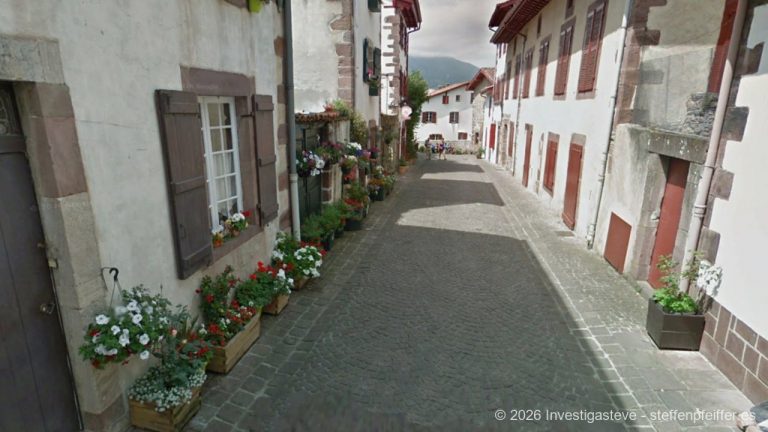
In the walls of the traditional stone houses, built from massive gray granite, the memory of the great Galician waves of emigration between 1880 and 1960 is deeply engraved. Many windows in Amarela once looked upon sons and daughters who descended this hill to seek their fortune in America or the rest of Europe, often with only a hope in their luggage that was as barren as the soil of the Costa da Morte. Yet Amarela is not a place of mere melancholy. The stones here possess their own, almost defiant dignity. When you look at the Cruceiro at the entrance to the village, this simple stone cross that watches over the path like a guardian, you feel the deep spiritual anchoring of the people. It is a place that has learned to live with the solitude and the wind, and which today, in the 21st century, is experiencing an unexpected renaissance.
The rediscovery of the place by the modern pilgrim flow has given Amarela a new voice. Where once only ox carts used the path, people from all over the world wander today. Yet the place has managed not to sell its soul to commerce. There are no glittering souvenir shops here; the story is still told by the hard hands of the few remaining farmers who lead their cows to the pastures while the pilgrims pass silently by. Amarela tells of “Terreña”, the deep connection to the earth that has survived even the most powerful social upheavals. It is a place of transition that teaches you that progress does not always mean speed, but often just preserving the essentials in an increasingly loud world.


Camino Distances
In the following table, you will find the distances for the current stage on the Camino Fisterra y Muxía (CFM 3a):
| Previous Location | Distance (km) | Next Location | Distance (km) |
|---|---|---|---|
| Corcubión | approx. 1.5 km | Estorde | approx. 1.0 km |
| San Roque (Vilar) | approx. 1.0 km | Sardiñeiro | approx. 2.5 km |
Overnight Stay & Arrival
Arriving in Amarela marks a deep psychological turning point on the journey to the cape. After the physical effort of the ascent, reaching this plateau is a ritual act of liberation. You notice that you are there when the path levels out and the first hórreos appear like stone monuments at the roadside. It is an arrival for the senses: the muscles relax, the lungs fill with the clear mountain air, and the eye can feast on the expanse of the ría. Amarela is not a place for mass accommodation; it is a refuge for those who prefer the quality of silence over the hustle and bustle of larger towns.
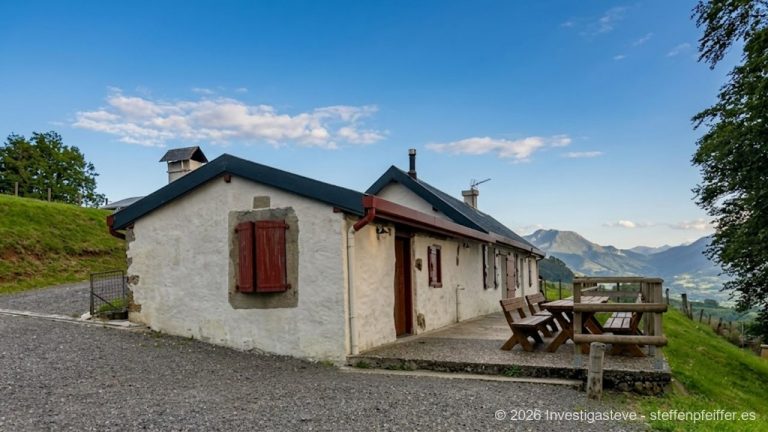
The jewel of local accommodation is undoubtedly the Albergue San Pedro. In pilgrim circles, this hostel is often considered the best accommodation on the entire Camino a Fisterra. To arrive here means to immerse yourself in a world of modern hospitality that fits seamlessly into the historical building fabric. The thick granite walls preserve a coolness inside that feels like a blessing after the hot ascent. When you put your hiking boots in the entrance area and feel for the first time the high-quality mattresses and the immaculate cleanliness of the rooms, you realize that Amarela is a place of regeneration. Many pilgrims consciously choose this hamlet for their last night before Fisterra to leave behind the “mass” of day pilgrims in Santiago or Cee and to prepare for the finale in the private atmosphere of a family-run hostel.
Staying overnight in Amarela is characterized by an acoustic exclusivity. While in the larger stage destinations the noise of the bars often penetrates through the windows, here at night you only hear the breath of the ocean echoing up from below and the occasional calling of an owl in the nearby eucalyptus forests. It is a deep, restful sleep as one only finds in places that still vibrate with the rhythm of nature. In the morning, waking up in Amarela is a gift. When the first mist – the “brétema” – lies like a white cloth over the Ría de Corcubión and the sun slowly reveals the contours of the cape on the horizon, you feel a clarity that perfectly equips you for the last ten kilometers to Fisterra.
The social fabric when arriving in Amarela is intimate. You get to know each other quickly here, share stories of the steep ascent in the hostel, and enjoy the view from the stone bench at the cruceiro together. Those who stay in Amarela decide against the anonymity of the large pilgrim centers and for an authenticity that has become rare in Galicia. It is the arrival in one’s own center, supported by the simple dignity of a place that has nothing to prove but simply is.
Eating & Drinking
The culinary situation in Amarela is a prime example of returning to the essentials. Since the hamlet has no commercial restaurants or bars of its own, the pilgrim here is dependent on their own planning and the hospitality of the hostel. Yet precisely this lack of “fast” catering makes eating in Amarela a conscious experience. Those who rest here often bring their supplies from Corcubión or Cee – a piece of hearty Galician cheese, a dark chorizo, and the indispensable, sturdy farmhouse bread. A picnic on one of the old stone walls on the eastern edge of the village, while the view sweeps over the bay, tastes more intense than any three-course menu.
The haptic experience of cooking in the communal kitchen of the Albergue San Pedro is a highlight for many. Here, the smells of freshly brewed coffee and regional vegetables, which often come directly from the surrounding gardens, mingle. It is an honest, earthy cuisine. Those lucky enough to be here during harvest time can perceive the sweet scent of freshly harvested corn or taste apples that still carry the warmth of the Galician sun. In Amarela, you dine with the landscape: the salty breath of the sea tickles the palate while you bite into a juicy empanada that you packed in the valley in the morning.
A secret tip for supplies is trusting in local products that are often offered informally. Occasionally, you will find baskets of fruit or vegetables at garden fences and a small tin for a few coins – the principle of honesty is still alive here. In Amarela, the preferred drink is the clear, soft water of the region or a sip of a simple Ribeiro wine enjoyed in the evening sun. It is a gastronomy of deceleration; you take time for every bite, chew more slowly, and feel the energy returning to the body. Eating in Amarela means treating yourself to the luxury of simplicity. It is the perfect preparation for the stomach and the soul before storming the rich fish restaurants in Fisterra.
Supply & Logistics
Logistically speaking, Amarela is a place of radical concentration. Anyone coming here must know that they are leaving the world of pharmacies, ATMs, and supermarkets for a moment. The entire pilgrim-relevant infrastructure is concentrated in the Albergue San Pedro. Everything is available here to ensure survival at a high level: washing machines, dryers, Wi-Fi, and modern sanitary facilities. It is an island of functionality in the middle of an agrarian idyll. Anyone needing special medication or cash should definitely take care of this in Corcubión (approx. 1.5 km back) or in the administrative town of Cee (approx. 4 km away).
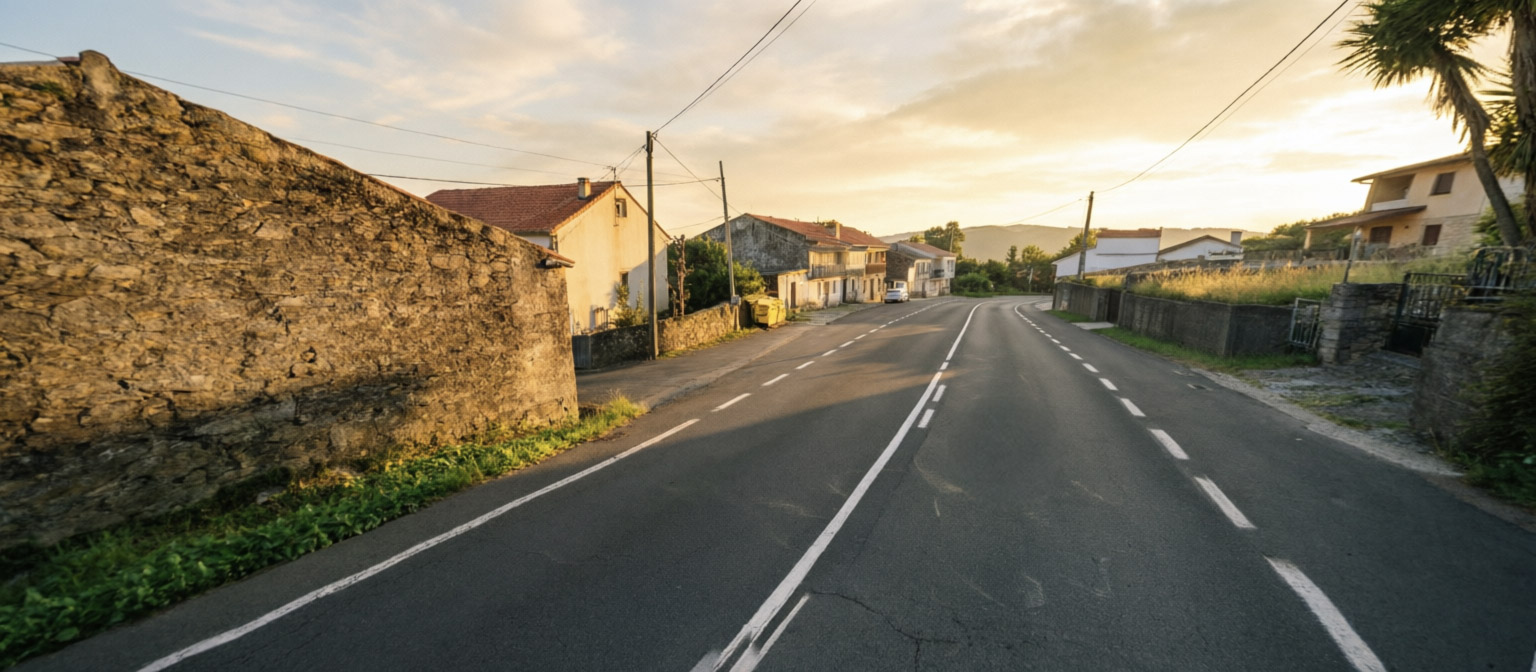
The connection to the further path is exemplary in Amarela. The Camino leads directly through the center and is perfectly marked with the classic yellow arrows and scallop shell symbols. The ground here changes from the hard cobblestones of the ascent to pleasant forest and field paths, which is a blessing for the joints. Anyone needing logistical support with luggage transport can rely on the common services serving Amarela as a fixed base; bags are safely deposited in the hostel. It is a logistics of short distances within the village, but wide planning outside.
Shopping: No shops or kiosks available; supplies must be topped up in Corcubión or Cee.
Gastronomy: No bars or restaurants in the village; self-catering or use of the hostel kitchen is required.
Accommodation: The Albergue San Pedro is the central and high-quality option; further capacities can be found in Estorde (1 km) or Sardiñeiro (2.5 km).
Public facilities: No authorities, doctors, or post offices; all administration takes place via Corcubión.
In conclusion, it can be said that the logistics in Amarela force the wanderer towards autonomy but simultaneously free them from the burden of constant choice. You concentrate on what you have in your backpack and on the strength of your own legs. The mobile network works excellently up here on the hilltop, which allows the organization of the next stages or the return journey without problems. Amarela is functional enough to be safe, but modest enough not to disturb the natural character of the journey with commercial distractions. It is the logistics of freedom.
Don’t miss
The first view of the ría: Pause at the highest point of the village and enjoy the panorama – here you understand for the first time why Galicia is called the land of the fjords.
The hórreo collection: At the southern edge of the village, three of these traditional granaries stand almost majestically in a row – a perfect motif for lovers of Galician architecture.
Overnight stay in the Albergue San Pedro: Treat yourself to the comfort of one of the best-rated hostels on the path to be fresh for the finale.
The cruceiro at the entrance: A moment of silence at this stone cross connects you with the centuries-old tradition of St. James pilgrims.
The gorse blossom (xestas): If you are on a pilgrimage in spring, let yourself be enchanted by the yellow sea of color and the beguiling scent.
Sunset at the mirador: Go the few meters to the eastern edge of the village to see how the sun transforms the bay of Corcubión into pure gold.
Insider tips and hidden places
Away from the yellow arrows, Amarela hides small corners that only catch the eye of those willing to slow down the pace even further. One of these places is the “Mirador de Amarela” at the eastern edge of the village. It is a small elevation with a simple stone bench, almost completely surrounded by blackberry bushes and wild fennel. Here you are absolutely alone. While most pilgrims hurry on towards Estorde, this spot offers the opportunity to literally soak up the silence of the ría. It is the ideal place to open your diary or just listen to the whispering of the distant surf, which reaches up here like a calming rustle.
Another secret tip is the narrow path that leads steeply north behind the hórreo collection. It is actually only used by farmers to reach the upper pastures, but after just a few minutes of walking, it offers a look back at Corcubión that visualizes the entire topographical achievement of your ascent. From up here, the church towers of San Marcos look like toys, and you understand the strategic location of Amarela as a guardian over the bay. In the wall crevices of this path, rare ferns and mosses thrive, a tiny ecosystem that testifies to the purity of the local air.
Those interested in spiritual history should venture a small detour (approx. 1 km) to the Romanesque church of San Pedro de Redonda. It is often locked, but its façade with vegetal decorations and the simple force of the 13th-century masonry radiate a calm that works deep into the soul. Here one often finds small piles of stones left by pilgrims as votive offerings – a silent archive of hopes and prayers. Near the church, there is also a small spring whose water is ice-cold and emerges directly from the rock. It is a place that perfectly symbolizes the region’s connection to water and faith.
Finally, it is worth observing the pastures at the northern edge of the village in the early morning hours. When the cows graze in the first light and the dew still glitters on the stone walls, Amarela reveals its archaic side. It is a picture that has hardly changed for centuries. Those who search the wayside with a lowered gaze often find fragments of blue slate or white quartzite – small geological treasures of the Costa da Morte that lie in the earth like smooth-polished gemstones. These unspectacular, quiet discoveries are what make Amarela in memory a place that is far larger than its modest population would suggest.
Moment of Reflection
In Amarela you stand at a threshold that is more than just a point on the map. It is the place of the “First Sigh”. While you sit on the stone bench and let your gaze wander over the Ría de Corcubión, a question inevitably arises: What do I leave behind in the valley, and what do I take with me on the last kilometers? The steep ascent from Corcubión was more than just a physical effort; it was a metaphor for the hurdles you have already overcome on your life path or on this Camino. In Amarela you are allowed to celebrate this victory – not loudly and triumphantly, but quietly and humbly. The sigh that escapes your lips here is the purest form of gratitude.
The transition from the urban civilization of Corcubión to the rural authenticity of Amarela invites you to take off your own mask. Up here, where there are no shops to distract you and no restaurants to entertain you, you are thrown back on yourself. The sea in the distance is no longer a goal that you only reach tomorrow, but a presence that already envelops you now. In the simplicity of the stone houses and the constancy of the hórreos, you recognize that the essential is often inconspicuous. Amarela challenges you to appreciate the quality of the “in-between”. You are no longer at the beginning, but not yet at the end. This suspended state is a sacred space.
Perhaps you realize here that true freedom does not consist in arriving, but in having the courage to go further – purified by the wind and strengthened by the silence. The expanse of the Bay of Corcubión reflects the expanse of your own possibilities. When you leave Amarela tomorrow and begin the descent to the coastal villages, you take this sigh of relief with you. You no longer walk as someone fighting the mountain, but as someone flowing with the wind. Amarela gives you the realization that after every difficult climb, a level of peace waits – you just have to walk long enough to reach it.
Camino of the Stars
This place is located on the Camino Fisterra y Muxía (CFM 3a), on the stage from Olveiroa to Fisterra. The sequence of locations is:
Olveiroa → Hospital → O Logoso → Cee → Corcubión → Redonda → Amarela → Estorde → Sardiñeiro → Fisterra
Did you also feel this moment of absolute relief in Amarela when you caught the first glimpse of the sea after the climb? Or did you discover a detail in the Albergue San Pedro that made your stay unforgettable? Share your personal impressions, your photos of the blooming xestas, or your tips for the best rest in this quiet hamlet with us. Your story makes this guidebook alive and valuable for all subsequent pilgrims. We look forward to your comment!
About the Author