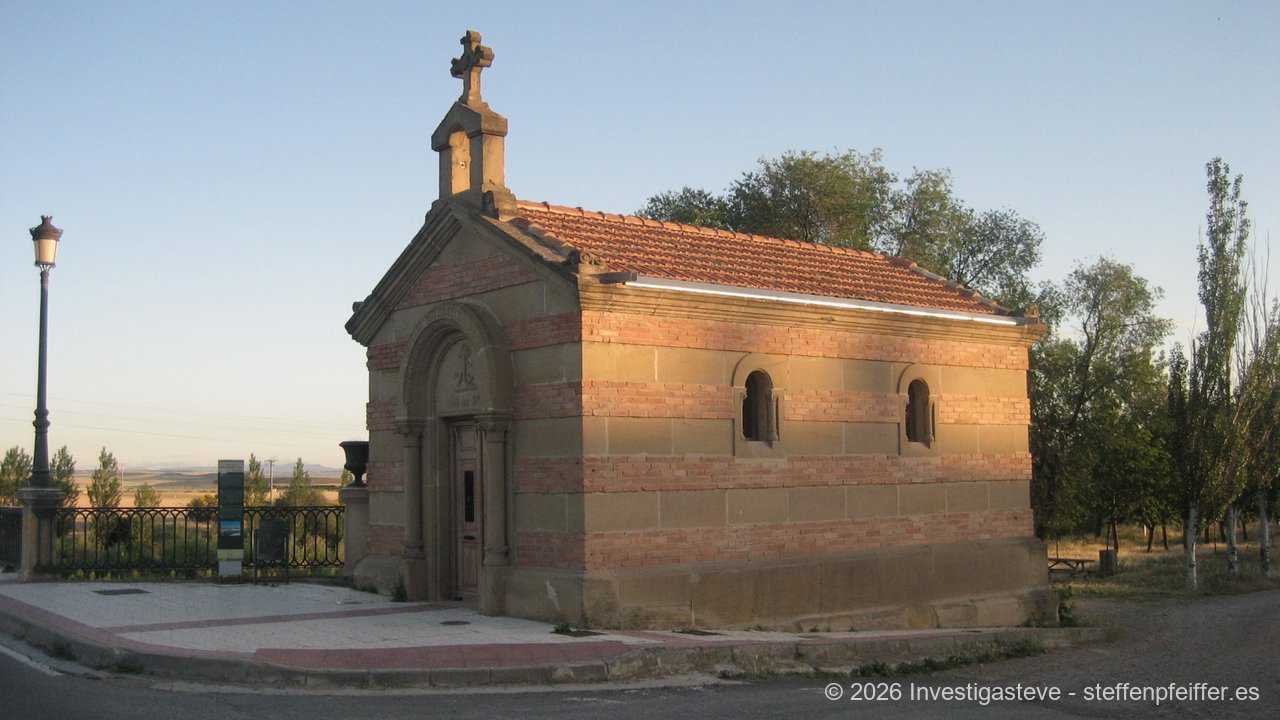
A new stage day – entering the stage
The morning in Santo Domingo de la Calzada begins with an almost tangible weight, which lies like a fine, damp veil over the granite facades of the old town. While the first rays of sunlight bathe the spire of the cathedral in a pale, almost ethereal gold, the cool, slightly musty breath of the night still lingers in the narrow alleys, mixed with the distant, rhythmic crowing of the legendary white rooster, watching high above the nave in its Gothic cage. It is a moment of absolute caesura: The echo of your own footsteps on the smoothly polished cobblestones reminds you that the shelter of the great pilgrim centers now ends for a while. You feel the hard stone beneath your soles, which here in Santo Domingo possesses an almost sacred smoothness, and you realize that today’s departure has a new quality. It is the farewell to the green heart of La Rioja and the ritual-slow entry into the wide, ochre-colored realm of Castile, which already waits on the horizon with relentless linearity.
The departure from the city leads you past the massive remains of the city wall, while the rhythmic clicking of your hiking poles on the asphalt of the Avenida de Burgos acts like a metronome, pulling you out of the trance of recent days. You leave behind the legacy of the great builder Santo Domingo, whose spirit lives on in every bridge and every stone of this region, and step out into the open agricultural landscape. The air suddenly becomes sharper, clearer, and already carries the dusty, pungent scent of the distant grain fields. A slight tingling in your fingertips – a mixture of awe and determination – accompanies you as you watch the silhouette of the town dissolve behind you in the morning mist. Today is the day of the threshold. You feel the weight of your backpack, which now feels like a part of your own skeleton, and you mentally prepare for a stage that will challenge not so much your muscles as your patience and your ability for inner contemplation.
Route and elevation profile
Distance: 22.0 km
Elevation gain: ↑ 220 m / ↓ 320 m
Difficulty: Easy (physically). The stage runs largely flat over agricultural tracks, but due to the monotony and exposed location, it demands high psychological endurance.
Special features: Entry into the Autonomous Community of Castile and León, long passages parallel to the N-120 main road, legendary hostel atmosphere in Grañón.
Today’s route is a study in horizontality. After leaving the last outskirts of Santo Domingo de la Calzada behind, the path transforms into an almost endless succession of agricultural service roads, the so-called “pistas.” The elevation profile shows a gentle, almost imperceptible incline towards Grañón at the beginning, which is barely perceived as such. The ground consists of a mixture of fine limestone gravel and compacted clay, which in dry weather deposits a fine, light layer of dust on your shoes and in rain can become a sticky, heavy mass that makes every step more difficult.
The path leads us steadily westward, with the mountain ranges of the Sierra de la Demanda to the south acting as distant, bluish guardians. From Redecilla del Camino onwards, the terrain becomes even flatter, almost plateau-like, as we cross the border into the province of Burgos. The technical challenge is minimal, as there are no steep ascents or dangerous descents. The true complexity lies in the acoustic and visual constancy: the N-120 main road is often only a few hundred meters away, and its monotonous roar mixes with the wind sweeping unhindered over the wide fields. It is a path that trains rhythm and forces the pilgrim to find their own pace in a landscape that offers few visual reference points.
Variants and small detours
On this stage, there are no significant scenic variants, as the geography of the “Rioja Alta” and the beginning of Castile largely fixes the route through the river valleys and along the historical traffic axes. Nevertheless, the pilgrim faces a fundamental decision in the choice of their stopovers, which significantly influences the character of the day. Those seeking the spiritual depth of the path will linger in Grañón rather than just passing through the village. There is no “detour” here, but the invitation to leave the path for a moment of contemplation in the church of San Juan Bautista, which for many proves to be the most important “detour” of the mind.
A small, subtle detour offers itself in Viloria de Rioja. Instead of staying on the main path that skirts the village, one should consciously immerse oneself in the town center to visit the birthplace of Santo Domingo. This tiny deviation of a few hundred meters is no physical challenge, but a historical gain, as it establishes the connection to the starting point of the stage. Otherwise, the path remains a straight-line affair that leaves little room for geographical experimentation, but all the more room for exploring one’s own inner landscape.
Description of the path – with all senses
The path out of Santo Domingo begins with an acoustic transition. The distant ringing of the cathedral bells slowly fades, and what remains is the monotonous, almost hypnotic crunching of your own steps on the limestone gravel. It is a dry, hollow sound that echoes in your head and puts you into a meditative rhythm. You hear the wind brushing through the still-green grain stalks – a soft, papery rustling that mixes with the distant, aggressive roar of trucks on the N-120 to form a strange symphony of modernity. The air here tastes of dust and freedom. The smell of dry straw and sun-warm clay rises to your nose, an earthy scent that underscores the fertility of the region, as you slowly approach the first hill on which Grañón sits like a stone fortress.
Arriving in Grañón, the texture of the path changes. The ground becomes old cobblestones, uneven beneath your soles, reminding you that you are now entering a village that has been considered a bastion of hospitality since the Middle Ages. You step out of the glaring sun into the cool, almost heavy darkness of the church of San Juan Bautista. Here it smells of beeswax, old wood, and the centuries-old dampness of massive stone walls. You hear the soft whispering of other pilgrims and the creaking of the old floorboards in the hostel, which is located directly above the nave. It is a haptic experience of security – the rough stone of the walls radiates a calm that immediately cools your heated skin. The mind finds an anchor point here, a historical causality that connects you directly with the hermits who once sought refuge from the world in these hills.
The descent from Grañón leads you directly to the border between La Rioja and Castile. You feel the moment of transition physically as you pass the simple boundary stone. The ground beneath your feet often changes color here – the dark red of La Rioja gives way to a lighter, dusty ochre. You taste the fine dust on your lips, a mixture of lime and dryness that makes you reach for your water bottle again and again. The visual expanse here is almost overwhelming. Your gaze wanders over fields that seem to extend to the horizon, only occasionally interrupted by a solitary group of trees or a scarecrow fluttering in the wind – an auditory flapping that in the otherwise static landscape almost feels like a signal. In this moment, the psychological metamorphosis begins: the external emptiness corresponds with an internal emptiness that creates space for thoughts that had no room in the hustle of the city.
In Redecilla del Camino, you encounter the architecture of stone with new intensity. When you enter the church and stand before the Romanesque baptismal font, you feel the urge to run your fingertips over the delicate reliefs of the heavenly city. The stone is cool and smooth, polished by the gazes and touches of thousands before you. Here it smells of cool granite and history. The acoustics of the place are concentrated; every sound outside the door seems far away, while inside the silence feels almost tangible. You recognize the mastery of the medieval stonemasons, who created an entire cosmology from a single block. It is a moment of aesthetic immersion that strengthens you for the coming, dusty kilometers.
The path to Castildelgado is characterized by the hardness of the asphalt and the heat rising from the ground. You feel the vibrations of passing vehicles in the soles of your boots, a constant haptic reminder that modern progress has never entirely left the Camino. The sun now burns relentlessly on your neck, as there is hardly any shade on these tracks. You hear the rhythmic “clack-clack” of your poles, accompanying you like a mantra. The smell of tar and hot tires mixes with the aroma of wild thyme growing at the roadside. It is a phase of psychological friction. Your mind may rebel against the monotony, seeks distraction, but finds only the shimmering light over the road. Here, the path becomes a mirror of your own perseverance.
In Viloria de Rioja, the birthplace of Santo Domingo, the atmosphere changes again. The village seems trapped in a timeless slumber. You hear the distant barking of a dog and the cooing of pigeons in the ruins of old farmsteads. The smell of agricultural machinery and diesel mixes with the scent of freshly mown straw. When you stand before the simple birthplace, you feel the historical significance of this unassuming place. The haptics of the adobe walls – sun-dried clay mixed with straw – tell of the modesty of beginnings. It is a psychological grounding: the great saint and builder came from this very simple earth on which you are now standing.
The passage to Villamayor del Río is an exercise in visual reduction. The path stretches like a ribbon of light gravel through the gentle waves of the landscape. You hear the distant rumble of a tractor, a sign of the constant work on this soil. Your body has now found an automated rhythm; your feet move almost by themselves. You feel the dryness in your throat and the salt on your skin, a result of the relentless Castilian sun. Villamayor receives you with the smell of cool water at its fountain. The feeling of the cold metal of the pump in your hand and the first tingling of the water on your wrists is a five-dimensional redemption. Here it smells of wet earth and mint, which often grows near the watercourses.
The final approach to Belorado is characterized by a change in topography. The first rocks and caves appear on the horizon. The air here becomes more lively, more animated again. You hear the increasing roar of civilization as you approach the town. Belorado smells of departure and arrival at the same time – a mixture of exhaust fumes from the main road and the scent of pastries from the local bakeries. The ground beneath your feet becomes firmer again, the gravel gives way to the cobblestones of the suburbs. You feel a deep satisfaction in your limbs, a pleasant heaviness signaling that you have almost reached today’s destination. The psychological tension of the monotony dissolves in anticipation of the town’s shady plaza.
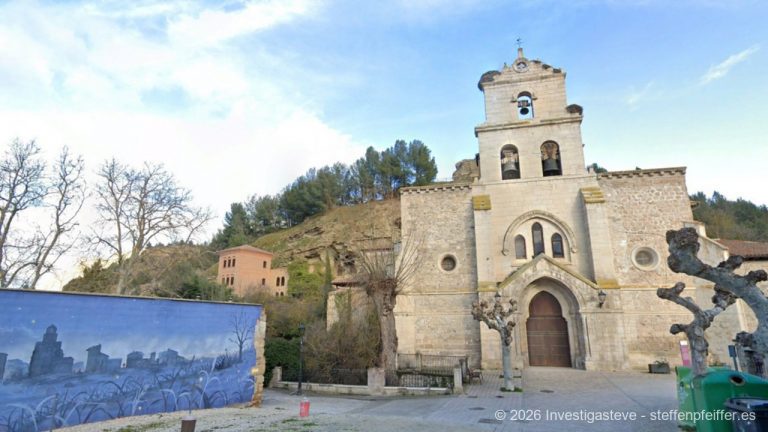
The entry into Belorado leads you past the imposing church of Santa María. The acoustics of the place are lively; the clatter of dishes from the cafés and the murmur of the inhabitants mix with the cooing of the storks in their huge nests on the church towers. You feel the soft grass on the plaza beneath your feet as you settle down for a moment – a haptic shock after the hardness of the tracks. The smell of freshly brewed coffee and “Torrijas” (a regional sweet dish) wafts towards you. You feel dusty, exhausted, but inwardly more composed than rarely before. The historical depth of Belorado, once an important border fortress, is tangible in the massive walls and the caves of the hermits above the town.
The reflection of the day usually takes place in the silence of one of the many hostels in Belorado. You hear the creaking of old wooden floorboards and smell the scent of freshly washed laundry drying in the wind. The psychological metamorphosis is complete: you have left La Rioja behind and penetrated deeper into the heart of Castile. You have learned that beauty is not always in the panorama, but often in the ability to appreciate the nuances of dust and the song of the wind. The path has stripped you bare today, burned away everything superfluous, and gifted you with a new form of clarity that prepares you for the coming, lonely kilometers through the Montes de Oca.
Intermediate places & special features
Grañón – This village is far more than just a geographical point on the map; it is the emotional heart of this stage. Grañón stands for the most authentic form of pilgrim hospitality. The hostel in the church of San Juan Bautista, where pilgrims still sleep on mats on the floor and cook together, is legendary. The special feature lies in the atmosphere of community (donativo) that has been cultivated here for decades. When you walk through the streets, you feel the spirit of the hermits who once chose this place as a retreat. A glimpse into the church interior with its magnificent Renaissance altarpiece is a must for anyone seeking the connection between art and faith.
Redecilla del Camino – This village marks the official entry into the province of Burgos and thus into the historic heartland of Old Castile. The absolute special feature is the parish church of Virgen de la Calle, which houses one of the most significant Romanesque baptismal fonts on the entire Camino. The 12th-century font shows a stylized depiction of the heavenly city of Jerusalem with towers, walls, and gates – a visual promise for the pilgrim at the end of their journey. Redecilla radiates a dignified calm, characterized by massive stone houses that defy the harsh Castilian climate.
Viloria de Rioja – Although the name still refers to La Rioja, this village lies on Castilian soil. It is a place of modesty and great history at the same time, as Santo Domingo de la Calzada was born here around the year 1019. His birthplace and the baptismal font in the church where he was baptized are silent testimonies to a great biography. The village itself is small and often deserted, lending the visit an almost meditative quality. It reminds the pilgrim that the greatest works often grow from the simplest beginnings.
Belorado – Today’s stage destination is a historic small town at the foot of the Montes de Oca. In the Middle Ages, Belorado was an important trading center and a significant border fortress between the kingdoms of Navarre and Castile. The special feature is the caves in the rock face above the town, where hermits once lived. The Plaza Mayor with its arcades is the social center and offers a wonderful space for regeneration. The churches of Santa María and San Pedro, with their massive towers and stork nests, bear witness to the former power and religious significance of this place.
Dining, accommodation & supplies
The supply situation on this stage is excellent, which makes it pleasant despite the exposed location. In almost every small town, there are bars and cafés specializing in the “pilgrim breakfast.”
Gastronomy: In Grañón, you should definitely experience the communal dinner in the parish hostel if you are staying there. In Belorado, the restaurants around the plaza lure with hearty Castilian cuisine, especially lentil stews (lentejas) and the famous “Caparrones” (red beans).
Accommodation: The Albergue Parroquial in Grañón is a spiritual must for purists. Those seeking more comfort will find modern accommodations in Belorado, such as “Albergue Cuatro Cantones” or “Albergue A Santiago,” which often have gardens or small pools for foot regeneration.
Public facilities: As a local center, Belorado offers all necessary services: pharmacies, ATMs, grocery stores, and a health center. In the smaller towns before, possibilities are limited to the essentials.
The special thing today
The absolute unique selling point of this stage is the transition from the charming La Rioja into the rough, proud world of Castile. It is a moment of geo-cultural transformation. The special thing today is not a single monument, but the feeling of the threshold. The boundary stone behind Grañón is more than just a marker; it symbolizes entry into the land that has most strongly shaped the Camino over the centuries. Here, the path becomes more serious, the landscape more barren, and the demands on inner fortitude higher. It is the day when the wine of La Rioja gives way to the grain of Castile.
A second highlight is the survival-psychological component of monotony. On the long “pistas” parallel to the N-120, the pilgrim is thrown back upon themselves. The special thing today is the discovery of “emptiness” as a quality. In a world of constant sensory overload, this section offers radical reduction. One learns to distinguish the fine nuances in the ochre of the fields, to observe the play of light and shadow on the dust, and to train one’s own mental resilience. It is a stage of mental maturation that is often underestimated.
Finally, the baptismal font of Redecilla del Camino is an artistic jewel that bridges the earthly pilgrimage and the transcendent longing. That a work of art of world-historical standing exists in such a small village shows the immense significance the Camino had in the 12th century. It reminds the pilgrim that they are part of an infinite chain of seekers, all heading towards the same goal – the “heavenly city.” This font is a haptic anchor in the history of European Romanesque art.
Reflection at the end of the stage
When you sit on the Plaza Mayor in Belorado in the evening and watch the swallows circling the arcades in rapid flight, you feel a deep metamorphosis of your inner state. Today’s stage was not a pleasure hike in the classical sense, but a traversing of time and space. You notice how your gaze has changed: the details along the wayside – a special stone, a blooming thistle, the smell of fresh hay – now weigh heavier than the mere number of kilometers. You have arrived in Castile, and this land demands respect.
Belorado is the place where you wash off the layer of dust from the day and realize that part of your old self has also been washed away. The monotony of the tracks has silenced the noise in your head. In the quiet of the evening hours, under the watchful eyes of the storks on the church towers, you become aware that the Camino picked you up today exactly where you were and led you a little closer to who you could be. You are ready for the coming challenges, because today you have learned that true strength lies in the constancy of the next step.
Camino of the Stars
This stage lies on the Camino Francés, on the stage from Santo Domingo de la Calzada to Belorado. The sequence of places is:
| Stage | Start | Destination | Distance (km) | Elevation gain | Difficulty | Intermediate places |
|---|---|---|---|---|---|---|
| 10 | Santo Domingo de la Calzada | Belorado | 22.0 | ↑ 220 / ↓ 320 | easy | Grañón → Redecilla del Camino → Castildelgado → Viloria de Rioja → Villamayor del Río |
Did you experience the 22 kilometers of the Castilian track as a trial or as a meditative liberation? What moment of silence did you find in the legendary hostel of Grañón, when the dust of the country road still lay on your shoulders? Share your story of transition and the discovery of slowness with us – every gained step is a star on your personal map.
About the Author

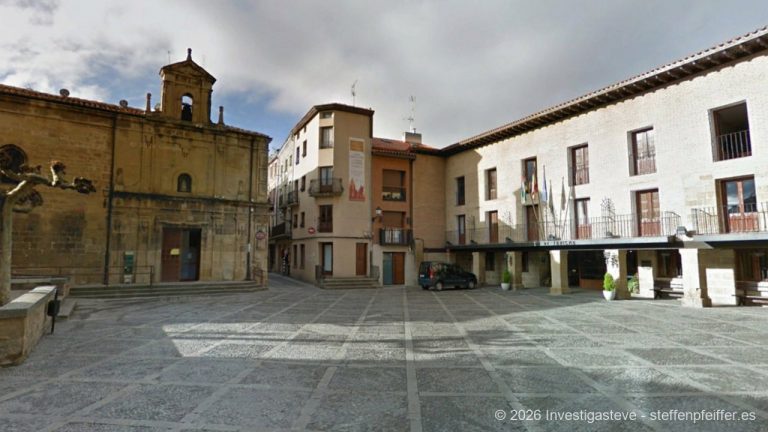
Santo Domingo de la Calzada – Where the Stones Pray and the Rooster Crows
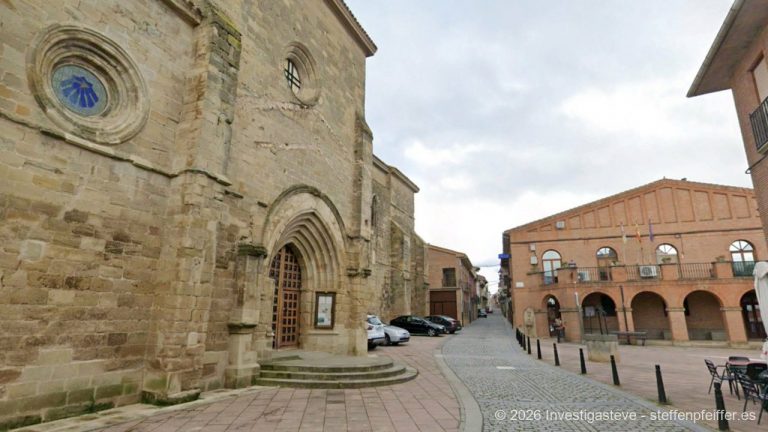
Grañón – The Spiritual Fortress Above the Golden Sea
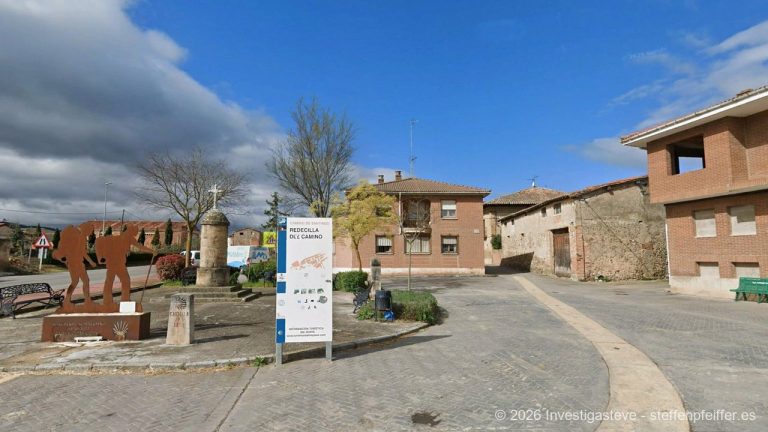
Redecilla del Camino – The Stone Gateway to the Heart of Castile
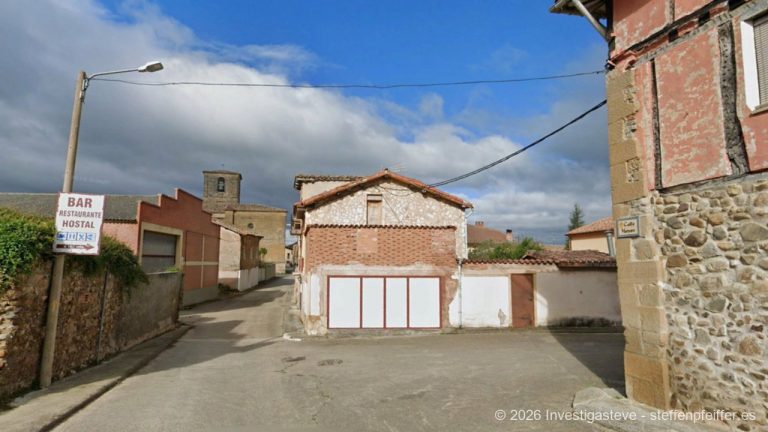
Castildelgado – The Stone Legacy in the Riojilla Burgalesa
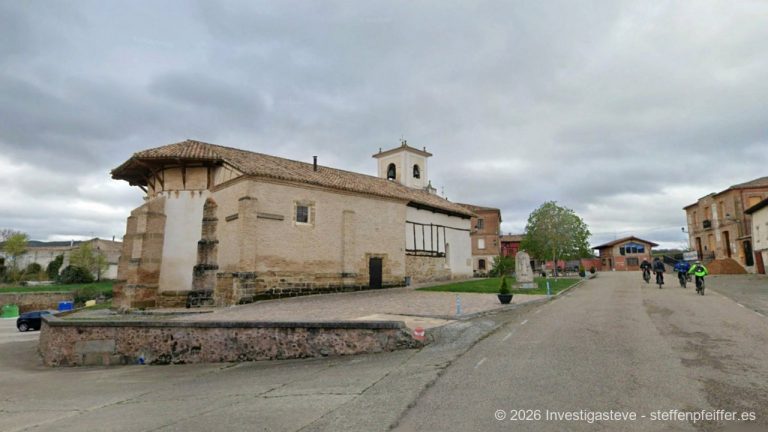
Viloria de Rioja – The Cradle of the Bridge Builder in the Heart of Castile
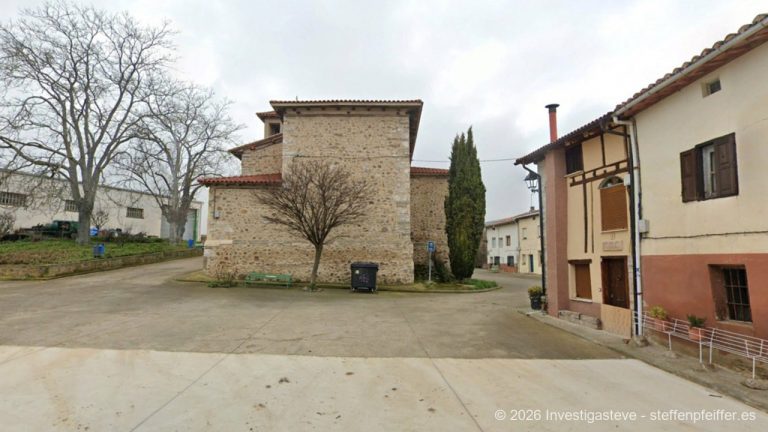
Villamayor del Río – The Village of Three Lies in the Golden Sea