Cee – The Industrial Heart at the Pulse of the Ocean
 investigasteve
A First Glance – Entry & Atmosphere
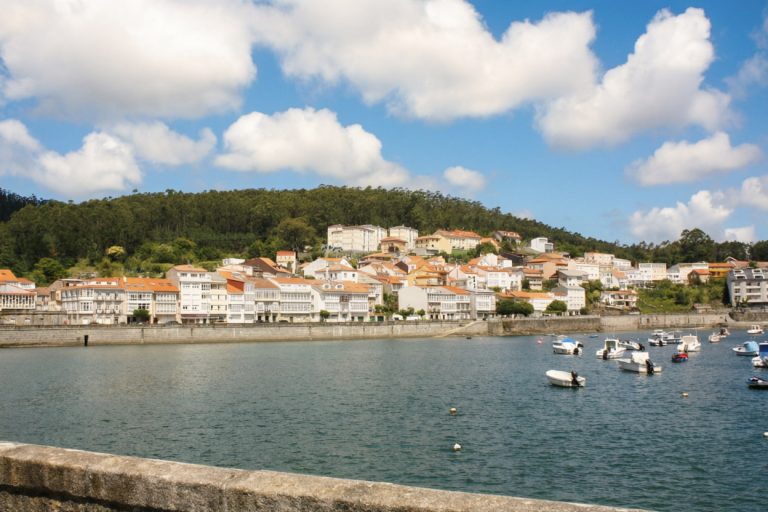
Once you’ve left the last steep descent behind you and the path releases you from the meditative solitude of the Galician hill ranges, a panorama suddenly opens up before you—one that doesn’t fit the usual image of the romantically idealized pilgrimage at all. You set foot in Cee—and you immediately feel that a different rhythm prevails here. It’s not the gentle murmur of a medieval hamlet that welcomes you, but the pulsing, unvarnished life of a functioning port town. Here the salty mist of the Ría de Corcubión mingles with the sharp smell of diesel, freshly landed fish, and the metallic sound of harbor work.
Cee is a place of contrasts, a point of transformation on your way to the end of the world. While in the days before you may have heard only the click of your own trekking poles and the distant ringing of cowbells, here you’re greeted by an auditory backdrop that speaks of the vitality of the sea. The distant rumble of ship engines, the screeching of gulls diving low over the quay walls, and the busy bustle of locals on their way to the market—all of it creates a dense, almost tangible atmosphere. The air is heavier here, saturated with the moisture of the Atlantic that settles like a fine film on your skin and gives your hair a salty sheen.
You walk through streets where granite doesn’t just breathe history, but forms the foundation of a hard, honest working world. There’s no artificial staging for tourists here; Cee is authentic down to the last pore. The “galerías,” those typically Galician glass-fronted balconies, gleam in the changeable light of the northwest, while behind them the administrative and industrial heart of the Costa da Morte is at work. It’s a place that challenges you to recognize the beauty of what is functional. Between modern concrete buildings and the remnants of old fish-processing plants, you feel an energy that shows how, for centuries, tribute has been wrested from the ocean here.
Cee marks the transition from the individual, often solitary spiritual journey back into the collective reality of human society. It’s a place of encounters, where the dusty pilgrim meets the harbor worker’s coveralls. In the cafés by the port, languages mingle: the rough, guttural Galician of old fishermen blends with the many-voiced murmur of travelers from all over the world. You don’t come here just to sleep; you come to understand that Galicia is more than just a green garden—it’s a land shaped by the sea: tough, warmhearted, and marked by a deep, unshakable practicality.
What This Place Tells You
The story of Cee isn’t a tale of glorious battles or holy apparitions; it’s a chronicle of adaptation, work, and resistance against the hardships of nature and history. Originally an insignificant fishing village in the shadow of more powerful neighbors like Corcubión or Fisterra, Cee was for a long time a place of subsistence. People lived off what the ría gave them—shellfish, fish, and seaweed. But its geographic position in the sheltered bay held a potential that was only fully tapped over the course of centuries.
A decisive turning point came in the 12th century, when the Arcediano (archdeacon) of Trastámara chose the town as his residence, laying the groundwork for Cee’s administrative importance. In the centuries that followed, Cee developed into a trading hub, but its true rise began with the industrial revolution in fishing in the 18th and 19th centuries. While other places on the Costa da Morte preserved their medieval face, Cee opted for progress. Canneries, fish-processing plants, and a modern port emerged, which soon became the region’s most important transshipment point. You can still feel this pragmatism in the architecture today—a blend of traditional granite and functional cement that tells of an untamed will to survive.
But progress came at a high price. Cee repeatedly became a target of hostile attacks. Especially painful was the year 1809, when Napoleonic troops rampaged through Galicia during the wars of independence. The French reduced large parts of the town to rubble and ashes; the proud parish church was also badly damaged. Yet this destruction sparked a spirit of rebuilding that shaped the character of the place for good. The people of Cee learned that nothing lasts if you don’t defend it with hard work. You can see this reflected in the fortifications as well, such as the Castillo del Príncipe, built in the 18th century to secure the ría against English pirates and enemy fleets. A legend says that once a massive iron chain under water linked the two fortresses on opposite sides of the bay, literally lifting unwanted ships out of the water.
In the late 19th and early 20th centuries, Cee experienced another wave of change through the phenomenon of emigration. Many sons and daughters of the town sought their fortune in the Americas, especially in Cuba and Argentina. But unlike in many other places, they often returned—as prosperous “Indianos.” They brought back not only money but also new ideas and architectural styles. The so-called “Indiano houses,” with their colorful facades and exotic gardens, still stand today as silent witnesses to this longing and pride. Cee tells you today that home is not just a place you leave, but also a destination you return to in order to make it better. It’s the story of a place that refuses to be a museum and instead prefers to remain a living workshop.


Camino Distances
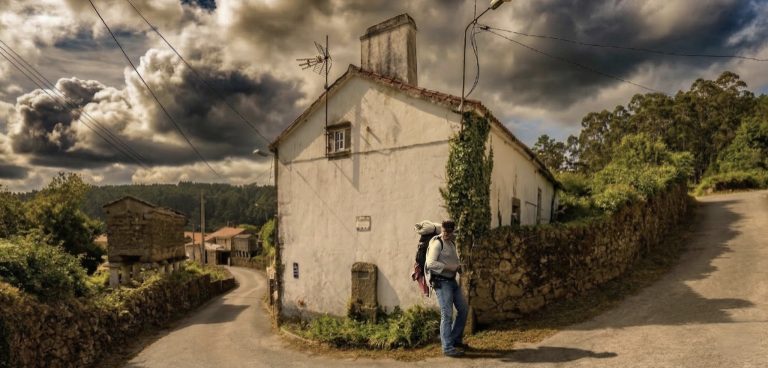
After about 14 kilometers through shady forests and across open plateaus, the view opens up here to the ría and the gateway to Cee.
| Previous location | Distance (km) | Next location | Distance (km) |
|---|---|---|---|
| O Logoso / Hospital | approx. 14.5 km | Corcubión | approx. 2.0 km |
Staying Overnight & Arriving
Arriving in Cee means trading the silence of nature for the busy murmur of civilization. The range of places to stay reflects the town’s character: it’s functional, warm, and tailored to the needs of people who have been on their feet all day. In the local albergues and guesthouses, there’s an atmosphere of genuine hospitality. Here the walls don’t whisper old legends; instead, they tell of the solidarity of the walking community. It’s not uncommon for you to arrive at one of the private hostels and immediately feel like you’re part of a big family that has come together for one night in this industrial harbor town.
Especially noteworthy is the quality of the accommodations, which are often housed in modernized buildings. While in other stage destinations you might spend the night in drafty monastery walls, Cee offers the comfort of a modern town. The albergues are often bright, clean, and equipped with infrastructure that leaves nothing to be desired—from stable Wi‑Fi connections to well-equipped communal kitchens. You can tell that the hosts here know what you need after the rigors of the previous miles: a warm shower, a comfortable bed, and a place where you can sort your gear before the final stage to Cape Fisterra begins.
A special experience is staying somewhere with a view of the harbor. When, in the evening, the lights of the fishing boats dance on the water and the rhythmic clacking of the masts in the wind is the only sound drifting in through the open window, a very particular kind of calm sets in. It’s not the absolute silence of the mountains, but a soothing maritime melody that rocks you to sleep. Cee is the ideal place for you to take one more deep breath, restock supplies, and mentally prepare for the near end of the journey. Here, midway between industrial reality and the vastness of the ocean, every walker finds exactly the level of comfort needed for that last push.
Food & Drink
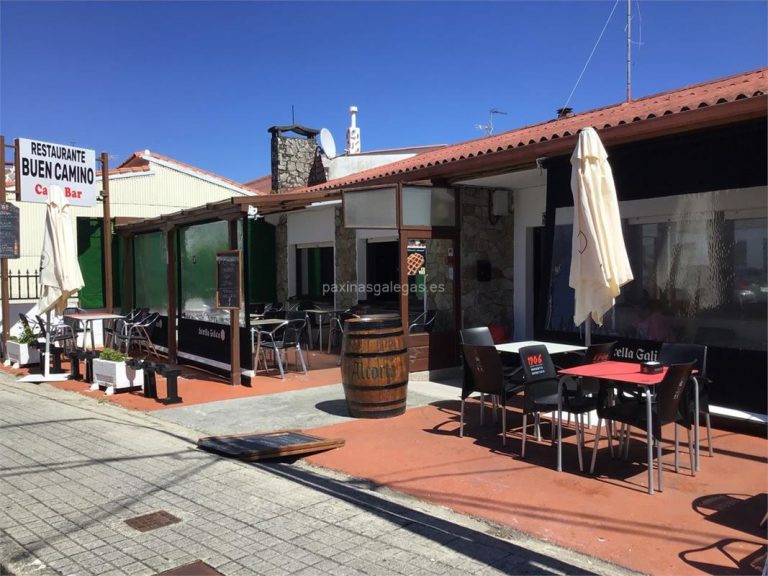
If anyone claims you can only enjoy simple pilgrim set menus on the Camino, they’ve never been to Cee. The culinary world here is so deeply rooted in the sea that you can practically taste the ocean in every bite. In the many harbor restaurants and small mesóns, a cuisine is celebrated that does without frills and instead relies on the absolute freshness of its ingredients. The star on every plate is the day’s catch: from gleaming sea bream to tender hake to the ría’s famous seafood—everything goes straight from the boat to the pan.
A must is the local fish soup, “Caldo de Pescado.” In steaming bowls, the flavors of the sea combine with the earthy taste of Galician vegetables into an elixir that brings tired spirits back to life. You sit in one of the harbor bars, the clinking of glasses mixing with the fishermen’s laughter, and in front of you is a portion of “pulpo a la plancha,” so tender it melts on your tongue. The local chefs have mastered the art of letting the products’ natural flavor speak for itself—a little olive oil, coarse sea salt, and a pinch of pimentón; that’s all it takes for a feast.
But it’s not only fish lovers who get their money’s worth. The fertile soils of the hinterland supply potatoes and vegetables of the highest quality, and Galician white wine—usually a crisp Albariño or a fuller-bodied Ribeiro—rounds out every meal perfectly. An evening in Cee often ends in one of the lively bars, where you swap stories about the day’s experiences over a glass of “Mencía” and an assortment of local cheeses. It’s this unpretentious, honest food culture that makes Cee a culinary highlight of the entire route. Here, eating isn’t understood merely as taking in nourishment, but as a celebration of life and of the gifts the sea and the land provide.
Supplies & Services
Cee is the undisputed supply hub of the Costa da Morte, a small metropolis that offers everything your pilgrim heart could desire. After you’ve spent days walking through tiny villages where you often found a working fountain only with luck, Cee feels like an oasis of abundance. The infrastructure is modern, complete, and designed for efficiency. You can tell this place is the region’s administrative capital—everything is here, from top-tier medical facilities to specialized outdoor-gear shops.
Supply runs are short and efficient. If you want to top up your provisions for the final stage to Fisterra, you’ll find a selection here that goes well beyond the usual. It’s worth using the opportunity to stock up on high-quality local products that not only provide energy but also let you carry a piece of Galician way of life in your pack. In the town’s pharmacies, you’ll meet staff who know the typical ailments of walkers—from blisters to knee pain—inside out and often have advice that goes beyond simply handing out medication.
Shopping: There are several large supermarkets (including a Carrefour, a Mercadona, etc.) as well as numerous local specialty shops. Here you’ll find everything from fresh fruit to high-quality hiking clothing.
Dining: The density of restaurants, bars, and cafés is enormous. Especially around the harbor and near the church, you’ll find excellent options for every budget.
Overnight stays: Cee offers the full range—from an inexpensive municipal pilgrim hostel to private hostels and comfortable hotels and apartments.
Public facilities: The town is home to Hospital Virxe da Xunqueira, the region’s most important hospital, as well as post offices, banks with numerous ATMs, and a modern cultural center.
In summary, Cee is the place where you can throw all logistical worries overboard. The town runs like a well-oiled clockwork mechanism and gives you the reassurance of being prepared for anything. It’s the last major hub before the route leads back into the wild, unspoiled nature of the cape, and you should very consciously enjoy the conveniences of this modern infrastructure.
Don’t Miss
Iglesia de Santa María de Xunqueira: An architectural jewel from the 15th century that, despite severe destruction by Napoleonic troops in 1809, shines again in its former splendor and shapes the townscape with its two distinctive bell towers.
Castillo del Príncipe: This impressive 18th-century fortress complex lies a bit outside town on the shore of the ría and tells stories of sea battles and of protecting the coast from pirate raids.
The market hall (Lonxa) in the morning: Dive into the chaos and energy of the fish auctions between 7 and 11 a.m., where the Atlantic’s freshest catch changes hands amid the vendors’ loud calls—an experience for all the senses.
Cruceiro da Armada: About 2.5 kilometers before the town entrance, this historic stone cross offers not only a spiritual stopping point but also one of the first spectacular views of the Bay of Corcubión.
Museo Marítimo: A small but excellent exhibition dedicated to the history of fishing and Cee’s industrial development, offering deeper insight into the soul of this working town.
Insider Tips and Hidden Spots
Beyond the main routes and obvious sights, Cee hides small treasures that reveal themselves only if you’re willing to slow down a little. One such place is the harbor pier at sunset. When the fishermen’s day shift is over and the boats tug quietly at their lines, the colors of the sky settle like a glowing carpet over the water of the ría. Here, away from the busy activity, you find a moment of deep contemplation. It’s the perfect backdrop for reviewing what you’ve accomplished so far, while the sound of the sea washes away, for a moment, every thought of the modern world.
Another almost invisible spot is the narrow alley behind the Iglesia de Santa María, where you can still find remnants of the old town wall. Here the moss clings especially thick to the granite, and you get a sense of just how small and winding the place must have been before its industrial boom. In these quiet corners you feel the “morriña,” that untranslatable Galician feeling of longing and melancholy that is so inseparably tied to the history of this region. It’s a place to pause briefly, far away from the lively café terraces.
For culinary explorers, it’s worth visiting one of the unassuming workers’ bars on the side streets away from the harbor promenade. There, where the menu is often written only on a chalkboard and you sit between crates of fishing nets, you’ll get the most authentic “raciones.” A plate of freshly grilled sardines, a glass of simple house wine, and you’re closer to Cee’s true heart than in any stylish restaurant. It’s this rough, unvarnished warmth of the locals that makes a visit to these hidden spots a lasting memory.
Last but not least, you should turn your gaze north, toward neighboring Corcubión, which from Cee looks like a postcard idyll perched on the hills. The walk along the waterfront promenade that connects the two towns offers an interesting perspective on the region’s duality: here, modern, industrial Cee; there, romantic, historic Corcubión. It’s a path of insight that shows that progress and tradition don’t have to be enemies, but can complement each other to shape the identity of an entire coast.
Moment of Reflection
Cee asks you a question many pilgrims prefer to ignore: Are you ready for reality? In the past few days, your path may have been shaped by an aesthetic stillness that made it easy to lose yourself in spiritual thoughts. But here, between fish markets, hospitals, and gas stations, the Camino shows you its worldly face. This place stays with you because it forces you to find the sacred in the everyday. Can you recognize the divine order in the precise work of a crane operator, or sense deep human solidarity in the noise of a fish auction?
Maybe Cee is exactly the place you need before you reach Cape Finisterre. It serves as a psychological sluice, slowly getting you used to life in community again without diminishing the intensity of your journey. Do you stay here to catch your breath and accept the modern world as part of your pilgrimage—or does longing already pull you onward to the “end of the world,” where the horizon makes every human structure seem small again? In Cee, you learn that the Way doesn’t run inside a bubble, but right through the pulsing heart of a land that works, loves, and hopes.
Camino of the Stars
This place lies on the Camino a Fisterra, on the stage from Olveiroa to Fisterra. The sequence of towns is:
Olveiroa → Hospital → O Logoso → Cee → Corcubión → Redonda → Amarela → Estorde → Sardiñeiro → Fisterra
Did you find a very personal place of calm in Cee’s busy streets, or did the authentic bustle at the harbor especially inspire you? Maybe you heard a story in one of the small bars that changed how you see the Camino? Share your impressions and experiences with us—whether in German, English, Spanish, Galician, or French. Your voice helps bring the multifaceted picture of this unique place to life for other walkers.
About the Author