Redonda – The Romanesque threshold guardian over the silvery Ría
 investigasteve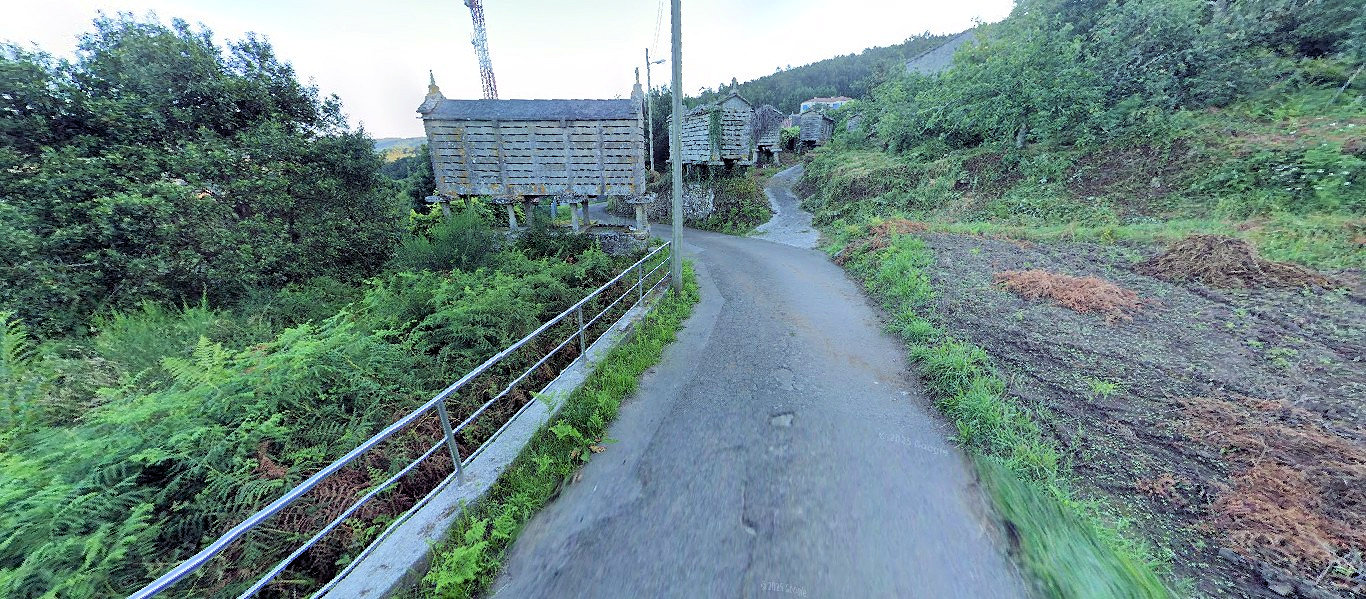
A first look – Entry & Atmosphere
When you follow the narrow path from Amarela and cross the gentle hilltop that lies like a protective wall between the open sea and the hinterland, you reach Redonda. It is a place that does not welcome you with spectacular size, but with an almost solemn seriousness. You feel it immediately: here the frequency of your hike changes. After the salty breeze of the coast has accompanied you for kilometers, an earthy, almost sacral silence takes its place in Redonda. The path leads you away from the immediate surf, up into a zone where the granite of Galicia unfolds its full defiant dignity. The air up here tastes of a complex alchemy of dry heather, the heavy scent of eucalyptus resin, and a distant, metallic note that the wind carries up from the rocks of the Ría de Corcubión. It is a place that breathes – slowly, deeply, and in the rhythm of centuries.
Your steps on the ground of Redonda create an echo that reverberates in the narrowness of the few stone houses. The “Aldea”, a tiny hamlet of little more than a dozen houses, acts like a stony still life that could have fallen directly out of a medieval chronicle. The light here possesses a special clarity; it breaks on the sharp edges of the massive granite blocks and bathes the landscape in a soft, ochre-colored glow, especially when the sun begins to tilt its arc toward the distant cape. To be in Redonda means to cross an invisible threshold. It is the moment when the civilization of the harbor towns finally fades and the raw, unfiltered nature of the Costa da Morte takes its place. You hear the rhythmic rustling of the wind in the treetops, the occasional wail of a gull that has ventured far inland, and the constant, quiet crunch of your own breath. Redonda is the guardian over the abyss, a place of concentration before the path leads you down again to the glistening water surface.
What this place tells
The stones of Redonda whisper a story that goes far beyond mere peasant existence. The undisputed centerpiece and spiritual soul of the place is the church of San Pedro de Redonda. This Romanesque jewel from the 13th century stands like an unshakeable monolith in the middle of the barren landscape. When you stand before the simple façade, you look into the face of medieval Galicia. The church was once far more than just a house of worship; it was a spiritual lighthouse for the pilgrims who commuted on the “Camino Real”, the Royal Way, between the seats of power of the Counts of Altamira and the end of the world. The architecture tells of a time when faith and defense went hand in hand. The thick walls and the narrow window openings suggest that this place also offered protection when storms – whether meteorological or warlike in nature – swept across the ría.
The craftsmanship details, which reveal themselves only to the patient eye, are particularly fascinating. The vegetal decorations on the façade and the artistically designed capitals bear witness to a deep connection to nature by the master builders of that time. Inside the church, protected from the salty sea air, rest treasures such as the Gothic statue of Saint Peter, which has watched over the souls of the inhabitants and those passing by for generations. Historically, Redonda was not a place of grand palaces, but a place of administrative and spiritual control. As part of the parish of San Pedro de Redonda, the hamlet was under the jurisdiction of Corcubión, yet preserved a headstrong autonomy through its exposed location on the hill. The people here lived in a hard symbiosis with the land and the sea; they were farmers who always directed their gaze to the horizon to interpret the weather and the arrival of ships.
The hórreos, those typical Galician grain stores on stilts that also characterize the townscape in Redonda, tell the economic counter-story to the spiritual splendor of the church. They are masterpieces of rural engineering, built to protect the harvest from the all-pervading moisture and rodents. Every stone of these stores was moved by hand, every slate slab placed with care. In Redonda, you feel the “Terreña”, the deep rooting of the Galician soul with its barren soil. It is a story of constancy and triumph over time. While the empires of the counts crumbled and the world changed radically, San Pedro de Redonda remained standing – a stony witness to the indomitability of a people who have learned to exist in harmony with the elements. Whoever wanders through the alleys of Redonda enters a living archive in which every lichen on the granite represents a line in the long chronicle of the West.


Camino Distances
In the following table, you will find the distances for the current stage on the Camino Fisterra y Muxía (CFM 3a) towards Fisterra:
| Previous Location | Distance (km) | Next Location | Distance (km) |
|---|---|---|---|
| Vilar | approx. 1.0 km | Amarela | approx. 1.0 km |
| Corcubión | approx. 2.5 km | Estorde | approx. 2.0 km |
Overnight Stay & Arrival
Arriving in Redonda is a moment of total deceleration. After having perhaps left the busy harbor of Corcubión or the modern quarters of Cee behind you, the sudden appearance of this tiny hamlet acts like a ritual transition into another era. There is no large welcoming committee and no glittering signs here; you notice that you are there when the path squeezes between ancient stone walls and the Romanesque silhouette of the church of San Pedro appears on the horizon. To arrive in Redonda means to exchange the noise of the world for the whispering of the wind. It is an arrival for the senses: the muscles relax after the moderate ascent, and the spirit finds a calm in the clear high altitude that is often lost in the lower coastal towns.
Accommodation options directly in the heart of Redonda are virtually non-existent, which makes the place an exclusive refuge for those seeking absolute silence. The hamlet is too small for its own hostel infrastructure, which, however, is part of its charm. Most pilgrims use Redonda as a place for inner contemplation while taking up quarters in the immediately neighboring towns such as Estorde or Corcubión. Nevertheless, there are isolated private guest rooms in restored farmhouses in the surrounding area that offer an experience of radical simplicity and historical depth. To stay here means to sleep in a room whose walls know more stories than any history book. The night in Redonda is characterized by a darkness and an acoustic purity that has become rare in Europe – only the distant, barely perceptible breathing of the sea accompanies your sleep.
The psychological moment of arriving in Redonda lies in the certainty that one has finally left the “urban” part of the journey behind. One is now in a borderland where nature dictates the rules. Many pilgrims pause at the church of San Pedro, place their backpack on the cool stone steps, and feel the tension of the past kilometers fall away from them. It is a place that allows you to organize your thoughts before you devote yourself to the final spurt to Fisterra. Arriving here is not a physical event, but a mental clicking into place. One feels secure in Redonda between the constancy of the church and the expanse of the ría – a paradoxical but deeply satisfying feeling of belonging to something larger.
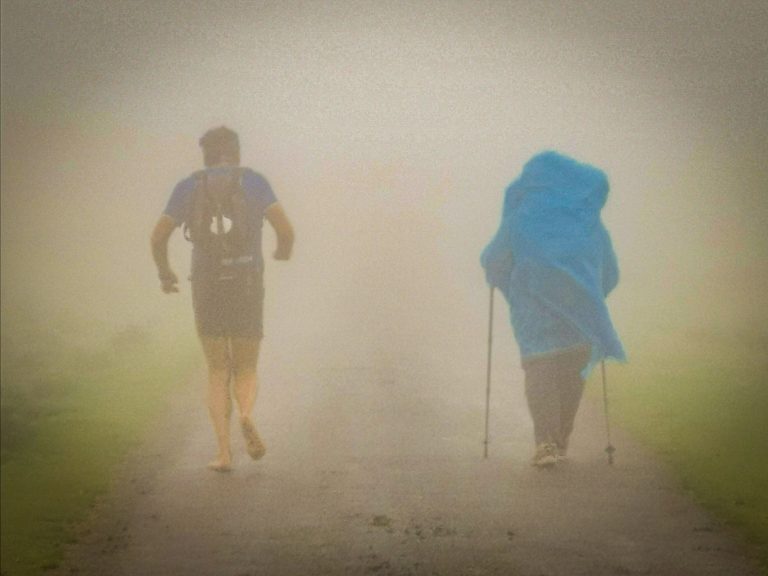
In the morning, waking up in this region is a gift. When the first mist, the typical Galician “Brétema”, still hangs in the valleys like a white cloth and the sun slowly reveals the contours of the hills of Toba, you feel a freshness that perfectly prepares you for the day. You usually leave Redonda with a feeling of clarity. It is as if the monumental silence of the place has washed away the burden of worries. Whoever lingers here consciously chooses against mass tourism and for the quality of contemplation. Redonda is the place where you learn that the most important goals are often those where seemingly the least happens.
Eating & Drinking
The culinary situation in Redonda is characterized by a radical reduction to the essentials. Since the hamlet has no commercial restaurants of its own, catering here becomes a ritual act of self-sufficiency and the appreciation of local products. Pilgrims resting in Redonda often bring their supplies from the markets of Corcubión – a piece of sturdy Galician cheese (Queixo de Tetilla), a hearty farmhouse bread, and perhaps a selection of local empanadas. A picnic in the shadow of the church of San Pedro, while the view sweeps over the green pastures to Monte Pindo, tastes more intense than any gourmet menu. It is a gastronomy of gratitude, in which every bite is seasoned by the salty air and the history of the place.
In the immediate vicinity, just a short walk away in Estorde, one finds first-class opportunities to taste the maritime soul of Galicia. There, seafood and freshly caught fish are at the center of the menu. An absolute must for every hiker are the “Navajas” (razor clams), which are prepared on the grill with olive oil, garlic, and a squeeze of lemon. Their meat is firm, sweetish, and carries the pure aroma of the Atlantic within it. Also, the “Pulpo á Galega”, served on traditional wooden plates with coarse sea salt and smoky pimentón, is an essential refreshment. The combination of the hard work of walking and the purity of this food creates a haptic and gustatory satisfaction that sinks deep into the body.
Drinking in Redonda is just as ritualistic as eating. A cool, mineral Albariño or a sparkling Ribeiro, drunk from the traditional “Cunca” (the white ceramic bowl), fits perfectly with the atmosphere of the place. The wine cleanses the palate and allows the soul to expand. Those lucky enough to be a guest of one of the few inhabitants might enjoy a homemade “Licor de Café” or a clear “Orujo”, which are often distilled here according to family secrets. To eat and drink in Redonda means to absorb the power of the earth and the sea directly. It is an honest, unpretentious catering that nourishes the body and sharpens the mind for the last kilometers to the cape.
Supply & Logistics
Logistically speaking, Redonda is a place of concentration and reduction. Anyone coming here leaves the world of supermarkets, pharmacies, and ATMs for a moment. The hamlet is purely functionally geared towards rural life and the spiritual passage of pilgrims. For you as a hiker, this means: planning is the key. There are no shops in Redonda, which forces the pilgrim to stock up on supplies either in Corcubión or in nearby Cee. This logistical “void” is not a deficiency, however, but an integral part of the experience. It throws you back on what you carry in your backpack and teaches you the autonomy of the path.
The paths in and around the place are excellently marked. The yellow arrows lead you safely through the stone labyrinth of the Aldea and show you the way towards Amarela or back to Vilar. The ground is a constant change between old country paths and short asphalt sections, which provides a welcome change for the feet. Anyone using logistical support in the form of a luggage transport service will usually find no direct drop-off points in the hamlet itself; bags are mostly deposited in the hostels of Corcubión or Estorde. However, the mobile network works excellently on this exposed hill, which allows the organization of the next stages or the booking of accommodation without problems.
Shopping: There are no shops in Redonda; the nearest supply possibility with a full range is in Corcubión (approx. 2.5 km) or Cee (approx. 4 km).
Gastronomy: No bars or restaurants in the village; pilgrims mostly use the gastronomy in neighboring Estorde or provide for themselves.
Accommodation: No official hostels directly in the village; accommodation options are found in Estorde (hotel/camping) or Corcubión.
Public facilities: No banks, post offices, or medical facilities; however, the nearest major hospital (Hospital de Cee) is reachable in a few minutes.
In conclusion, it can be said that the logistics in Redonda are reduced to the human scale. It is a place that shows you how little you actually need when the goal is clearly in sight. The supply here is not a commercial service, but an act of preparation. You leave the place knowing that true strength comes from your own preparation and the silence of nature. Redonda is logistically a “pause in the system”, a moment of catching one’s breath before dipping back into the more organized world of the larger coastal towns.
Don’t miss
Church of San Pedro de Redonda: A masterpiece of 13th-century Romanesque architecture – pay attention to the Gothic statue of St. Peter and the vegetal ornaments on the façade.
Mirador “Banco Azul”: Only a short detour leads you to this viewpoint with a spectacular view of the Ría de Corcubión and the cape – a must for photographers.
The Hórreos of Redonda: Observe the variety of these traditional stores; they stand here like stone guardians of Galician agricultural history.
View of Monte Pindo: In clear weather, you have a fantastic view from up here of the sacred granite mountain of the Celts, which enthrones the other side of the ría.
The old cemetery: A place of absolute silence directly at the church, which invites reflection on transience and constancy.
The Lobeira Islands: From the hill, you can see the islands of Lobeira Grande and Lobeira Chica glistening in the sea – mysterious places full of legends and myths.
Insider tips and hidden places
Away from the main path, Redonda hides corners that only the patient explorer finds. One of these places is the narrow path that leads steeply west towards the cliffs behind the cemetery. While most pilgrims take the marked path to Amarela, this path leads to a small plateau from which you have the feeling of floating above the ría. Here you are absolutely alone. The only sound is the distant roar of the surf and the whistling of the wind in the rock crevices. It is the perfect place to open your diary or just soak up the expanse of the horizon. In this place, you often find rare mountain flowers that stubbornly cling to the cracks in the granite – a beautiful symbol of life on the Costa da Morte.
Another secret tip is observing the play of light on the outer walls of the church during the “Blue Hour”. When the sun has already sunk behind the cape, but the sky still glows in a deep indigo, the granite stones of San Pedro begin to develop an almost eerie life of their own. The reliefs and ornaments stand out three-dimensionally, and you can almost haptically trace the chisel marks of the medieval stonemasons. In these moments, the separation between past and present seems completely suspended. You feel the presence of all those pilgrims who stood in exactly this spot for over eight hundred years and looked at the same stars.
For the culinary discoverers, there is an almost invisible “treasure”: the wild herbs that grow in the old wall cracks and on the pastures of Redonda. If you look closely, you will find wild fennel and thyme, whose aroma, when you rub a leaf between your fingers, releases the entire intensity of Galicia. It is a tiny, haptic moment of connection to the earth that costs nothing but sharpens the senses. Redonda is full of such small wonders; one only has to learn to use the slowness of the path to discover them.
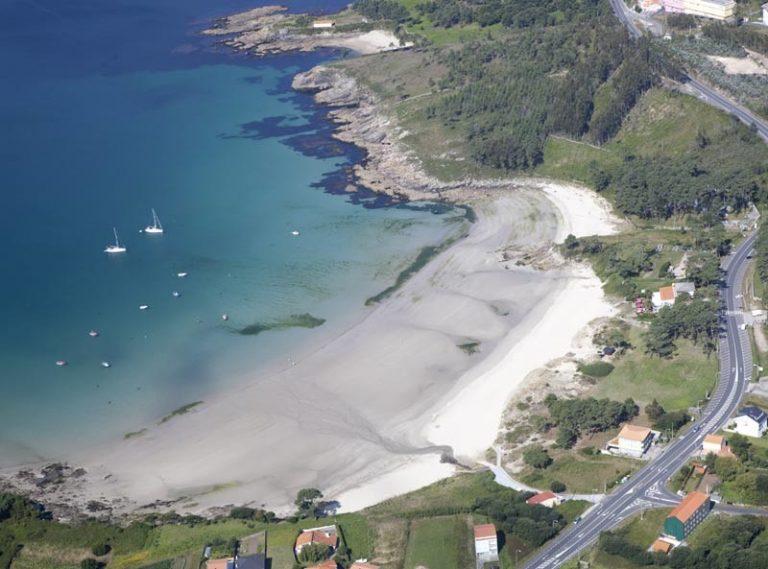
Finally, it is worth casting a glance down at the small bays at the foot of the hill at low tide. Often you see locals there searching for shells or getting their small boats ready. It is an insight into the real, unfiltered life of the region, far from any tourist production. Redonda is not a place for loud spectacle; its secrets reveal themselves only to those who are willing to listen and open their eyes to the inconspicuous. These are the small, unspectacular moments that make a stay in Redonda a personal journey of discovery.
Moment of Reflection
In Redonda you stand at a threshold that is of enormous significance both geographically and psychologically. It is the place of the “in-between”. While you sit on the stone steps of the Romanesque church and let your gaze wander over the silvery Ría de Corcubión, a question inevitably arises: What do I take with me from this path that does not fit in a backpack? Redonda offers you the space for a spiritual inventory. The goal of Santiago lies far back, and the physical end of the world at Cape Fisterra is almost tangible. Here, in the suspended state between the mountains and the sea, you are allowed to cast off the identity of the “performing wanderer” and become an “observing human being”.
The monumental simplicity of San Pedro de Redonda reminds you that the essential things in life often need no decoration. Just as the granite of the church has defied the storms of eight centuries, so your inner core has also withstood the hardships of the path. The hardness of the first kilometers has given way to a supple endurance, and the noise of your worries has succumbed to the rhythm of your steps. In Redonda you are allowed to be proud of what you have achieved without already being under the pressure of the finality that Cape Finisterre radiates. The place gives you permission to pause – a lesson that is often harder to learn than the daily walking.
Perhaps you realize in the silence of this hamlet that the true transformation does not only happen at the kilometer stone 0.0, but in these quiet moments of preparation. The purity of the atmosphere in Redonda invites you to also wash your inner images. What of the expectations you had at the beginning of the journey was truly yours? And what of it was just the noise of the world? When you leave Redonda and continue the path towards Amarela, you take something of the constancy of the stones with you. You no longer walk as someone seeking, but as someone who has already found – namely the ability to be completely with oneself in the silence. Redonda is the gentle guardian of your inner contemplation, a Romanesque promise that every path ultimately leads to a deep, inner peace.
Camino of the Stars
This place is located on the Camino Fisterra y Muxía (CFM 3a), on the stage from Olveiroa to Fisterra. The sequence of locations is:
Olveiroa → Hospital → O Logoso → Cee → Corcubión → Redonda → Amarela → Estorde → Sardiñeiro → Fisterra
Did you also experience this moment of complete clarity in the monumental silence at the church of San Pedro de Redonda? Or did you enjoy a view from the Mirador “Banco Azul” that you will never forget? Share your personal impressions, your photos of the ancient granite walls, or your very own reflection on this special place with us. Your story makes this guidebook alive and valuable for all subsequent pilgrims. We look forward to your comment!
About the Author