A First Glance – Introduction & Atmosphere
When the dense, almost sacred shadow of the eucalyptus forests behind Santa Irene gradually lifts and the gentle, undulating high plateau of O Pino reveals the first groups of houses, the pilgrim enters A Rúa. It is a place that, in its modesty, seems almost like a mirage, a fleeting apparition of gray granite and lush Galician green that only reveals itself to the eye at the last moment. Here, at about 268 meters above sea level, the landscape exudes a deep, almost melancholic calm, which stands in stark contrast to the bustle of O Pedrouzo, only a few hundred meters away. The atmosphere in A Rúa is shaped by the absence of noise; it is a place of transition where the rhythmic clicking of pilgrim poles on the hard-packed ground takes on an almost meditative quality. In the air hangs the heavy, spicy scent of damp fern and rotting leaves, mixed with the ethereal sharpness of the eucalyptus trees that enclose the village like a protective wall.
Haptically, we experience A Rúa through the nature of the path: the ground beneath your soles feels softer here, almost as if the earth wanted to gently catch the pilgrim one more time before the hard asphalt of the suburbs takes over. You feel the cool moisture of the “Orballo,” that fine Galician drizzle that lays itself like an invisible film on your skin and softens the contours of the world. The auditory panorama is reduced to the essentials – the distant, barely perceptible murmur of the national road N-547 sounds like the breaking of a distant ocean, while the chirping of birds in the gardens of the few houses determines the actual melody of the place. A Rúa is not a destination, but a breather, a final pause in the rural isolation of Galicia before the psychological gravity of Santiago de Compostela overshadows everything else. It is a place of nuances, where the eye learns to read the beauty of the inconspicuous before the grand monuments of the holy city overwhelm the senses.
What This Place Tells
The name “A Rúa” – Galician for “The Street” – carries a deep historical irony. It refers to a time when this small hamlet was not just an appendage of the larger Parroquia Arca, but a prominent point on one of the region’s most important traffic axes. Historically, these settlements often lie on the foundations of ancient Roman connecting roads, which were later adopted by the medieval Camino de Santiago. A Rúa tells the story of continuity; it is the bare essence of the Camino, reduced to the motif of the road. Administratively, the place belongs to the municipality of O Pino and has served for centuries as the “quiet prelude” to O Pedrouzo. While the larger towns vied for the attention of pilgrims, A Rúa preserved the integrity of a rural hamlet whose rhythm was determined not by the arrival times of hikers but by the changing seasons and the needs of the land.
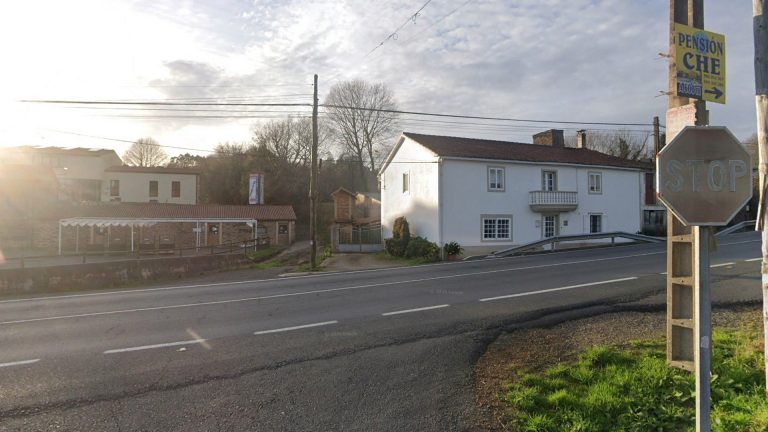
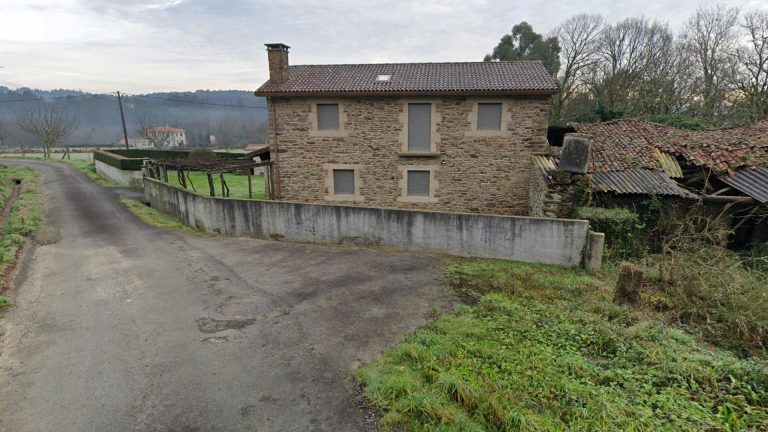
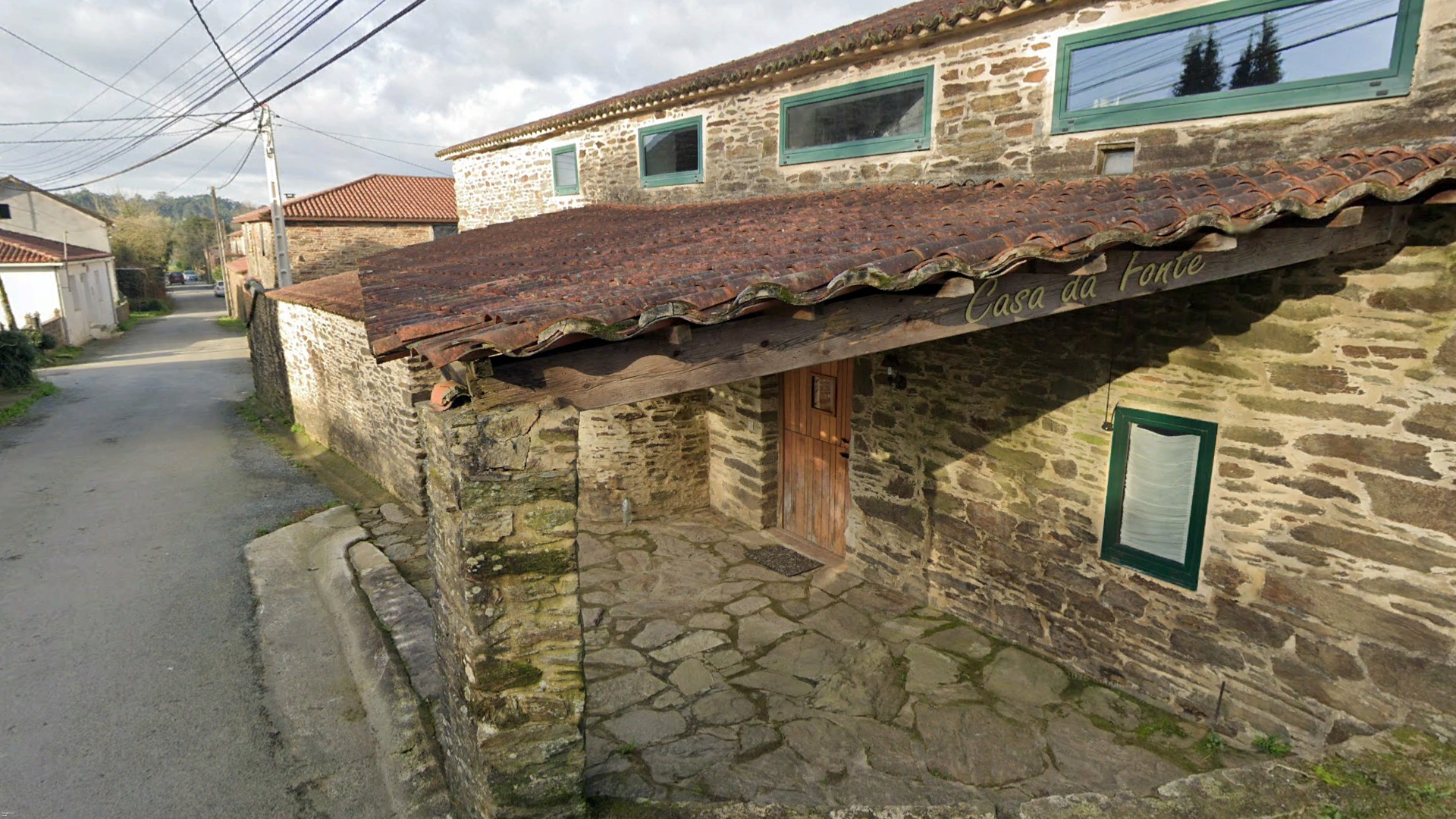
The architecture of the place is a lesson in Galician constancy. The simple houses of regional granite, whose walls are often covered with silvery lichens and emerald-green moss, testify to a deep connection of the people with their stony ground. Every joint, every roughly hewn door lintel tells of a time when building was still a haptic dialogue with nature. Psychologically, A Rúa functions as a buffer zone. Whoever passes through here leaves the rural solitude of the past stages and unconsciously prepares for the arrival into civilization. It is documented that such “suburbs” of the larger stations often served as places of purification – here, pilgrims organized their thoughts, cleaned their clothes in the stream, and mentally prepared for what awaited them in Santiago. Even if A Rúa today is hardly more than a cluster of houses, it is a place where the 1,200-year history of the Way seems to be stored in the silence of the walls. You feel the presence of the millions of steps that have already compacted this ground, and you realize that “The Street” here is far more than just a name – it is a symbol of life itself, which inexorably moves forward.
Camino Distances
In A Rúa, the compression of the Way becomes palpable. The distances shrink, and the destination comes within reach.
| Previous Location | Distance (km) | Next Location | Distance (km) |
|---|---|---|---|
| Santa Irene | ca. 1.8 km | O Pedrouzo | ca. 0.3 km |
Sleeping & Arriving
Arriving in A Rúa is an experience of transience. Since the place practically has no independent hostel infrastructure of its own, “arriving” here is more of a psychological phenomenon than a physical act of laying down. You usually reach the hamlet after a stage from Arzúa; your legs are heavy, your body marked by the elevation gain of the Galician hinterland. Whoever enters A Rúa feels an almost eerie calm that makes you pause for a moment. There are no signs here loudly advertising for guests, no brightly lit reception halls. Arriving in A Rúa means dampening your own expectations and surrendering to the simplicity of the place.
For many pilgrims, A Rúa is the place where they first realize that O Pedrouzo – and thus the last night before Santiago – is imminent. You can already see the first modern buildings of the neighboring town on the horizon, but here in the narrow alleys of A Rúa, time seems to stand still for another five minutes. It is a haptic experience of pausing: you might sit down on a low stone wall, feel the cold of the granite through your pants, and listen to the distant rustling of the leaves. It is the calm before the storm of emotions. Since there are no accommodations, this arrival is a purely internal process – a brief gathering of strength, a final organizing of gear, before you cover the final three hundred meters to O Pedrouzo. This infrastructural emptiness makes the place perfect for a prayer or meditation; here you are still a pilgrim of the wilderness before you become a pilgrim of the city.
Eating & Drinking
Anyone looking for a bar or restaurant in A Rúa will be disappointed. Culinary-wise, this place is a desert, but precisely therein lies its olfactory and sensory appeal. The pilgrim’s hunger is not satisfied here by a menu, but by imagination and anticipation of what awaits in O Pedrouzo. Nevertheless, the nature of A Rúa offers its own pleasures. In the air lie the scent of fresh grass, the smell of livestock from nearby stables, and – depending on the season – the aroma of ripe apples or blackberries growing along the wayside. The haptic experience of picking a handful of wild berries in passing, their juice staining your fingers and their acidity making your tongue tingle, is the most primitive form of sustenance on the Camino.
In the absence of gastronomic facilities, drinking from your own canteen becomes a conscious act here. You feel the cool metal or plastic in your hand, hear the gurgle of the water, and taste the freshness that you filled hours ago at a spring. The psychological effect of this culinary asceticism is not to be underestimated; it sharpens the senses for the coming meal. You might already smell the distant scent of garlic-fried pulpo wafting over from the kitchens of O Pedrouzo, and this scent becomes a compass that drives you forward. Eating and drinking in A Rúa means appreciating your own provisions and perceiving the simplicity of nature for what it is: the most honest nourishment for mind and body. It is a final lesson in frugality before the abundance of the larger towns once again casts its spell on pilgrims.
Supplies & Logistics
The logistical situation in A Rúa is absolutely minimalist. In its functionality, the place is completely oriented towards its large neighbor O Pedrouzo, which makes it a place where planning and foresight are required.
Shopping: There are no shopping opportunities in A Rúa. Neither a supermarket nor a small grocery store is available. All errands must be done in O Pedrouzo.
Gastronomy: There is no gastronomic offering whatsoever. Pilgrims should be prepared to cover the final meters to O Pedrouzo without any further intermediate refreshment.
Accommodation: There are no registered pilgrim hostels or private accommodations in A Rúa. The place serves only as a passage point.
Public Facilities: No administration, no post office, no pharmacy, and no health services. All these services are located in O Pedrouzo, about 0.3 km away. In an emergency, dial the general emergency number 112.
Logistically, A Rúa is the point where the forest path of the Camino meets the village structure that seamlessly transitions into suburban development. Since the distance to O Pedrouzo is only a few hundred meters, the logistical burden on the pilgrim is minimal here, provided you are aware that you will pass through this hamlet in a few minutes. There is no significant transport connection; anyone who has to interrupt the Way will find the next bus stop only in O Pedrouzo. This absence of infrastructure preserves the place’s character as an “invisible hamlet,” often perceived in the pilgrim experience only as a short sequence of stone and green. It is a logistical vacuum that serves to refocus the walker’s attention on the walking itself.
Don’t Miss
- The traditional granite walls: Pay attention to the hand-laid stone walls that line the gardens; they are masterpieces of Galician rural architecture.
- The view of O Pedrouzo: From a small elevation in A Rúa, you can see the silhouette of the next town and feel the psychological tension of the approaching destination.
- The play of light and shadow: In the narrow alleys of the hamlet, the low sun and the old houses often create dramatic contrasts, ideal for atmospheric photographs.
- The tiny chapel or house altars: Look in the niches of the walls for small religious symbols that tell of the deep popular piety of the region.
Insider Tips and Hidden Places
Away from the marked pilgrim path that traverses A Rúa in an almost imperceptible curve, there are small, hidden corners that escape the hurried walker. One of these places is a small passage between two ancient barns, about fifty meters off the main route. Here, time seems to have stood completely still; the ground is covered with a thick carpet of silvery moss, and the scent of old wood and damp stone is particularly intense here. It is a place of absolute silence, where you can hear the soft sighing of the wind in the cracks of the walls. Here, you can forget for a moment that you are on one of the most frequented routes in the world. The haptic experience of running your flat hand over the cold, rough stone of a wall that might have stood there two hundred years ago connects you directly with the physical history of Galicia.
Another insider tip is to observe the details in the small house gardens. While the path is often perceived only as a transit route, a closer look in A Rúa reveals botanical treasures: rare ferns thriving in the shady corners of the walls, or old varieties of fruit trees whose branches hang heavy with fruit. If you take the time to stop and let your gaze wander, you often discover small, handmade details on the doors or windows of the houses – signs of a quiet, unobtrusive hospitality. These moments of deceleration in a place that itself seems like a pause are what enrich the journey. A Rúa gives the attentive pilgrim an intimacy that is often lost in the larger centers. It is the beauty of the fragmentary, the knowledge that even an “invisible” place possesses its own deep soul.
Moment of Reflection
A Rúa is the place of final hesitation. Here, on the threshold of O Pedrouzo, a deep psychological question arises: Am I ready for the end? The physical reality of the hamlet – small, quiet, almost empty – mirrors the inner emptiness that many pilgrims feel just before the destination. You reflect on the thousands of kilometers you may already have in your legs, and on the people you have met on this path. In A Rúa, you become aware that the journey does not end in Santiago, but that every place like this was part of your own metamorphosis. The haptic feeling of heavy hiking boots on the ground becomes a symbol here for the grounding you have experienced through the Camino.
You ask yourself: What of all that I have experienced will I take with me into my “normal” life? A Rúa offers no comfort through convenience, but through constancy. The walls will be here when you are long back home, and they will receive the next pilgrims just as silently. This realization brings a deep humility. You breathe in the cool forest air once more, feel the final rural calm, and prepare yourself to leave the cocoon of pilgrimage. A Rúa is the psychological lock that gently releases you from the wilderness of Galicia and leads you into the arms of the holy city. It is a moment of melancholy, paired with an irrepressible pride at having reached this point.
Camino of the Stars
This place lies on the Camino Francés, on the stage from Arzúa to O Pedrouzo (or Santiago). The sequence of locations is:
Arzúa → Pregontoño → A Peroxa → Tabernavella → Calle → Boavista → Salceda → O Empalme → Santa Irene → A Rúa → O Pedrouzo
Did you feel the almost eerie silence in A Rúa, which acts like a final promise of nature before the hustle and bustle of O Pedrouzo takes you over? What small details of the old granite houses remain in your memory, or did you simply pass through this “invisible” hamlet in passing? Share your personal impressions and moments of reflection with us – every story helps keep the soul of this silent waypoint alive.
About the Author