A new stage day – entering the stage
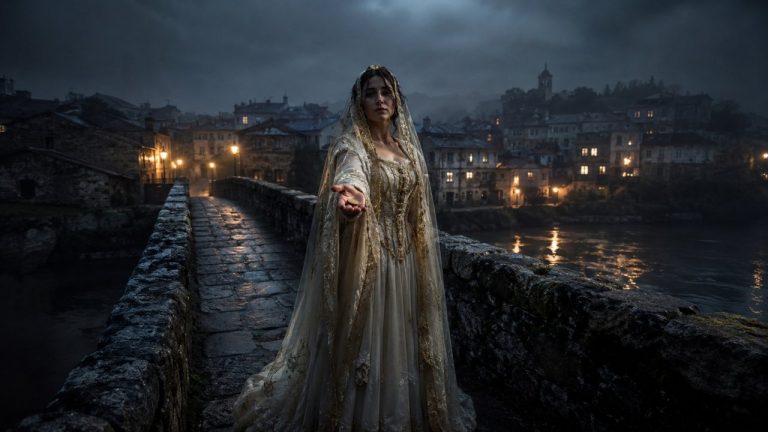
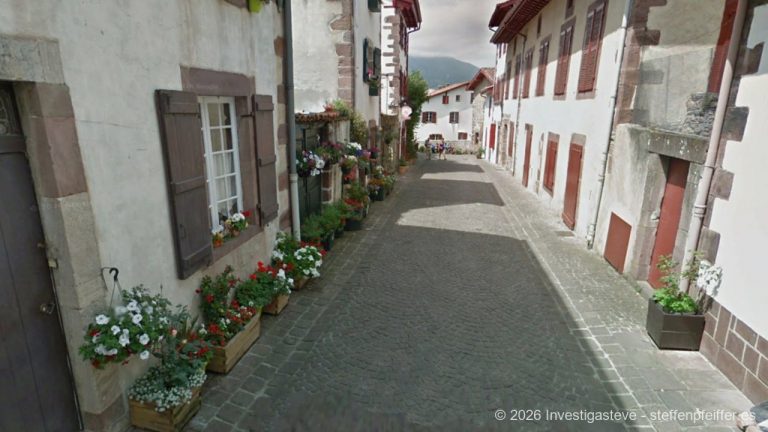
The morning in Saint-Jean-Pied-de-Port does not simply begin with the rising of the sun; it begins with a collective, almost reverent catching of breath. When you walk through the Rue de la Citadelle at dawn, you feel the cool, damp breath of the Nive drifting through the narrow alleyways, settling like an invisible veil over the reddish sandstone facades. The air is heavy with the scent of freshly baked croissants and the pungent aroma of freshly roasted coffee wafting from the still half-closed doors of the boulangeries. It is a moment of absolute caesura: the rhythmic clicking of the metal tips of your walking poles on the centuries-old cobblestones sounds like a metronome setting the tempo for the weeks ahead. You feel the hard stone beneath your soles, which here in the Basque confines possesses an almost archaic solidity, and you realize that today’s departure is far more than just the start of a hike. It is the ritualized leaving of the vertical security of a medieval fortress town, heading towards the relentless, majestic vastness of the Pyrenees.
As you leave the Porte d’Espagne behind you, the acoustics change abruptly. The echo of the city walls fades, replaced by the distant, steady rustle of the mountain forests and the first, tentative chirping of birds. Your gaze travels upwards, where the silhouette of the mountains stands out like an impregnable wall against the still-pale sky. A slight tingling in your fingertips – a mixture of nervous anticipation and deep respect for the physical force of the 1,450 meters of elevation gain to come – accompanies every step. You feel the weight of your backpack, which now, on the first real day, still feels foreign and demanding on your shoulders, as if reminding you of the seriousness of your undertaking. Today is the day of transformation. With every meter you move away from the civilization at the foot of the mountains, you shed the identity of your old life and step into the timeless current of seekers who, for over a thousand years, have gathered their courage precisely at this spot to conquer the “King’s Stage.”
Route and elevation profile
Distance: 24.2 km
Elevation gain: ↑ 1,450 m / ↓ 674 m
Difficulty: Very hard. The physical strain for a cold start is extreme. This stage acts as the “brutal filter” of the Camino Francés.
Special features: Steep asphalt ascent to Orisson, exposed mountain ridges with risk of wind, technical forest descent to Roncesvalles.
Today’s route is a dramaturgical composition of relentless ascent and an almost spiritual expanse. After leaving the urban fabric of Saint-Jean-Pied-de-Port behind, the path transforms into a vertical challenge. In the first eight kilometers, we already climb the majority of the elevation gain on narrow, asphalted mountain roads that spiral upwards like serpents. The elevation profile resembles a steep ramp that allows for no rest breaks. The ground here is unyieldingly hard, demanding a toll on tendons and joints from the very first moment, and mercilessly reflecting the heat of the sun, should it shine.
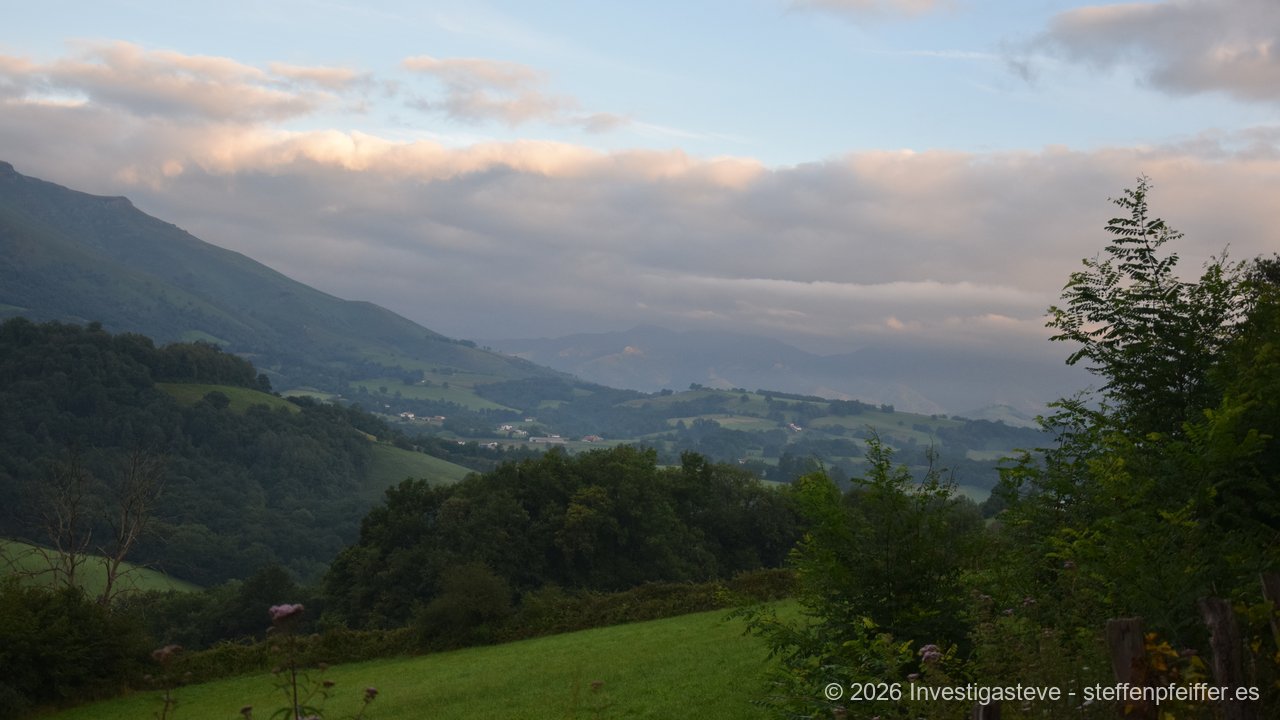
Once we have left the Refuge Orisson behind, the terrain opens up. We leave the asphalt and enter the grassy ridges of the Pyrenees. Here, the topography becomes more undulating, but no less strenuous. The path leads via the Col d’Arnosteguy and the Thibault Cross to the highest point of the stage, the Lepoeder Pass at 1,430 meters. Here, the ground is often a mixture of short mountain grass and jagged rock fragments. The final act is the descent: over a short distance of less than four kilometers, the path plummets into the basin of Roncesvalles. Here, the surface changes to often damp, slippery forest floor, interspersed with roots and loose slate. It is a stage that forgives no mistakes and forces the pilgrim to ration their strength with mathematical precision from the very first second.
Variants and small detours
The classic route over the mountains, known as the Napoleon Route, is the heart of the Camino myth. It is spectacular, offers breathtaking panoramas, but is life-threatening in bad weather, fog, or winter (officially closed from November 1 to March 31). Whoever wants to feel the archaic force of the mountain world chooses this path, which leads over the roof of the Pyrenees and psychologically prepares the pilgrim for the weeks ahead. It is the route of heroes and legends, which, however, requires stable weather and a good basic physical condition.
The alternative is the Valcarlos variant. It runs lower in the valley along the main road and through the town of Valcarlos. This variant is less exposed, offers more shade, and ascends more steadily, albeit less dramatically. It is the salvation in adverse weather conditions and the right choice for pilgrims seeking a gentler start to the elevation gain. The path here leads through dense forests and along small streams, offering a completely different, more intimate natural experience. Whoever decides against the Napoleon Route misses out on the 360-degree view from the Lepoeder but gains safety and a deeper connection with the Basque valley landscape. The choice between these two paths is often the first major strategic decision of the entire journey.
Description of the path – with all senses
The path leading out of Saint-Jean-Pied-de-Port begins with a haptic experience of resistance. As soon as you have left the Porte d’Espagne behind, the asphalt rears up before you. You feel the relentless pull in your calf muscles as each step upward forces your lungs to work deeper and more rhythmically. The air here in the valley is still heavy and damp, laden with the smell of wet earth and the metallic scent of ferns. You hear the rhythmic “clack-clack” of your poles, a sound that seems almost aggressive in the silence of the early morning and forces you into a meditative rhythm. Your body begins to heat up, and sweat mixes with the cool morning air, forming a fine patina on your skin.
After about five kilometers, you reach Huntto. Here, the acoustic backdrop changes. The distant rushing of the Nive fades and is replaced by the deep, tinny ringing of the cencerros – the sheep bells – echoing somewhere on the steep slopes. The smell changes: away from urban dampness towards the sharp, animal scent of sheep herds and dry mountain grass. Your hand brushes over the rough, sun-warmed stone of the fountain in Huntto. The water is ice-cold, a haptic shock that sharpens your senses for the next, even steeper section to Orisson. The historical causality becomes tangible here: you are walking on a route used by the legions of Rome and the troops of Napoleon – a path of power that is now your path of humility.
At the Refuge Orisson, the stage reaches a social and psychological turning point. Here it smells of café au lait and fried bacon – an olfactory promise of reward. You hear a chorus of voices in all the world’s languages, an acoustic mosaic of hope. The ground beneath your feet becomes flat for a moment, and you feel the sudden relief in your tendons. But the visual impact that now unfolds is almost overwhelming. The view back shows Saint-Jean-Pied-de-Port as a tiny toy village in the depths, while before you lie the endless waves of mountain ridges. This visual expansion leads to inner spaciousness; everyday worries become small in the face of the monumental indifference of the mountains.
Behind Orisson, you enter the realm of absolute exposure. The asphalt gives way to stony paths, and the wind becomes a tactile actor. It tugs at your clothes, cools the sweat on your temples, and carries the scent of wild thyme and dry broom. You reach the statue of the Virgin of Biakorri, standing like a silent guardian at the wayside. Here is the place for pausing. You feel the coldness of the metal when you touch the statue, and you hear the whistling of the wind in the crevices of the rocks. The psychological metamorphosis is in full swing here: the exertion of the body has filtered the mind, washing away all that is unnecessary, leaving only pure presence in the “here and now.”
The passage at the Col d’Arnosteguy is a five-dimensional immersion into solitude. The ground beneath your feet is now uneven, each step demanding attention. You see the prehistoric stone circles, the cromlechs, lying silently in the grass like mute witnesses of a forgotten time. The smell is now pure and mineral – cold stone and thin mountain air. You taste the salt on your lips, a result of relentless evaporation. In this phase of the path, you lose your sense of time; the kilometers stretch out, and the horizon seems barely to change despite hours of walking. It is the test of endurance, passed only by those who find their own inner rhythm.
At the Thibault Cross, you encounter the spiritual weight of the path. You see the countless small stones, photos, and messages left here by pilgrims. The haptic experience of laying down a stone of your own is a ritual act of liberation. You hear the fluttering of small prayer flags in the wind, a restless, flickering sound. The historical dimension is made present by the knowledge that this was the place where chivalric virtues and religious fervor clashed in medieval battles. You feel small in this chain of generations, but at the same time infinitely connected to everyone who stood here before you.
The final ascent to the Lepoeder Pass is a physical limitation. Your thighs burn, every breath is a struggle. But arriving at the top, at the apex of the world at 1,430 meters, visual redemption occurs. The panoramic view over the green valleys of Navarre steals your last breath. You feel the wind blowing with unexpected force up here, and you smell the approaching moisture of the Atlantic forests. The acoustics up here are vast and hollow; the silence is so intense that you can hear your own heart pounding in your ears. It is the moment of triumph before the arduous descent begins.
The descent through the Lepoeder forest is a haptic experience of treachery. The path is steep, uneven, and demands your concentration with every single step. You feel the pressure in your toes, relentlessly hammering against the front of your boots – a dull, rhythmic pain that reminds you that the goal has not yet been reached. The air in the forest is cooler, heavier, and smells of damp moss and musty beech. You hear the cracking of dry twigs under your feet and the distant rushing of a stream. The light here is filtered through the dense canopy, falling in long, dusty fingers onto the mossy ground.
Shortly before Roncesvalles, you pass the Ibañeta Chapel. Here, the acoustics change again: the vast whistling of the wind on the ridge is replaced by the monotonous ringing of the Ibañeta bell, which once guided pilgrims through the fog. The smell of damp asphalt and fresh grass heralds the return to civilization. You feel the sudden relief in your joints as the path becomes flatter. The psychological tension of the last hours dissolves into deep satisfaction. You see the massive roof of the Abbey of Roncesvalles emerging from the trees – a monumental promise of safety and rest.
Upon entering the monastery complex of Roncesvalles, the sensory immersion reaches its crowning conclusion. You step out of the bright, clear mountain air into the shady coolness of the stone arcades. It smells here of old stone, incense, and wet wool – a specific aroma stored in these walls for centuries. You hear the hollow echo of your own footsteps on the smoothly polished stone floor of the church and the soft murmur of arriving pilgrims. Your hand strokes the cool marble of a tomb, and you feel the energy of a place that harbors pain and hope alike. You have arrived, exhausted to the bone, but inwardly more composed than rarely before.
The evening reflection, while the sound of the organ vibrates through the Gothic nave, is marked by deep gratitude. Your body is tired, your feet are throbbing, but your mind is as wide as the mountains you have just left behind. The 24 kilometers have filtered you; they have washed the noise of the world from your head and made room for the silence of the stones. You realize that the Camino demanded everything from you today, only to give you the most valuable insight in the end: that you can grow far beyond your perceived limits if you surrender completely to the rhythm of the path.
Intermediate places & special features
Saint-Jean-Pied-de-Port (SJPdP) – The starting point is far more than just a geographical beginning. The fortified town in the French Basque Country is the gate to transformation. The Rue de la Citadelle with its inscriptions above the doors tells stories of 16th-century craftsmen and traders. The special feature is the atmosphere of a “departure hall of souls”: everywhere you meet people experiencing the same threshold moment as you. The architecture is defensive, characterized by the Vauban citadel that watches over the town. A ritual walk through the Porte d’Espagne is a must for every pilgrim.
Huntto – A small hamlet, about five kilometers behind SJPdP. Huntto is the first place where you feel the reality of the Pyrenees. It consists of only a few buildings but offers an essential water stop. The special feature is the view back: here you realize for the first time the immense altitude you have already gained in a short time. Huntto is the place of the first pause, where sweat washes away the first layer of your old self.
Orisson – About eight kilometers after the start lies this mountain hut, often referred to as the “last outpost of civilization.” Orisson is famous for its communal atmosphere and the spectacular view of the mountain ranges. The special feature is the psychological effect: whoever spends the night here experiences a sunset above the clouds that puts the coming exertion of the next day into perspective. It is a place of encounter, where the “Camino family” often takes its first roots.
Valcarlos (variant) – This town in the deep valley is the center of the winter alternate route. Valcarlos is a typical Basque village with a proud identity. The architecture is characterized by large, detached stone houses with wooden balconies. The special feature here is the tranquility and the immediacy of nature, which impresses less through dramatic peaks than through dense, green forests. Valcarlos is the place of safety and constancy for those who want to avoid the storm on the ridges.
Roncesvalles (Orreaga) – The stage destination is a monumental ensemble of faith and history. The Colegiata de Santa María de Roncesvalles, a jewel of French Gothic architecture, houses the tomb of King Sancho VII (the Strong). Roncesvalles was historically the most important pilgrim Hospital at the pass. The special feature is the evening pilgrim mass with the blessing in many languages. Here you feel the historical causality of the Reconquista and the significance of the Pyrenees as a bridge between Europe and Spain. A place of silence, massive walls, and deep spiritual contemplation.
Dining, accommodation & supplies
The supply situation on this stage is extremely limited and requires clever advance planning. Between Orisson and Roncesvalles on the Napoleon Route, there are no settlements or shops whatsoever. It is absolutely imperative to carry at least two liters of water and sufficient calories in your backpack.
Gastronomy: In Orisson, you should take the opportunity for a hot meal or a sandwich. The “Gâteau Basque” in Saint-Jean-Pied-de-Port is the perfect energy source for the start. In Roncesvalles, the surrounding restaurants (like La Posada) offer hearty pilgrim menus, usually consisting of trout or meat dishes, quickly replenishing your depleted reserves.
Accommodation: In Saint-Jean-Pied-de-Port, there are numerous hostels, with the Albergue de Peregrinos (communal) being the most traditional. In Roncesvalles, the large pilgrim hostel in the abbey (run by the brotherhood) is a must for every first-time pilgrim; it offers a high standard in a historic setting.
Public facilities: Pharmacies and banks are only available in Saint-Jean-Pied-de-Port. In Roncesvalles, the infrastructure is completely geared towards the abbey and the needs of pilgrims; there are no ATMs, but there is an information office.
The special thing today
The absolute unique selling point of this stage is the myth of the “limit experience.” On the Napoleon Route, you cross not only the political border between France and Spain at the Fontaine de Roland, but you also cross an inner boundary of your physical and mental resilience. The historical causality is omnipresent here: you are walking through the area of the Battle of Roncesvalles in 778, in which Charlemagne’s rearguard under Roland was annihilated. The special thing today is the engagement with heroism – back then on the battlefield, today in your personal struggle against the incline and the wind. This stage deconstructs your ego and reassembles it in the infinite Pyrenees.
A second special aspect is the “filter effect.” The first stage is the reason many pilgrims fail when they overestimate themselves. The special thing is the realization of one’s own fragility. Whoever arrives in Roncesvalles in the evening carries a new form of pride within them – a pride not based on arrogance, but on the experience of their own endurance. The absence of modern distractions on the high ridges leads to a radical self-encounter that often ends in tears or a feeling of deep liberation. Roncesvalles receives you not as a hiker, but as an initiate of an age-old mystery.
Finally, the architectural heritage of Roncesvalles is a special phenomenon. That a Gothic monastery of such European standing stands amidst this lonely mountain world attests to the immense significance of the Camino de Santiago over the centuries. The special thing is the aesthetic shock upon entering the church: after the rough, grey stones of the mountains, you suddenly stand before the glittering gold of the Marian altar. It is a moment of transcendence that shows the pilgrim that at the end of every deprivation lies a splendor that can only be seen with the heart. This stage is thus a metaphor for life itself: a hard ascent, a lonely ridge path, and a majestic reward at the end.
Reflection at the end of the stage
When you walk through the illuminated cloisters of Roncesvalles in the evening and see the warm light on the bright limestone of the buildings, a strange kind of clarity sets in. You notice how your perception has sharpened over the last 24 kilometers. The noise of Saint-Jean-Pied-de-Port is now only a distant memory, a necessary level of noise that first made the silence of the mountains audible. In the quiet of the evening hours, surrounded by majestic architecture, you become aware that you have passed a test of the senses today. The hardness of the stones has filtered your mind and washed away everything unnecessary.
Roncesvalles is a place of pause and reward. Here, in the shadow of the mighty towers, the effort of the day is put into perspective. You realize that the Camino today was a journey through the layers of history – from Napoleonic chivalric epic to the spiritual silence of the Cistercians. In the reflection of the day, it becomes clear to you that this first stage is the foundation for everything to come: laboriously fought for over steep paths, just as your own path of realization consists of thousands of small resistances. You are ready for what is to come, because today you learned that true stars only shine brightly in the sky at the end of a hard march.
Camino of the Stars
This stage lies on the Camino Francés, on the stage from Saint-Jean-Pied-de-Port to Roncesvalles. The sequence of places is:
| Stage | Start | Destination | Distance (km) | Elevation gain | Difficulty | Intermediate places |
|---|---|---|---|---|---|---|
| 01 | Saint-Jean-Pied-de-Port | Roncesvalles | 24.2 | ↑ 1,450 / ↓ 674 | very hard | Huntto → Orisson → Biakorri → Col d’Arnosteguy → Lepoeder |
Did you feel the moment when behind you the valley of Saint-Jean disappeared in the mist and only the wind of the ridges spoke to you? Was the descent to Roncesvalles a physical torment for you or the beginning of a deep healing? Share your story of crossing the Pyrenees with us – your experience is another star in the sky of the pilgrim community.
About the Author