Sardiñeiro
 investigasteve
Sardineiro
The gentle refuge before the end of the world
A first look – Entry & Atmosphere
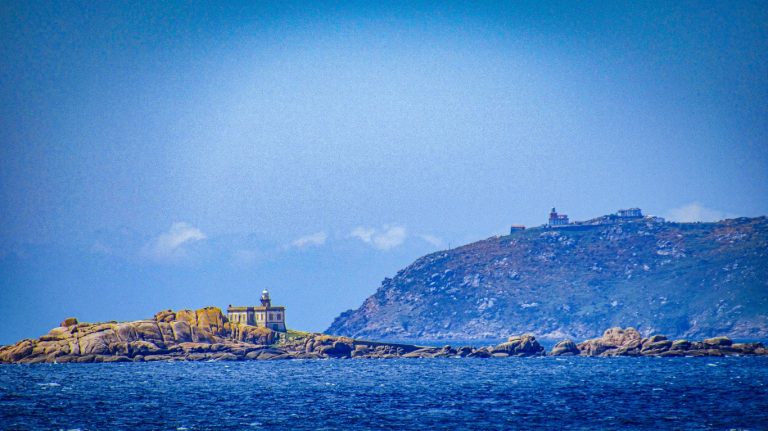
When you leave the rugged, wind-swept cliffs of Corcubión behind you and the path gradually releases itself from the rocky embrace, a scenery opens up before you that acts like a promise. Sardiñeiro does not welcome you with the harsh brutality of the open Costa da Morte, but with the gentle security of a protected bay. It is that moment on the last stage to Fisterra in which the adrenaline of the past days gives way to a deep, almost floating calm. You feel it first in the change of the air: The salty sharpness of the Atlantic is softened here by the sweet, warm resin notes of the extensive pine forests that frame the village like a green protective wall. The light in Sardiñeiro possesses its very own, amber quality, especially when the afternoon sun is low and the shadows of the pines draw long, filigree patterns on the fine, light gray sand.
Your steps slow down involuntarily. The rhythmic clicking of the walking sticks on the asphalt of the village street mixes with the distant, calming sound of the surf, which does not thunder here but rolls against the shore in a steady, almost meditative beat. It smells of iodine, of fresh seaweed, and of the tempting aroma of grilled fish wafting from the chimneys of the few houses. Sardiñeiro is a place of sensory healing. The coolness of the sea water, which lies calm and clear in the bay here, seems to literally suck the heat out of the swollen pilgrim feet. It is a space of transition, a last deep breath in a world that is still entirely under the sign of the earthly, before the metaphysical encounter with infinity awaits at Cape Fisterra. Here, between dunes and pines, the St. James Way becomes, for a precious moment, a mere lingering.
What this place tells
The history of Sardiñeiro is a narrative of silence, hard work, and the tireless rhythm of the sea. For a long time, this small hamlet was an almost forgotten fishing village that was hardly mentioned in the chronicles of the great routes. While the powerful monasteries and trading cities of Galicia unfolded their splendor, the people here lived in a simple subsistence economy that was completely based on the whims of the Atlantic. It was not until the 16th and 17th centuries, when the so-called “Camino Real” – the Royal Way – gained in importance, that Sardiñeiro moved into the focus of travelers. This historical path served as a vital artery between Santiago and the coast, and Sardiñeiro became one of those inconspicuous but indispensable intermediate stops where messengers and merchants watered their horses and pilgrims sought protection from the dreaded storms of the “Coast of Death”.
In the 19th and early 20th centuries, the village experienced a heyday that was closely linked to the silver wealth of the seas: the sardine. The name of the village is no coincidence; it is a monument to that era in which the fishermen’s nets were bulging and the small harbor hummed with activity. It was a time of community in which the knowledge of currents and tides was passed down from generation to generation. However, the industrialization of fishing and the strengthening of large ports like A Coruña and Vigo in the course of the 20th century led to a gradual decline. Many families were forced to leave their homeland – part of that great Galician wave of emigration that carried so many sons and daughters of the country to America and the rest of Europe. Remaining behind were the old stone foundations of the fishing houses and a deep collective memory of the “Golden Years”.
Today, Sardiñeiro tells a story of renaissance. Since the turn of the millennium, the place has found its new purpose in gentle tourism and in accompanying the modern pilgrim flows. It has preserved its authenticity by not trying to become a second Fisterra. When you walk through the Rúa Nova today, you feel this pride of the inhabitants, who combine their traditions – such as the occasional music of the “Gaita Gallega” at festivals – with modern hospitality. Sardiñeiro is today the place of the “last earthly rest”. The stones do not tell of battles or kings, but of the miraculous rescue of shipwrecked souls by the Holy Virgin and of that deep, human warmth that can only be found where life has had to assert itself against the wind and the salt for centuries.
Camino Distances
On the home stretch of the Camino Fisterra y Muxía, Sardiñeiro offers the last opportunity for extensive recovery before the final ascent to the cape begins.
| Previous Location | Distance (km) | Next Location | Distance (km) |
|---|---|---|---|
| Estorde | approx. 2.0 km | Fisterra (Center) | approx. 6.0 km |
| Corcubión | approx. 6.0 km | Faro de Fisterra | approx. 9.5 km |
Overnight Stay & Arrival
Arriving in Sardiñeiro is an act of physical and mental relief. You notice that you reach the place when the path gently drops and the view of the crescent-shaped bay widens. There is no magnificent square here that welcomes you, but the immediate proximity to the water. The feeling of suddenly feeling the cool, fine-grained sand under your feet after the kilometers on the hard ground of the coastal road is for many pilgrims the actual moment of arrival. Here in Sardiñeiro, the backpack is not just put down; it loses its weight in the face of the infinite expanse of the sea. The infrastructure of the place is deliberately kept small, which reinforces the feeling of exclusivity and tranquility.
For staying overnight, the Hotel Playa de Sardiñeiro offers a quality that seems almost surprising in this secluded location. After its complete renovation in 2022, it combines modern aerothermal technology and eco-friendly comfort with a location just five minutes from the beach. Arriving here in one of the bright rooms equipped with sea views means treating yourself to the luxury of regeneration before entering Fisterra. The sound of the surf penetrating through the open windows at night acts like a natural remedy for the exhausted spirit. It is a place where you do not feel like a passerby, but like a guest who has arrived at the right place at the right time.
Alternatively, the Hotel-Restaurante Merendero offers a traditional, pilgrim-specific experience. Here, the atmosphere is characterized by an almost familial communality. In both cases, staying in Sardiñeiro is a conscious decision against the often hectic activity of the final destination Fisterra. One chooses the silence of the bay to tackle the last six kilometers the next morning with a clear head and a light step.
The psychological moment of arrival in Sardiñeiro is often accompanied by a feeling of liberation. Since the place has no significant church or monumental sights, the pressure to have to “visit” something falls away. You are allowed to just be. Many pilgrims report emotional moments when they sit on the beach in the late afternoon and realize that they have overcome the last big hurdle before the lighthouse. It is the arrival in one’s own achievement, framed by the peaceful backdrop of a Galician bay, which rocks you safely to sleep.
Eating & Drinking
To dine in Sardiñeiro means having the essence of Galicia on your plate. The local gastronomy is an homage to the freshness of the ocean and the honest tradition of fishing cuisine. Anyone who enters the Restaurante Casa Lestón steps into a world that has existed since 1917. It is one of the oldest restaurants in the region and is often referred to as the “most authentic address” of the Costa da Morte. Here, “Grandmother-style cooking” reigns – that hearty, unadulterated culinary art of grandmothers where nothing is artificially decorated because the quality of the products speaks for itself. The scent of garlic-heavy olive oil sizzling in heavy pans mixes with the fine aroma of freshly caught fish delivered directly from the cutters of nearby Corcubión.
An absolute classic that one must try here are the “Chipirones en su tinta” – small squids in their own ink that are so tender they literally melt on the tongue. Usually, simple, hearty farmhouse bread is served with them to soak up the dark, aromatic sauce to the last drop. Also, the “Pulpo á Galega”, refined with coarse sea salt and smoky paprika, reaches a perfection here that can only be found where the sea lies directly outside the door. The restaurants use the daily catch: whether mackerel, cod, or the namesake sardines – the taste is mineral, fresh, and carries the full power of the Atlantic within it.
Drinking in Sardiñeiro is just as ritualistic as eating. A cool Albariño or a sparkling Ribeiro, served in the typical white ceramic bowls known as “Cunca”, fits perfectly with the salty air and the fish dishes. The wine cleanses the palate and allows the soul to expand. For the pilgrim, the “Menú del Día” is often an affordable and nutritious way to get to know the regional specialties. It is a communal experience; one often sits at simple wooden tables, sharing the wine and bread with locals and other pilgrims, feeling the deep connection created by good, honest food. It is the nourishment of strength before the last march.
Supply & Logistics
Sardiñeiro is logistically a place of concentration on the essentials. You quickly realize that you are in a small hamlet not designed for mass tourism. There is no ATM, no pharmacy, and no large supermarket here. This infrastructure is only found again in Fisterra, 6 km away, or back in Corcubión. For the pilgrim, this means: planning is the key. Nevertheless, Sardiñeiro has a small “Tienda”, a shop that provides the most important things for daily needs. Here you can stock up on water, fruit, and the indispensable energy bars that will carry you over the last hills to Fisterra.
The logistical strength of the place lies in its connection to the beach. Public toilets, showers, and changing rooms are available at the Praia de Sardiñeiro and are even guarded by lifeguards during the high season. This makes the place an ideal point for an extended break, where you can air out your gear and refresh yourself. Those who need logistical support in the form of transport can rely on local bus connections that run several times a day between Corcubión and Fisterra, or call a taxi, which is usually on site within a short time.
- Shopping: A small village shop provides you with the essentials such as drinks, snacks, and simple backpack rations.
- Gastronomy: The hotel restaurant and the tradition-rich Casa Lestón offer excellent Galician cuisine; simple pilgrim stops for snacks are also available.
- Accommodation: With the renovated Hotel Playa de Sardiñeiro and the Hotel Restaurante Merendero, two fundamentally different but high-quality options are available.
- Public facilities: No formal offices available; informal help and information can be obtained at the hotel or from the hosts.
The logistics in Sardiñeiro force you to pause. Since you cannot get everything at the push of a button here, you are thrown back on your own supplies and the small, local offerings. This is an important part of the St. James Way experience: the realization of how little one actually needs when the environment is right. The hotel often functions as an unofficial info point, where you can get help organizing your onward journey or with minor medical questions. Sardiñeiro is functional enough to supply you, but modest enough not to distract you.


Don’t miss
- Praia de Sardiñeiro: The only safely swimmable beach on this stage – take the opportunity for a ritual footbath in the cool Atlantic.
- Restaurante Casa Lestón: Dine where fishermen and travelers have stopped for over a hundred years, and enjoy authentic Galician traditional cuisine.
- The ascent via Rúa Fisterra: When you leave the village, this section of the path offers one of the most spectacular panoramic sea views of the entire route.
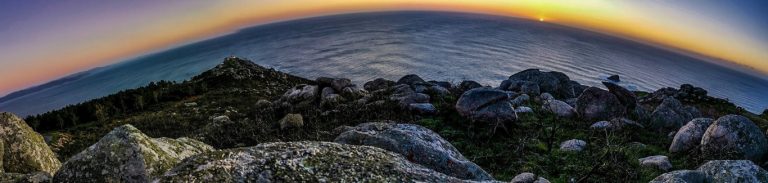
- Sunset at the beach: Experience how the sky turns into a deep gold and purple, bathing the bay in a magical light.
- The pine forests: Hike a bit off the asphalt through the fragrant pine groves that give the place its special aroma.
- Observation of the fishing cutters: If you get up early, you can see between 6 and 8 AM how the small boats head out into the morning mist.
Insider tips and hidden places
Away from the main square and the obvious beach life, Sardiñeiro hides small treasures that reveal themselves only to the patient explorer. One such place is the forest path “Camino de los Pinos”, which winds through the dense greenery almost parallel to the official St. James Way behind the beach. While most pilgrims stay on the main road, here you walk on a carpet of soft pine needles. The scent of resin is so intense here that it has an almost intoxicating effect. At a certain point, the thicket opens up and reveals a view from above of the entire bay – a perfect place for a meditative pause or a photo that captures the solitude and beauty of Galicia.
Another real secret tip is the “Cala do Talón”, a tiny rocky bay about 1.5 kilometers south of the main beach. Anyone continuing the path from Sardiñeiro to Fisterra will find this beach after leaving the forest behind the village. It can only be reached via a somewhat arduous path and is often used by nudists and those seeking total seclusion. Here the water is even clearer, and the rock formations offer protection from the wind. It is a place of absolute silence, where the only sound is the gurgling of the water in the crevices. Only few pilgrims take the detour, but those who do are rewarded with an intimacy that is often lost at the main beach of Langosteira. Additionally, some pilgrims use this quiet beach to submerge themselves 9 times in the gentle waves according to old Celtic custom, than at the busier Praia do Langosteira.
In Sardiñeiro, there is also a very special park bench at the eastern end of the beach, standing directly under a mighty, old pine tree. The locals use this spot in the morning for their first coffee or tea. It is the place of the “Locals”. If you settle down there, you often come into contact with people who can tell you stories of the sea that are in no travel guide. They are reports of miraculous rescues and of the time when Sardiñeiro was still the center of sardine fishing. This bench is a place of exchange, a place where time stands still for a conversation.
Finally, it is worth examining the small tide pools at the edge of the bay at low tide. Here you often find rare shells or smooth-polished pottery shards that could tell of past shipwrecks. Sardiñeiro is a place of small finds. Those who wander along the shore with a lowered gaze often find more than just pretty stones; one finds fragments of a maritime history that the ocean has patiently washed up here. These small, insignificant discoveries are what make a stay in Sardiñeiro a personal journey of discovery.
Moment of Reflection
In Sardiñeiro you stand at a threshold that is of enormous significance both geographically and psychologically. It is the place of the “last regeneration”. While you sit on the beach and watch the water of the Atlantic glide gently over your bare feet, a question inevitably arises: What do I really take with me to the end from this journey? The beach of Sardiñeiro acts like a natural laboratory for your thoughts. The physical exertion of the ascent from Corcubión lies behind you, and the spiritual final spurt to Fisterra is imminent. Here, in the suspended state between pines and sea, you are allowed to cast off the identity of the “performing pilgrim” and become a “feeling human being”.
Many pilgrims report that the bath in the bay of Sardiñeiro acts like a ritual cleansing ritual. The coldness of the water sharpens the senses, while the salt on the skin leaves a lasting memory of the elemental forces. In Celtic mysticism, the sea was considered the boundary to the afterlife, and Sardiñeiro is the last earthly outpost before this boundary. It is the place where you are allowed to break down your last emotional hurdle. Here you are allowed to be proud of what you have achieved without already being under the pressure of the finality that Cape Finisterre radiates. Sardiñeiro gives you permission to pause – a lesson that is often harder to learn than the daily walking.
Perhaps you realize here that the true transformation does not only happen at the lighthouse, but in these silent moments of preparation. The gentleness of the bay contrasts with the hardness of your path so far and reminds you that healing and reflection are necessary companions of every spiritual effort. When you leave Sardiñeiro and direct your gaze to the cape on the southern horizon, you do so with a new lightness. You have washed yourself, you have strengthened yourself, and you have made peace with the path. Sardiñeiro is the place that gives you the freedom to understand the end of the world not as a loss, but as a completion.
Camino of the Stars
This place marks the last stage before reaching the main goal of the Camino Fisterra y Muxía (CFM 3a):
Olveiroa → Hospital → O Logoso → Cee → Corcubión → Redonda → Amarela → Estorde → Sardiñeiro → Fisterra
Did you also feel the moment when the cool water of Sardiñeiro washed the burden of your entire journey off your shoulders for a moment? Perhaps you discovered a dish in the history-steeped Casa Lestón that tastes of pure Galician homeland, or found a lonely path through the pine forests? Share your personal impressions, your photos of the amber sunset, or your tips for the last rest before the end of the world with us. Your experiences make this guidebook truly come alive for all who come after you. Write us a comment and tell us your story!
About the Author